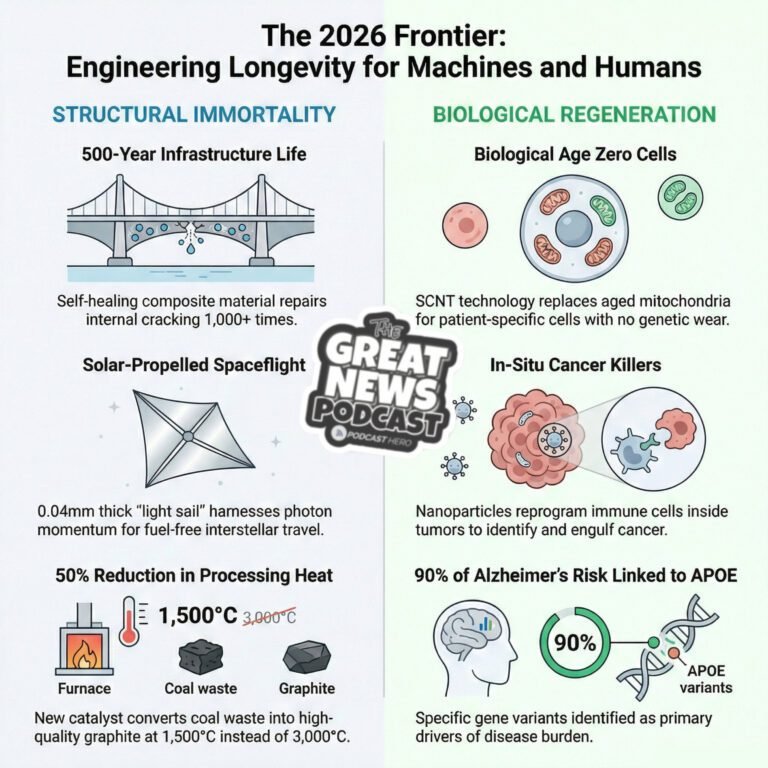
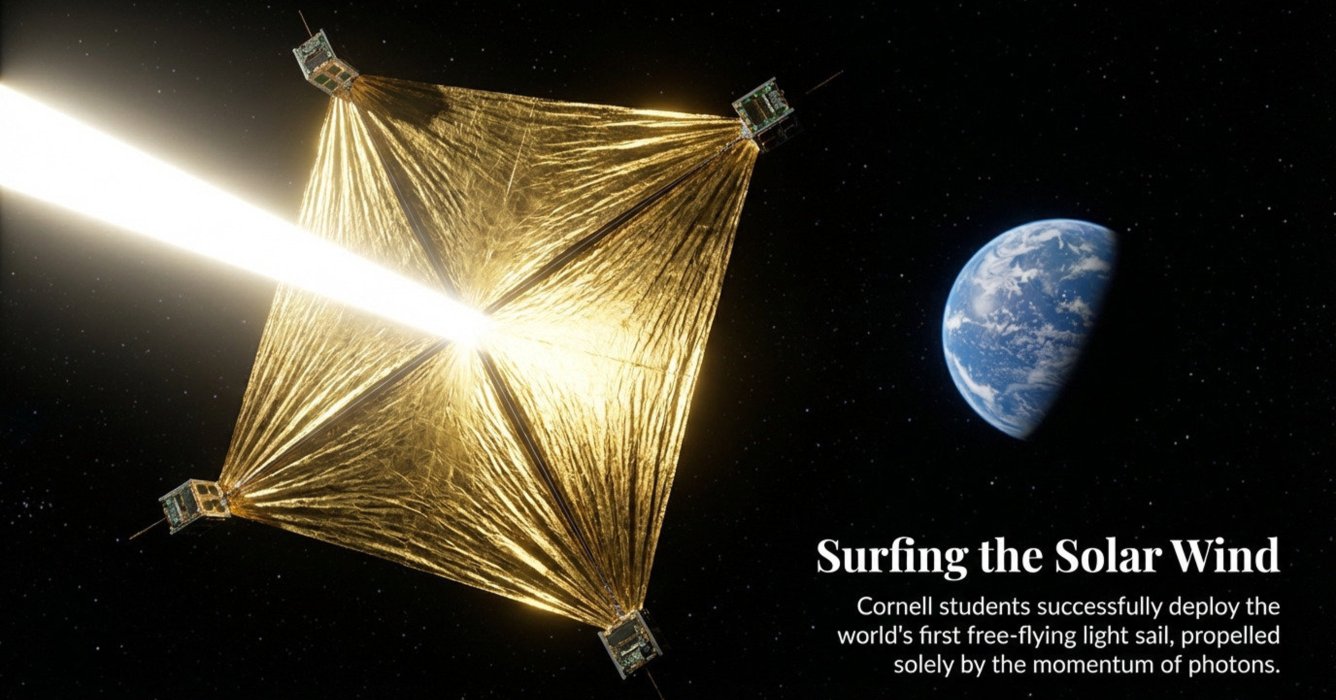
A student-led group at Cornell University has successfully deployed the world’s first free-flying light sail. This tiny spacecraft, called Alpha CubeSat, weighs only 0.2 pounds and is just 0.04 millimeters thick. Instead of using fuel, it is propelled by the momentum of photons—particles of light—bouncing off its super-reflective surface. This successful mission proves that small, low-cost probes could eventually use sunlight to travel far beyond our solar system.
Light sails are a new method of space travel that has promise to send probes beyond our solar system.
How does a light sail work?
When light particles (photons) bounce off the super reflective surface of the sail they give the spacecraft a tiny push forward. The combined effect of photons bouncing off the sale moves the craft without using fuel.
Source: Interesting Engineering
This topic was covered in Great News podcast Episode 28