For the millions of people living with liver cirrhosis, treatment options have long been frustratingly limited — focused mostly on managing complications rather than addressing what’s actually going wrong inside the liver. New research from Spain suggests that may be about to change, thanks to the discovery of a single inflammatory pathway that could serve as a powerful therapeutic target.
The Problem with Cirrhosis
Cirrhosis is what happens when the liver sustains chronic damage — from alcohol, hepatitis, fatty liver disease, or other causes — and healthy tissue is gradually replaced by scar tissue. The liver loses its structure and function, and the immune system, rather than helping, often makes things worse. Specialized immune cells called macrophages become overactive, driving a cycle of inflammation and scarring that’s difficult to break.
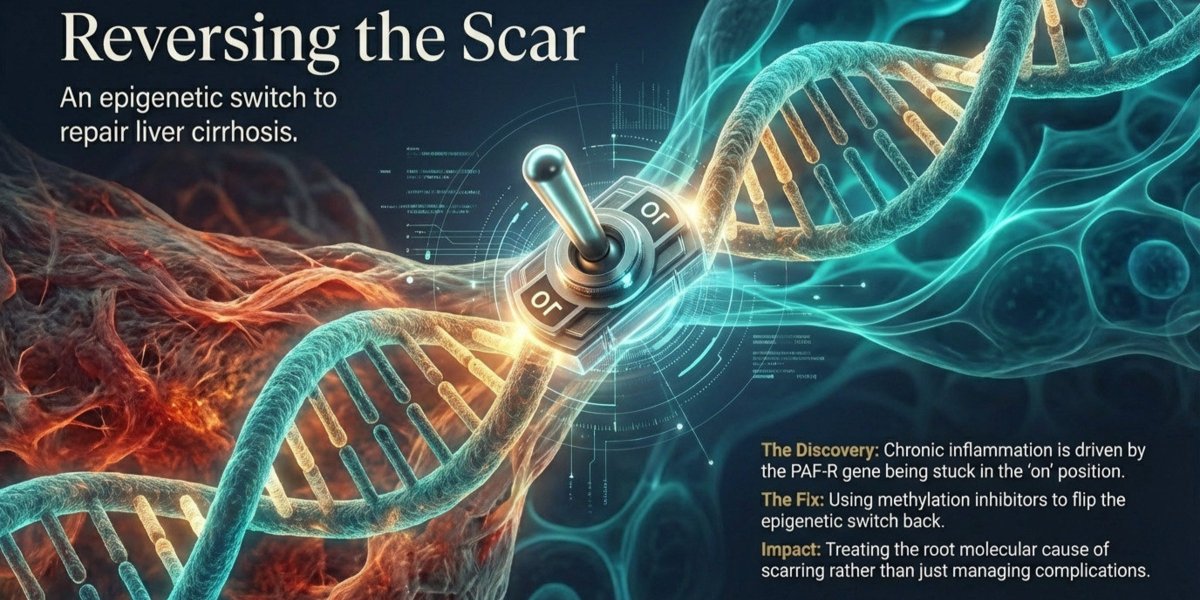
A chemical messenger called Platelet-Activating Factor (PAF) sits at the center of this destructive process. PAF triggers inflammation, promotes clotting, and disrupts blood vessels. In cirrhosis, liver macrophages produce high levels of both PAF and its receptor (PAF-R), raising pressure in the portal vein and contributing to the cascade of damage that defines advanced liver disease.
An Unexpected Culprit: Epigenetic Changes
Researchers at Miguel Hernández University in Spain have now uncovered a key reason why PAF-R becomes so overactive in the first place. The answer lies not in the gene itself, but in how it’s regulated.
In cirrhotic livers, epigenetic changes — specifically, the removal of chemical “tags” from the PAF-R gene — cause the gene to switch on too strongly. Think of it like a volume knob being permanently turned up. With more PAF-R receptors present, liver immune cells respond more aggressively to inflammatory signals, worsening both injury and scarring.
The team studied patients with cirrhosis alongside mice with chemically induced cirrhosis, examining how DNA regulation affected immune cell behavior and disease progression.
Blocking the Switch
The most exciting part of the research is what happened when scientists interfered with this pathway. When cirrhotic mice were treated with BN-52021, a drug that blocks the PAF receptor, the results were striking: liver injury was reduced, blood vessel function improved, and the liver’s immune response was brought back toward balance.
As researcher Enrique Ángel Gomis put it, the findings suggest that drugs capable of blocking PAF’s action “could represent a new therapeutic line for liver cirrhosis.”
A More Precise Future for Treatment
Perhaps most intriguingly, the discovery opens the door to epigenetic therapies — treatments that don’t just block the inflammatory signal, but correct the upstream molecular switch that was flipped in the first place. Rather than suppressing inflammation broadly (with all the side effects that entails), a targeted epigenetic approach could reprogram liver immune cells to stop overreacting before the damage is done.
It’s early days, and much more research will be needed before this translates to new medicines for patients. But the findings, published in Biomedicine & Pharmacotherapy, offer a genuinely fresh angle on a disease that has long resisted effective treatment. For the many people waiting on a liver transplant list — or trying to slow the progression of cirrhosis — that’s welcome news.
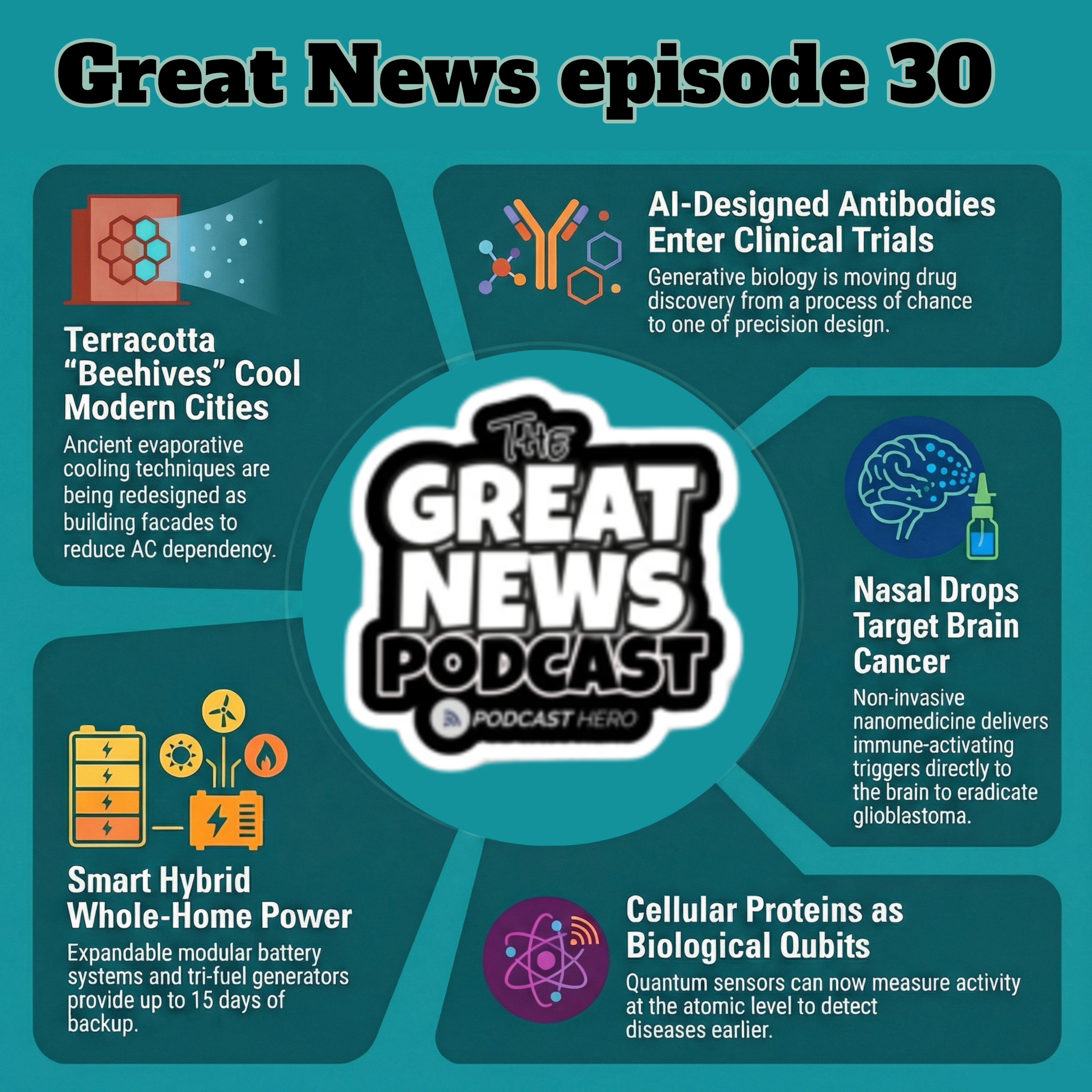
This topic was featured in Great News podcast episode 30.

Because good news should be heard…
Today, we are exploring how artificial intelligence is moving medicine from a game of chance to a masterwork of design. Plus, we’ll look at a cooling system inspired by ancient beehives, a non-invasive nasal drop that could tackle the deadliest brain cancers, and a backup power system that ensures you’ll never even notice a blackout.
How AI Is Reinventing the AntibodyClay, Cool Air, and a 5,000-Year-Old IdeaNasal Nanodrops: A Promising New Weapon Against the Deadliest Brain CancerNever Get Caught in the Dark Again
And stay tuned for our speed round, where we’ll cover everything from quantum biological sensors to the ”switch” that might repair the human liver.
Source: New Atlas