Glioblastoma is the kind of diagnosis no one wants to hear. The most common malignant brain cancer in the United States, it affects roughly three in every 100,000 people, progresses with alarming speed, and is almost always fatal. There are currently no curative treatments. But a new study from researchers at Washington University School of Medicine in St. Louis and Northwestern University is offering a rare glimmer of hope — and it comes in the form of something as simple as a nasal drop.
The Problem with Getting Medicine to the Brain
One of the biggest obstacles in treating brain cancer is delivery. The brain is extraordinarily well-protected, and getting therapeutic drugs past its defenses — and directly to a tumor — has traditionally required invasive surgical procedures. For a treatment called STING activation, which works by triggering the immune system to recognize and attack cancer cells, this has meant directly injecting drugs into the tumor itself, repeatedly. For patients who are already gravely ill, that’s an enormous burden.
Glioblastoma is also what researchers call a “cold tumor.” Unlike many cancers that naturally attract immune cells, glioblastoma actively suppresses the body’s immune response, making it notoriously resistant to immunotherapy.
A Tiny Solution to a Massive Problem
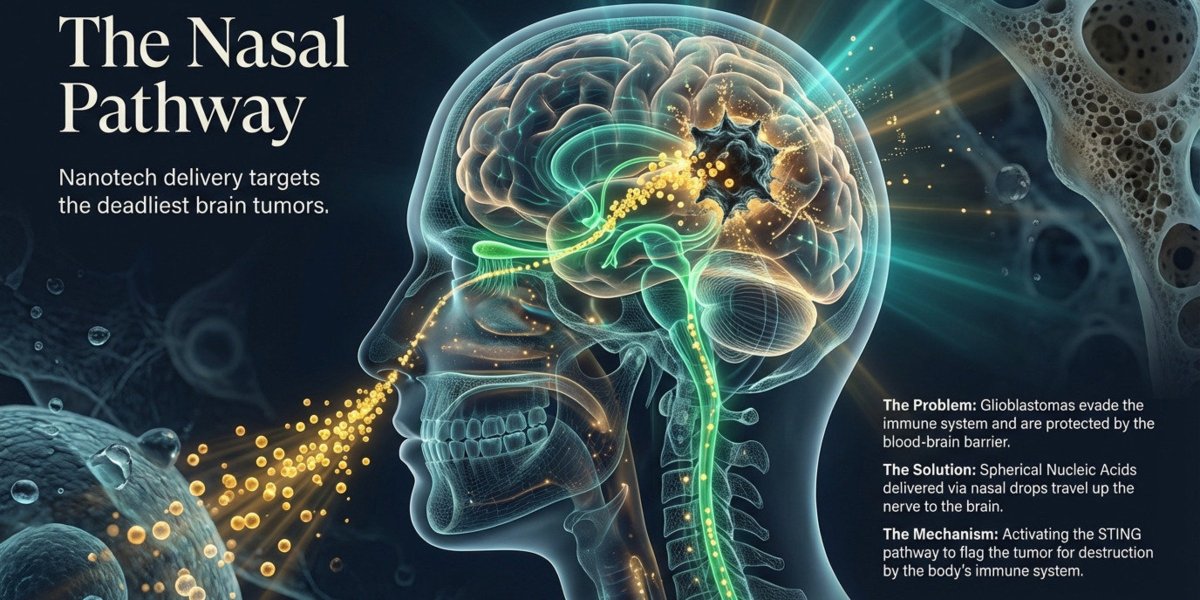
The research team’s breakthrough lies in nanotechnology. They engineered structures called spherical nucleic acids — nanoparticles with gold cores studded with precisely arranged snippets of DNA — capable of carrying STING-activating compounds into the brain. The delivery route? The nose.
Intranasal therapy had previously been explored as a way to get medications to the brain, but no nanoscale therapies had been developed using this approach to activate immune responses against brain cancers.The team found that when their nanomedicine was administered as drops into the nasal passages of mice with glioblastoma, the particles traveled along the pathway of the main nerve connecting the facial region to the brain, where the immune response concentrated in specific immune cells within the tumor. Crucially, the therapy did not spread widely through the body, reducing the risk of unwanted side effects.
The Results
In mouse studies, the results were striking. When the nanotherapy was paired with medicines that help activate T lymphocytes, the two-dose treatment eliminated tumors in mice and produced long-lasting immunity that prevented the cancer from returning — outcomes significantly better than those seen with current STING-targeting therapies.
What This Means — and What Comes Next
It’s important to temper excitement with realism. This research was conducted in mice, and human clinical trials are still a long way off. The researchers also acknowledge that stimulating the STING pathway alone is unlikely to be a complete cure, since glioblastoma employs multiple strategies to evade the immune system. Further work is needed to build additional immune-activating features into the nanostructures.
Still, the significance of this step shouldn’t be understated. No nanoscale therapy had previously been shown to increase immune cell activation in glioblastoma tumors when delivered from the nose to the brain, making this a genuine first. The approach also holds potential beyond glioblastoma, possibly extending to other cancers that resist immunotherapy.
For patients and families facing one of medicine’s most devastating diagnoses, science is slowly but surely opening new doors. A simple nasal drop may not be the final answer — but it might just be the beginning of one.
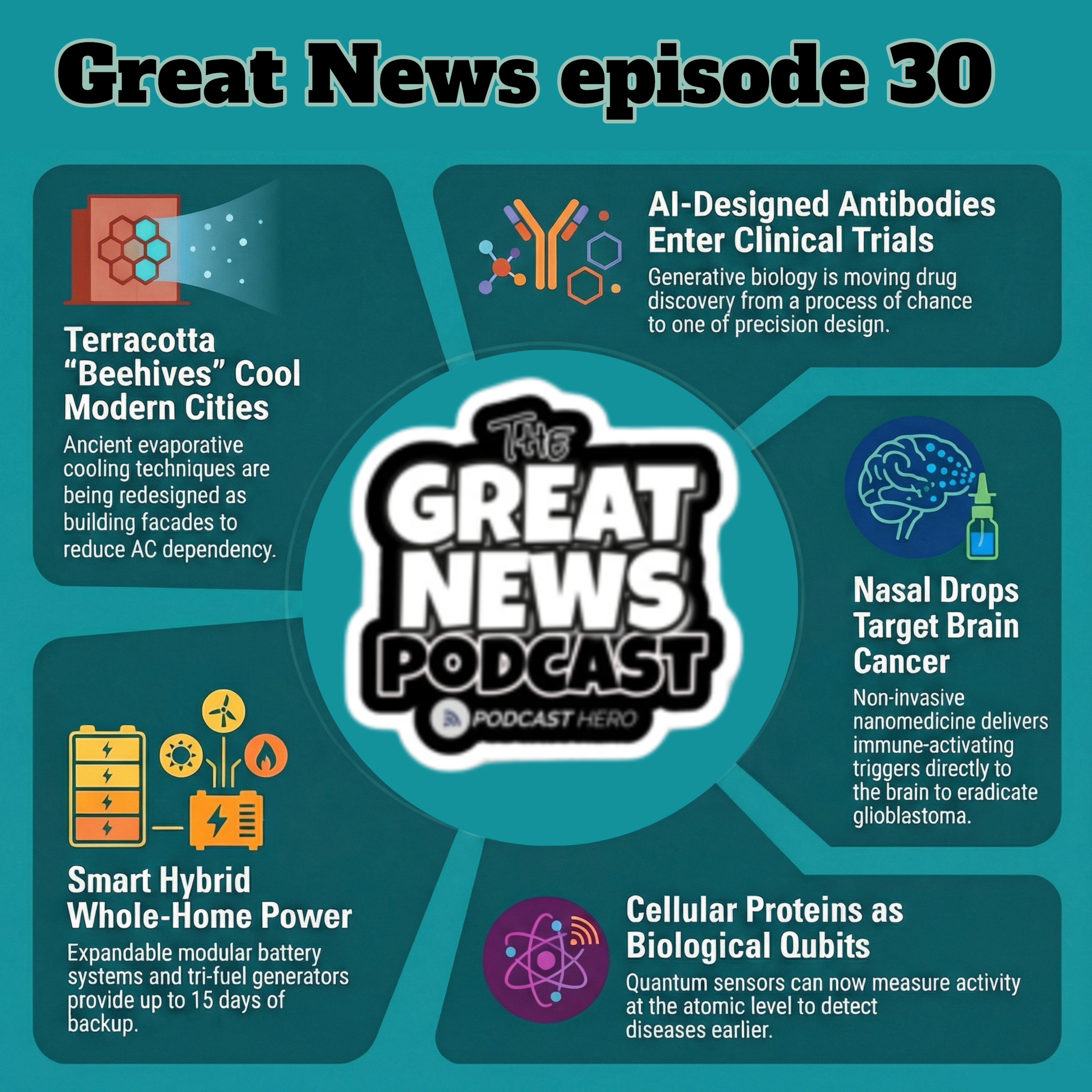
This topic was featured on Great News podcast episode 30.

Because good news should be heard…
Today, we are exploring how artificial intelligence is moving medicine from a game of chance to a masterwork of design. Plus, we’ll look at a cooling system inspired by ancient beehives, a non-invasive nasal drop that could tackle the deadliest brain cancers, and a backup power system that ensures you’ll never even notice a blackout.
How AI Is Reinventing the AntibodyClay, Cool Air, and a 5,000-Year-Old IdeaNasal Nanodrops: A Promising New Weapon Against the Deadliest Brain CancerNever Get Caught in the Dark Again
And stay tuned for our speed round, where we’ll cover everything from quantum biological sensors to the ”switch” that might repair the human liver.
Source: SciTechDaily WashU Medicine