We’ve long known that weight-bearing exercise is one of the best things you can do to keep your bones strong as you age. But why exactly does it work? New research has pinpointed a fascinating molecular mechanism — and it opens the door to drugs that could deliver similar benefits to people who can’t exercise.
The Bone Loss Problem
As we age, bone mineral density declines. Bone marrow gradually fills with more fat cells and fewer bone-building cells (osteoblasts), tipping the balance toward the fragile, porous bones characteristic of osteoporosis. Exercise — particularly weight-bearing and resistance training — is known to slow this process, but the precise cellular machinery behind that benefit has remained murky. Until now.
Enter Piezo1: Your Cells’ Pressure Sensor
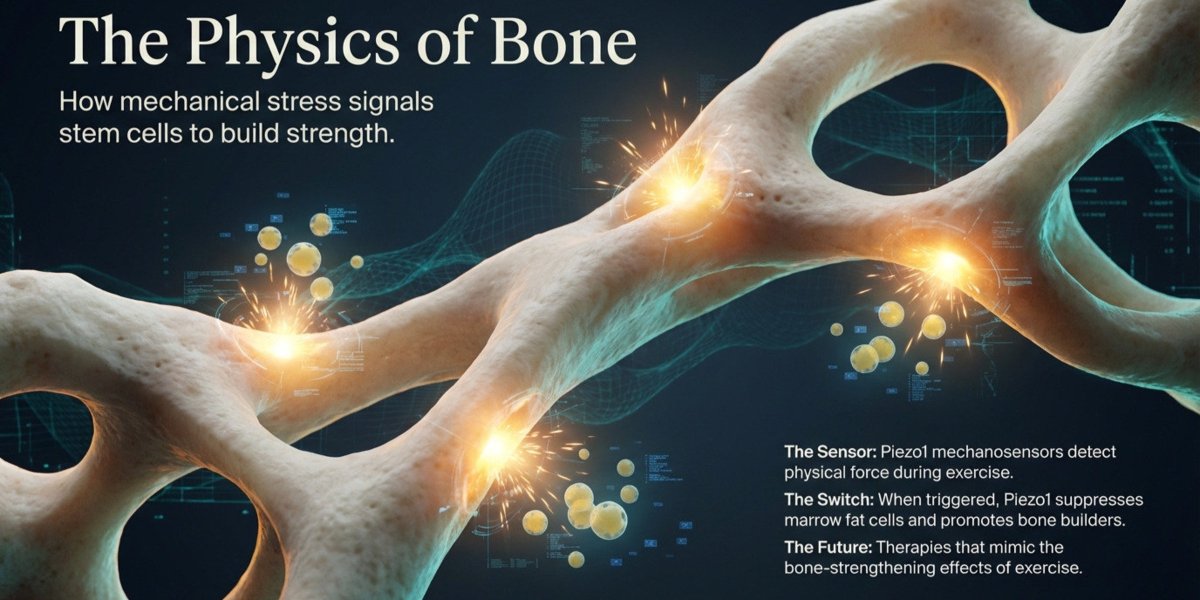
A study published in early 2026 identifies a key player: a protein called Piezo1, a mechanosensitive ion channel found in mesenchymal stem cells in the bone marrow. These stem cells are the precursors that can become either fat cells or osteoblasts — and the choice they make has enormous consequences for bone health.
Piezo1 is essentially a molecular sensor that detects physical forces — compression, shear stress, pressure — the very forces that bone marrow experiences during exercise. When you walk, run, or lift weights, your bones flex slightly, and that mechanical stress activates Piezo1 in these stem cells.
What Activation Actually Does
When Piezo1 is triggered, it suppresses a local inflammatory signaling loop (involving proteins Ccl2 and Lcn2). By dampening this inflammation, Piezo1 steers the stem cells away from becoming fat cells and toward becoming osteoblasts that build and repair bone. In experiments where Piezo1 was genetically disabled, the bone-protective effects of exercise completely disappeared — strong evidence that this protein isn’t just involved in the process, it’s essential to it.
A Therapeutic Target in the Making
This is exciting not just as an explanation, but as a potential treatment. Many people — the elderly, those with disabilities, the severely ill — cannot exercise enough to meaningfully slow bone loss. If a drug could activate Piezo1 or its downstream pathways, it might deliver the bone benefits of exercise in pill form.
The research also reveals a previously unrecognized link between three biological processes: mechanotransduction (how cells sense force), inflammation, and cell fate. These turn out to be deeply connected in ways that matter for aging.
Exercise isn’t magic — it’s biology. And once we understand the biology precisely enough, we gain the power to replicate it.
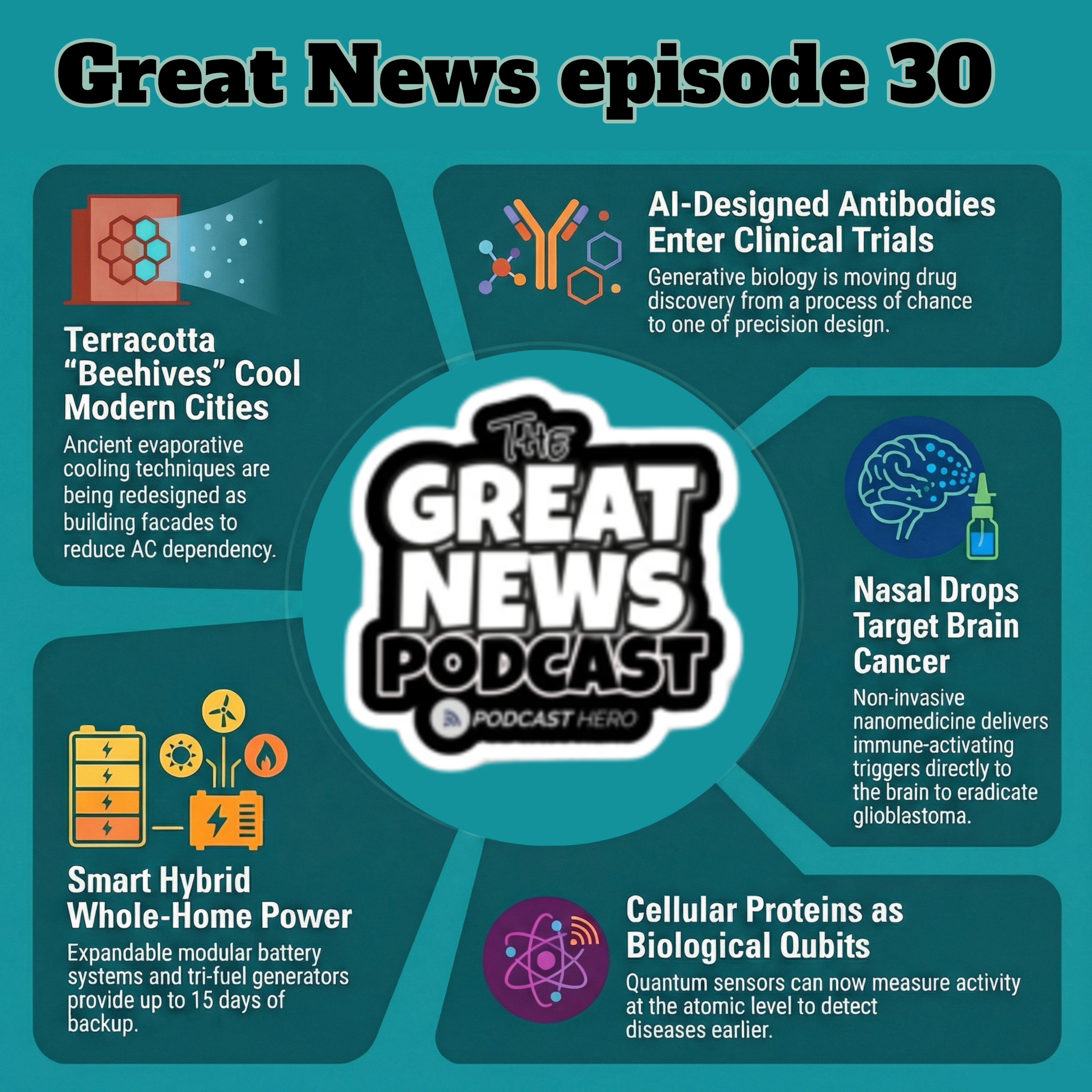
This topic was featured on Great News podcast episode Great News podcast episode 30.

Because good news should be heard…
Today, we are exploring how artificial intelligence is moving medicine from a game of chance to a masterwork of design. Plus, we’ll look at a cooling system inspired by ancient beehives, a non-invasive nasal drop that could tackle the deadliest brain cancers, and a backup power system that ensures you’ll never even notice a blackout.
How AI Is Reinventing the AntibodyClay, Cool Air, and a 5,000-Year-Old IdeaNasal Nanodrops: A Promising New Weapon Against the Deadliest Brain CancerNever Get Caught in the Dark Again
And stay tuned for our speed round, where we’ll cover everything from quantum biological sensors to the ”switch” that might repair the human liver.
Source: Fight Aging! | Signal Transduction and Targeted Therapy