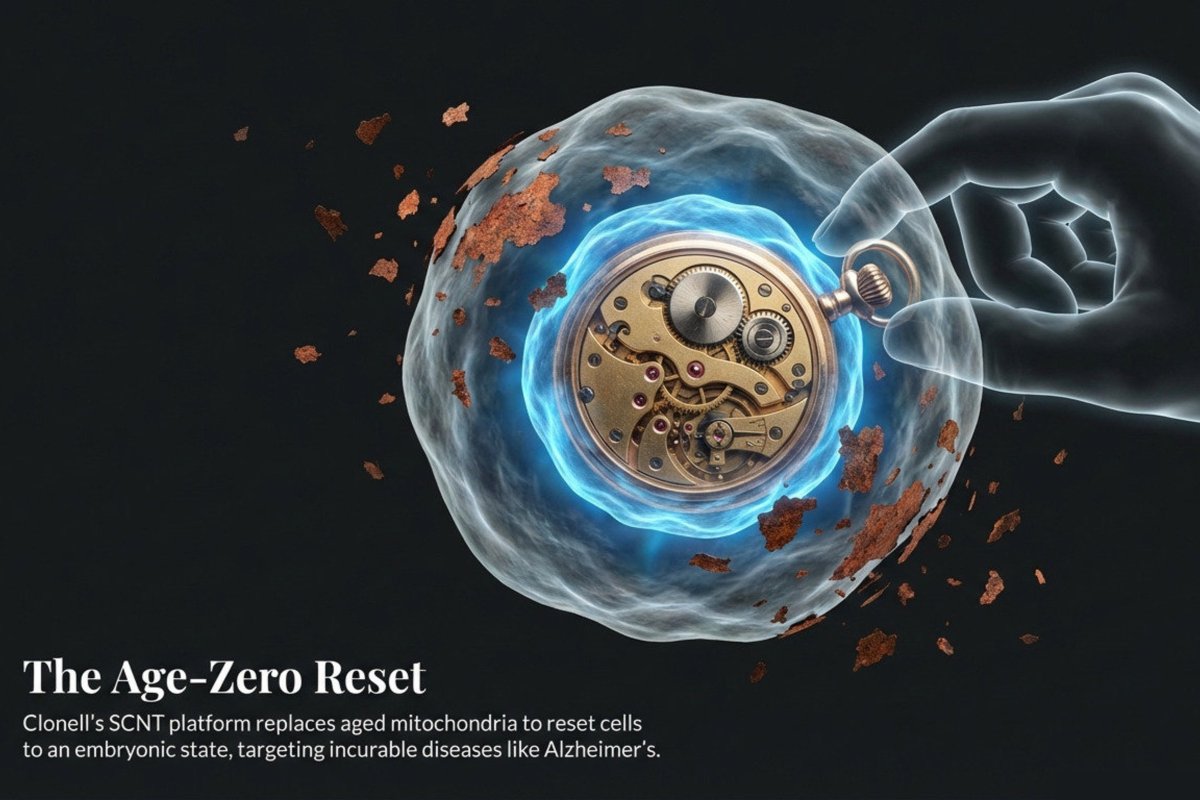
What if we could treat disease not by managing symptoms or slowing decline, but by giving your cells a complete biological do-over? That’s the ambitious promise behind a new platform launched this January by South Korea’s Clonell Therapeutics, which aims to tackle some of medicine’s toughest challenges—Alzheimer’s, ALS, heart failure—by rewinding the cellular clock to zero.
The Problem with Current Stem Cell Therapies
For years, regenerative medicine has pursued the dream of replacing damaged tissue with healthy new cells. But existing approaches have struggled with fundamental limitations. Induced pluripotent stem cells (iPSCs) derived from skin cells may retain cellular memories from their origins, resisting conversion into other cell types like neurons or heart muscle cells, or tending to revert to their original form.
Even more critically, iPSCs inherit the patient’s aged mitochondria—the cell’s energy factories—resulting in low energy production and high levels of harmful reactive oxygen species. When you’re trying to rebuild energy-intensive tissues like the brain or heart, starting with exhausted cellular machinery is like trying to win a race in a car that’s already broken down.
The SCNT Solution: True Cellular Rejuvenation
Clonell’s approach sidesteps these problems entirely through Somatic Cell Nuclear Transfer (SCNT), the same technique that created Dolly the sheep in 1996. The process transfers the nucleus of a patient’s somatic cell into a healthy enucleated egg cell, ensuring a 100% DNA match with the patient and eliminating immune rejection.
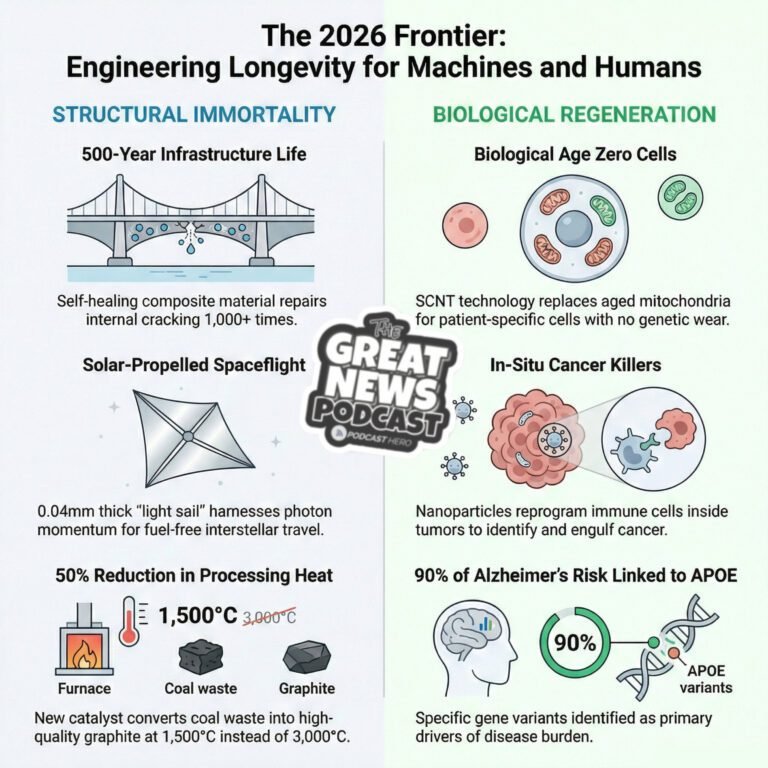
But the real magic happens next. Through the powerful reprogramming capability of the egg cell’s cytoplasm, the patient’s cells are epigenetically reset completely, reborn as pluripotent stem cells with a biological age of zero where even aged mitochondria, ribosomes, and other organelles are replaced with healthy ones.
Think of it as the difference between refurbishing an old building versus constructing a new one with the original blueprints. You get the same genetic identity, but with brand-new cellular machinery that hasn’t accumulated decades of wear and tear.
From Lab to Clinic
Clonell’s Chief Scientific Officer, Hyo-Sang Lee, was a key figure in the research team at Oregon Health & Science University that successfully established the world’s first human SCNT-derived embryonic stem cells in 2013. Now, more than a decade later, the company has developed proprietary techniques that achieve more than double the production efficiency of conventional SCNT methods.
The company’s pipeline targets neurodegenerative diseases such as Alzheimer’s, ALS, and stroke, as well as cardiovascular diseases and aging-related conditions. Their ambition isn’t symptom management—it’s functional restoration by replacing diseased tissue with cells that have never experienced aging.
To accelerate clinical access, Clonell has introduced a novel concept called Patient-Initiated Clinical Trials, where patients who urgently need treatment can fund and initiate their own trials rather than waiting for traditional pharmaceutical company-led development.
The Road Ahead
Of course, revolutionary promises need to be met with appropriate scrutiny. Market observers note that the platform still needs robust, reproducible functional data and long-term safety follow-up, and that the real turning point will be whether the anti-aging claims can be backed by clinical-grade evidence rather than compelling rhetoric.
The technical challenges are significant, the regulatory pathways complex, and the ethical considerations substantial. But if Clonell can deliver on even a fraction of its promise, we may be witnessing the early stages of a fundamental shift in how we treat degenerative disease—not by slowing the inevitable decline, but by turning back the clock to when our cells were young, vital, and unmarked by the passage of time.
This topic was covered in Great News podcast episode 28.

Source: Longevity.Technology