For decades, developing antibody therapies has been a slow, painstaking game of trial and error. Researchers would vaccinate animals, screen massive protein libraries, and spend years optimizing candidates — often with no guarantee of success. Now, artificial intelligence is turning that process on its head, and the results are beginning to reach real patients.
A Market Ripe for Disruption
Antibodies are among the most powerful tools in modern medicine. They can precisely target cancer cells, tame autoimmune responses, and neutralize the toxic proteins behind neurological diseases. More than 160 antibody therapies have been approved worldwide, and the market is expected to surpass $445 billion within five years. Yet for all their promise, antibodies remain notoriously hard to engineer — until now.
Designing Life on a Computer
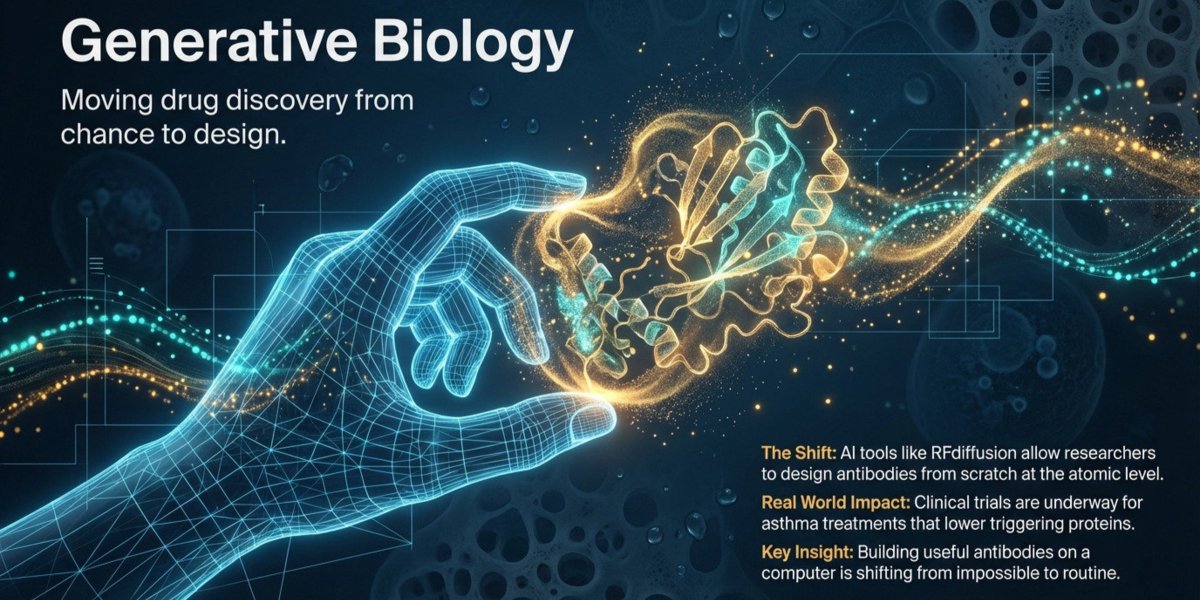
The new wave of generative AI models treats antibody structures the way other AI systems treat images or text: as patterns that can be learned, remixed, and reimagined. By training on vast datasets of protein structures and interactions, these algorithms can now propose entirely new antibody designs — ones never seen in nature — tailored to a specific target from the ground up.
One of the most notable advances comes from Nobel Prize winner David Baker’s lab at the University of Washington. His team upgraded an AI model called RFdiffusion to design antibodies at the atomic level, handling the flexible protein loops that earlier tools like AlphaFold struggled with. The results — confirmed in lab tests — showed the designed proteins reliably binding their targets at therapeutic doses, with minimal off-target effects.
“Building useful antibodies on a computer has been a holy grail in science,” said study author Rob Ragotte. “This goal is now shifting from impossible to routine.”
Heading Into the Clinic
Academic breakthroughs are one thing; clinical results are another. Generate:Biomedicines, a Massachusetts-based biotech, has already presented Phase 1 data from patients with severe asthma treated with an AI-optimized antibody. A shot every six months meaningfully reduced levels of an asthma-triggering protein, with no serious side effects reported. The company has since launched a global Phase 3 trial enrolling around 1,600 patients.
Other companies are tackling targets previously considered out of reach. Nabla Bio’s JAM platform has demonstrated the ability to design antibodies against G-protein-coupled receptors — a notoriously complex protein class involved in everything from brain signaling to hormone regulation — a target class that has long frustrated drug developers.
The Road Ahead
The vision is ambitious: AI that can handle the entire antibody development pipeline, from predicting binding sites to generating candidates to ranking them for optimization. Future systems might even design antibodies capable of crossing the blood-brain barrier, opening doors to treatments for Alzheimer’s and other neurological conditions.
But significant challenges remain. Because AI-generated proteins are entirely novel, the body’s immune system may treat them as foreign — potentially triggering dangerous immune reactions. Safety will be the defining test as these molecules move through clinical trials.
Still, the momentum is undeniable. As Generate:Biomedicines CEO Mike Nally put it, “Generative biology is moving drug discovery from a process of chance to one of design.” If the clinical results continue to hold, AI-designed antibodies could reshape pharmaceutical development as profoundly as any technology in the field’s history.
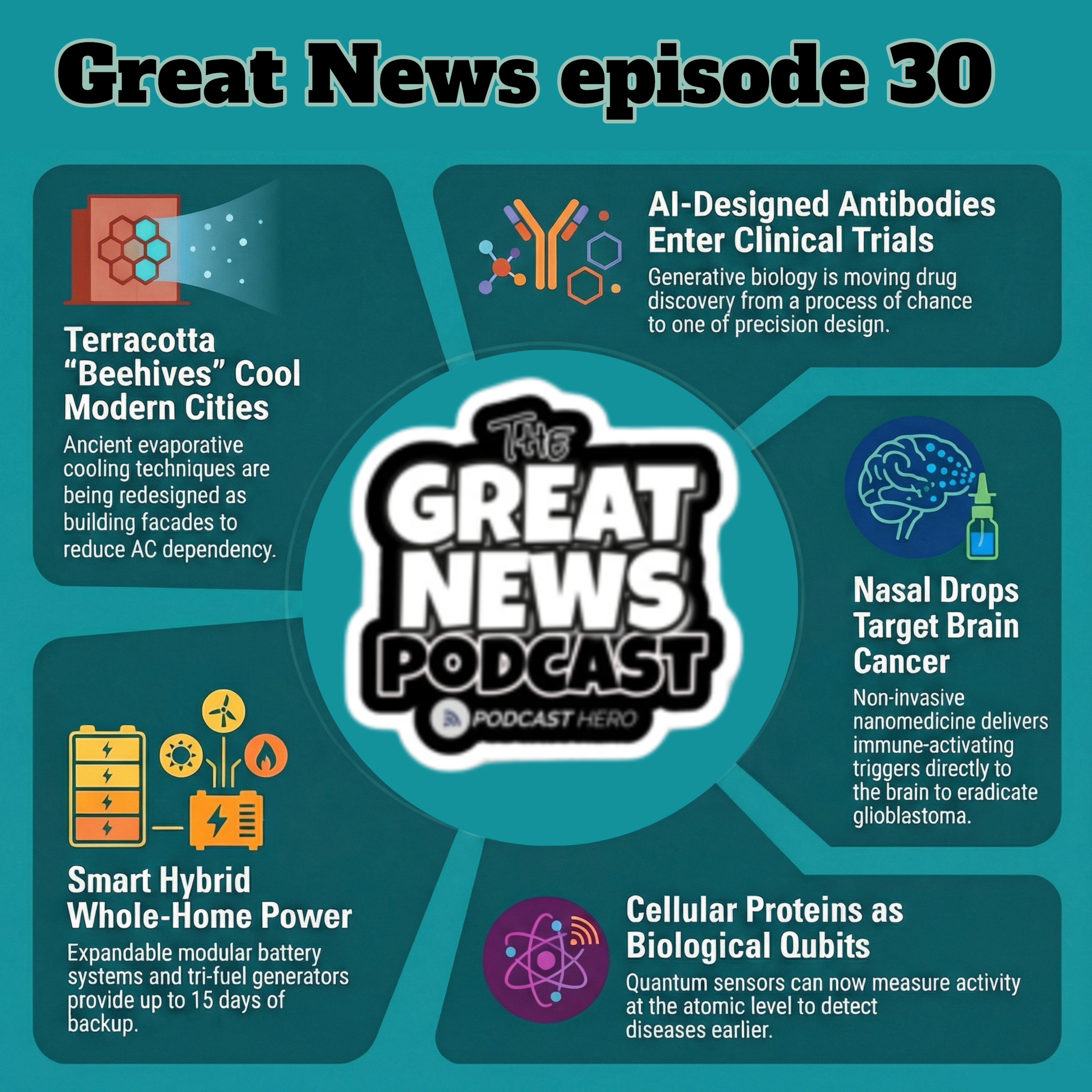
This topic was featured on Great News Podcast Episode 30

Because good news should be heard…
Today, we are exploring how artificial intelligence is moving medicine from a game of chance to a masterwork of design. Plus, we’ll look at a cooling system inspired by ancient beehives, a non-invasive nasal drop that could tackle the deadliest brain cancers, and a backup power system that ensures you’ll never even notice a blackout.
How AI Is Reinventing the AntibodyClay, Cool Air, and a 5,000-Year-Old IdeaNasal Nanodrops: A Promising New Weapon Against the Deadliest Brain CancerNever Get Caught in the Dark Again
And stay tuned for our speed round, where we’ll cover everything from quantum biological sensors to the ”switch” that might repair the human liver.
Source: Singularity Hub