

Welcome to the Daily Quote, the podcast designed to kickstart your day in positive way. I'm your host Andrew McGivern and this episode is brought to you by the Great News podcast, because good news should be heard and the link is in the show notes.
Today's quote comes from Michel de Montaigne, 16th century French philosopher, statesman, and the man widely credited with inventing the personal essay as a literary form.
A man who spent much of his adult life in genuine physical pain, suffering from a severe hereditary kidney disease that caused him constant discomfort throughout his later years.
A man who knew real suffering deeply, and who, from that place, identified a second kind of suffering that most of us inflict entirely on ourselves.
From his Essays, he wrote:
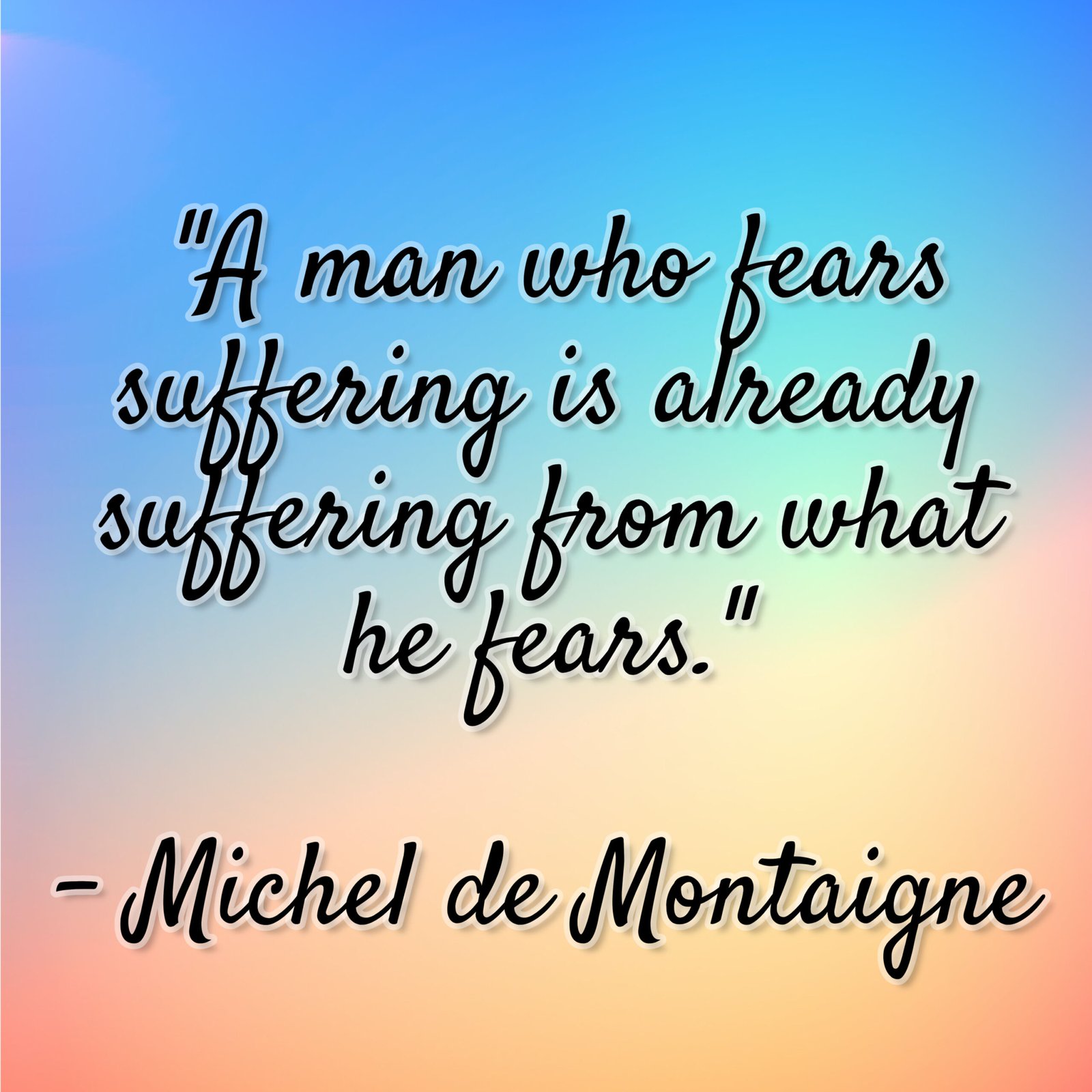
”A man who fears suffering is already suffering from what he fears.”
There are two kinds of suffering in that sentence. Only one of them is real. The first is the suffering that arrives, the difficulty, the loss, the pain, the thing you were dreading that actually happens.
That suffering is real. It has weight and texture and it asks something genuine of you. You go through it, as Frost said. You root yourself in it, as Jung said. You face it honestly and move through it and come out changed on the other side.
The second kind of suffering is the one Montaigne is pointing at, the suffering that exists entirely in anticipation. The suffering of imagining the thing before it arrives. The sleepless night before the difficult conversation. The months of dread before the medical result. The years spent avoiding a decision because of what might happen if it goes wrong. The career unlived, the relationship unpursued, the opportunity untaken, all because the imagined suffering of failure felt too heavy to risk.
Here is what makes Montaigne's observation so devastating: the imagined suffering is often longer, heavier, and more exhausting than the real thing ever turns out to be. He wrote extensively throughout his Essays on the realities of illness, ageing, and death, precisely because he wanted to familiarize himself with their inevitability, to rid himself of fear's tyranny by looking at what he feared directly rather than flinching away from it.
He found, consistently, that the looking was less terrible than the not-looking. That the fear of the thing cost more than the thing itself. Modern psychology has a name for this pattern. Anticipatory anxiety, the mind's tendency to simulate negative future events with far more intensity and duration than those events, when they arrive, actually warrant. We are, by design, catastrophizers.
The brain rehearses danger to prepare for it, but it cannot distinguish between preparation and the experience itself. So it suffers. Before anything has happened. Sometimes for years before anything has happened.
And sometimes in anticipation of things that never happen at all. Montaigne's invitation is simple and radical: stop paying in advance for a debt that may never come due. The suffering you're carrying right now, how much of it is real, and how much of it is the shadow of something that hasn't arrived yet?
So here's the question: What are you currently suffering from, in anticipation, that hasn't actually arrived yet?
Because Montaigne isn't telling you the hard things won't come. Some of them will. He knew that better than most.
What he's telling you is that paying for them twice: once in fear and once in reality, is a choice. And the first payment is always optional. Stop suffering from what you fear. Save the cost for if it actually comes.
That's it for today. I'm Andrew McGivern and I'll see you in the next one with another Daily Quote.