By age 50, one of your most critical immune organs has largely turned to fat. The thymus, a small organ near your heart responsible for producing infection-fighting T cells, atrophies dramatically with age—leaving your immune system increasingly unable to defend against disease, respond to vaccines, or detect emerging cancers.
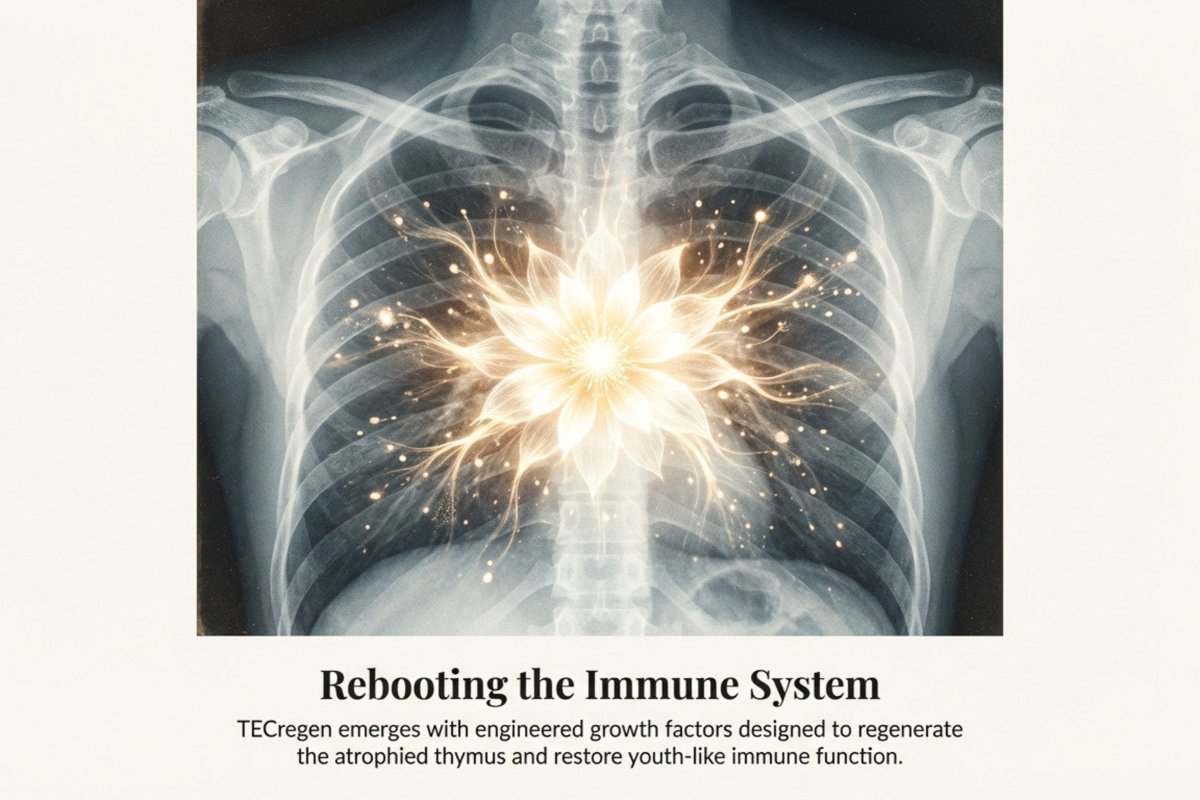
But a growing field of biotech companies is racing to reverse this decline. The latest entrant, Swiss startup TECregen, emerged this month with a novel approach to regenerating the aged thymus and restoring immune function at its source.
The Thymus Problem
The thymus is responsible for the maturation of T cells of the adaptive immune system, and the supply of new T cells is critical to the maintenance of effective immune function over time. Unfortunately, the thymus atrophies over the course of adult life, and in most people is largely made up of inactive fat tissue by as early as 50 years of age.
The result? The diminished supply of replacement cells ensures that the T cell population thereafter becomes ever more made up of malfunctioning, exhausted, and senescent cells incapable of mounting an effective response. This contributes to weaker vaccine responses, slower recovery from infections, and diminished surveillance against cancer.
The Delivery Challenge
Scientists have known for years how to regrow the thymus. Delivery of recombinant keratinocyte growth factor reliably regrows the thymus in aged mice and non-human primates. The problem? When given systemically at doses high enough to reach the thymus effectively, these growth factors cause serious side effects in other tissues.
There are as yet no robustly demonstrated ways to target therapies to the thymus other than direct injection, a procedure that carries sufficient cost and risk to make it infeasible for widespread use in older individuals.
This is the core challenge that has kept thymus regeneration therapies from reaching patients—not the biology, but the delivery.
TECregen’s Solution
TECregen is developing engineered biologics it calls “thymopoietics” designed to regenerate thymic epithelial cells—the structural backbone that allows T cells to mature properly. The company claims its approach involves engineering growth factors to be functionally selective and tissue-targeted, concentrating their activity in the thymus while minimizing off-target effects.
If successful, this would restart the production of healthy, diverse T cells and restore immune resilience across conditions ranging from immune aging to cancer-related immune suppression.
A Growing Field
After something of an abandonment of efforts following 2010s work, the past few years have seen a number of programs make the leap from academia to industry. TECregen joins several other biotech startups now competing to crack this problem, each pursuing different delivery mechanisms and therapeutic approaches.
The stakes are high. The gradual loss of thymic function is increasingly viewed as a biological bottleneck for healthy aging. Solving the delivery challenge could unlock one of the most direct interventions we have for reversing immune aging—not just managing symptoms, but restoring the body’s capacity to produce fresh, functional immune cells.
The question is no longer whether we can regenerate the thymus. It’s whether someone can figure out how to do it safely, effectively, and affordably enough to transform this from a laboratory curiosity into a therapy that can help millions of aging adults reclaim their immune resilience.
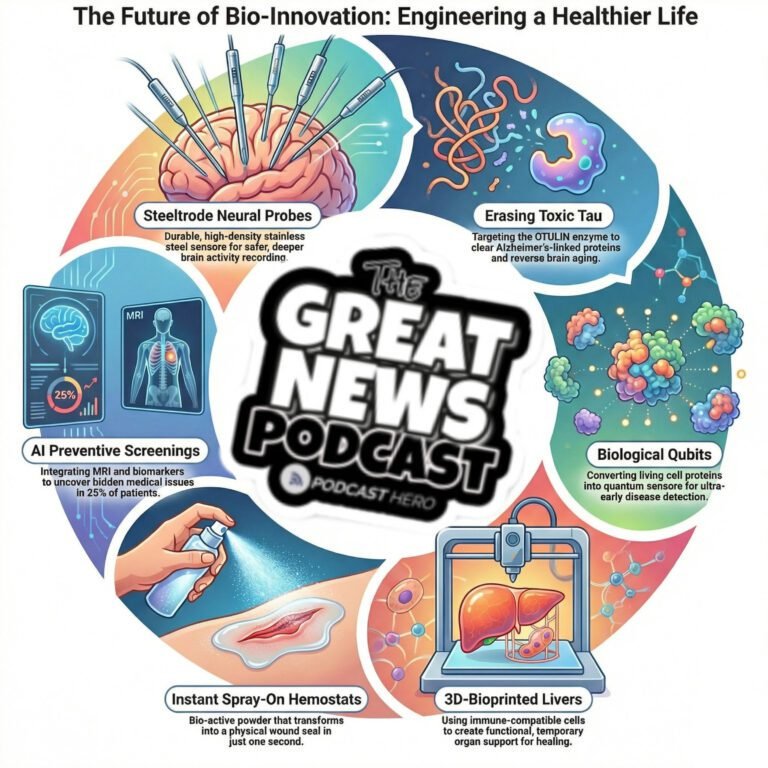
This topic was featured in Great News podcast episode 30
Source: Fight Aging!