Cellular Reprogramming restores memories
For decades, the idea of reversing cognitive decline felt like science fiction. But a study published in Neuron earlier this year suggests we may be closer to that reality than anyone expected — and the mechanism is as elegant as it is surprising.
Targeting the Neurons That Hold Our Memories
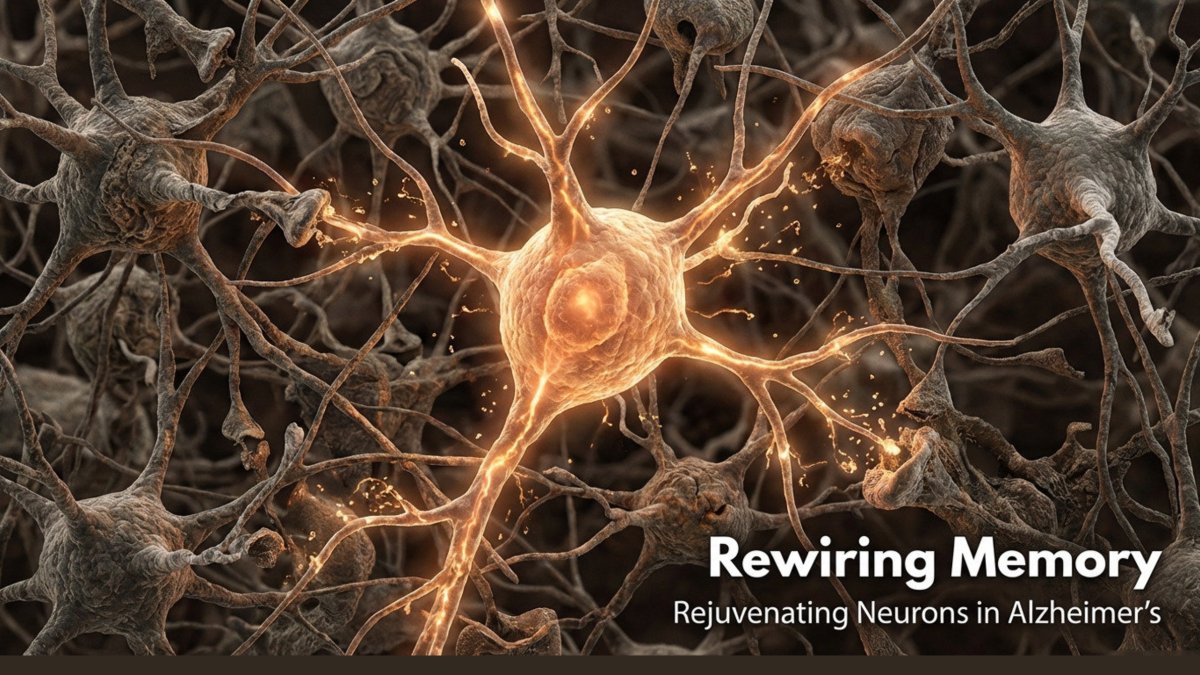
Researchers at the Swiss Federal Technology Institute of Lausanne (EPFL) set their sights on a specific type of neuron: engram cells, the clusters of neurons that physically encode individual memories. Rather than broadly treating the brain, they developed a way to rejuvenate only the neurons active during a learning event — essentially, the cells doing the work of remembering.
To do this, they used a partial cellular reprogramming cocktail called OSK, made up of three of the four Yamanaka factors — Oct4, Sox2, and Klf4. These factors are known to wind back the biological clock of cells. Crucially, the fourth factor, cMyc, was left out. That omission is deliberate: without cMyc, cells can be rejuvenated without losing their identity, meaning neurons stay neurons rather than reverting to an undifferentiated state.
A Clever Delivery System
The team used a dual-virus (AAV) system with a surprisingly intuitive design. One virus carries an activator that switches on only when a neuron fires during learning. The other encodes the OSK reprogramming factors. The whole system is controlled by doxycycline in the mice’s drinking water: remove it, and a window opens in which only the neurons active during learning get tagged and treated. Reintroduce it, and the process shuts off.
This means the reprogramming is precise — targeted to the exact cells involved in a specific memory, not the whole brain.
What Happened to the Mice?
The results were striking. Middle-aged mice, which naturally show age-related memory decline, were restored to young-like performance on fear memory tests after OSK treatment. The reprogrammed neurons were more likely to reactivate during recall, suggesting the memories were not just encoded but better preserved. Importantly, the researchers confirmed that neuronal identity was maintained — the cells became more themselves, not less.
The team then tested the approach in two different mouse models of Alzheimer’s disease. Untreated Alzheimer’s mice struggled with spatial navigation in the classic Morris water maze, relying on inefficient, random-like strategies. OSK-treated Alzheimer’s mice regained normal learning progression, taking shorter paths and using spatial reasoning. The effect held whether the researchers targeted the hippocampus (key for recent memory) or the medial prefrontal cortex (key for remote, long-term memory).
A Cognitive Age Clock
In a creative final experiment, the team built a model that predicts a mouse’s age based on how it learns. When applied to OSK-treated aged mice, the model estimated them to be significantly younger than their actual age. For Alzheimer’s mice, untreated animals showed accelerated cognitive aging — but OSK-treated ones returned to their chronological age baseline.
Why This Matters
One of the biggest fears around brain reprogramming has always been: what if it erases memories? This study offers reassurance on that front. Rather than scrambling what’s stored, OSK treatment enhanced the stability and recall of memories. The treated engram neurons showed reinforced identity, not destabilized function.
The approach is also timely. The OSK cocktail is the same formula being used in what is reportedly the first FDA-cleared clinical trial of cellular reprogramming in humans. While the mouse results don’t guarantee human outcomes, they add meaningful weight to a growing body of evidence.
We are still early. But the idea that we might one day treat Alzheimer’s — or simply the cognitive fog of aging — by gently rewinding the biological clock of the very neurons that hold our memories? That’s no longer science fiction. It’s a hypothesis being actively tested, and so far, the mice remember.
This topic was featured in Great News podcast episode 32.

The Great News Podcast is your source for positive news, inspiring stories, and good news from around the world. We skip the doom and gloom of mainstream media to focus on scientific breakthroughs, environmental wins, and the inspiring news that proves the world is getting better. Join Andrew McGivern for a dose of optimism and uplifting stories that will change your perspective on human progress.
It is easy to find the
Keep looking for the good in the world, because it is not only there – its everywhere.
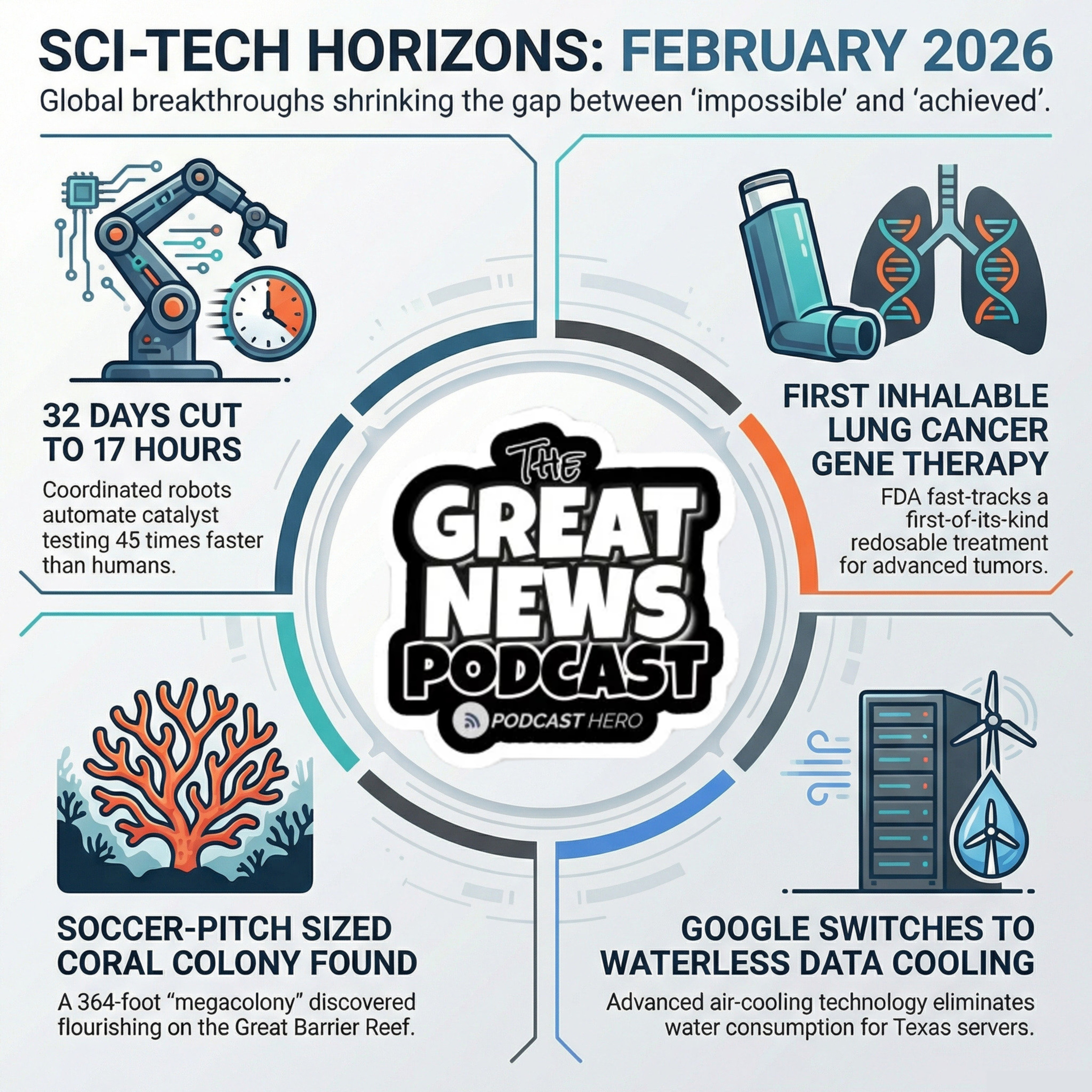
Today, we are diving into a ”fountain of youth” for the brain, a massive underwater discovery by a mother-daughter duo, and a plan to save the world's most popular fruit. Plus a new water free data center…
Can We Reprogram Our Way Out of Alzheimer's?
A Mother, a Daughter, and the World's Largest Coral Discovery
Protecting Commercial Bananas From Fungus
New AI Data Center to Use Zero Water?
And don't forget to stick around for the speed round:
Robots Are Transforming the Chemistry Lab — One Catalyst at a Time
Breathe In, Fight Back: The World's First Inhalable Gene
Therapy for Cancer Just Got Fast-Tracked
Why Your Funniest Teacher Was Probably Your Best Teacher
Source: Lifespan.io