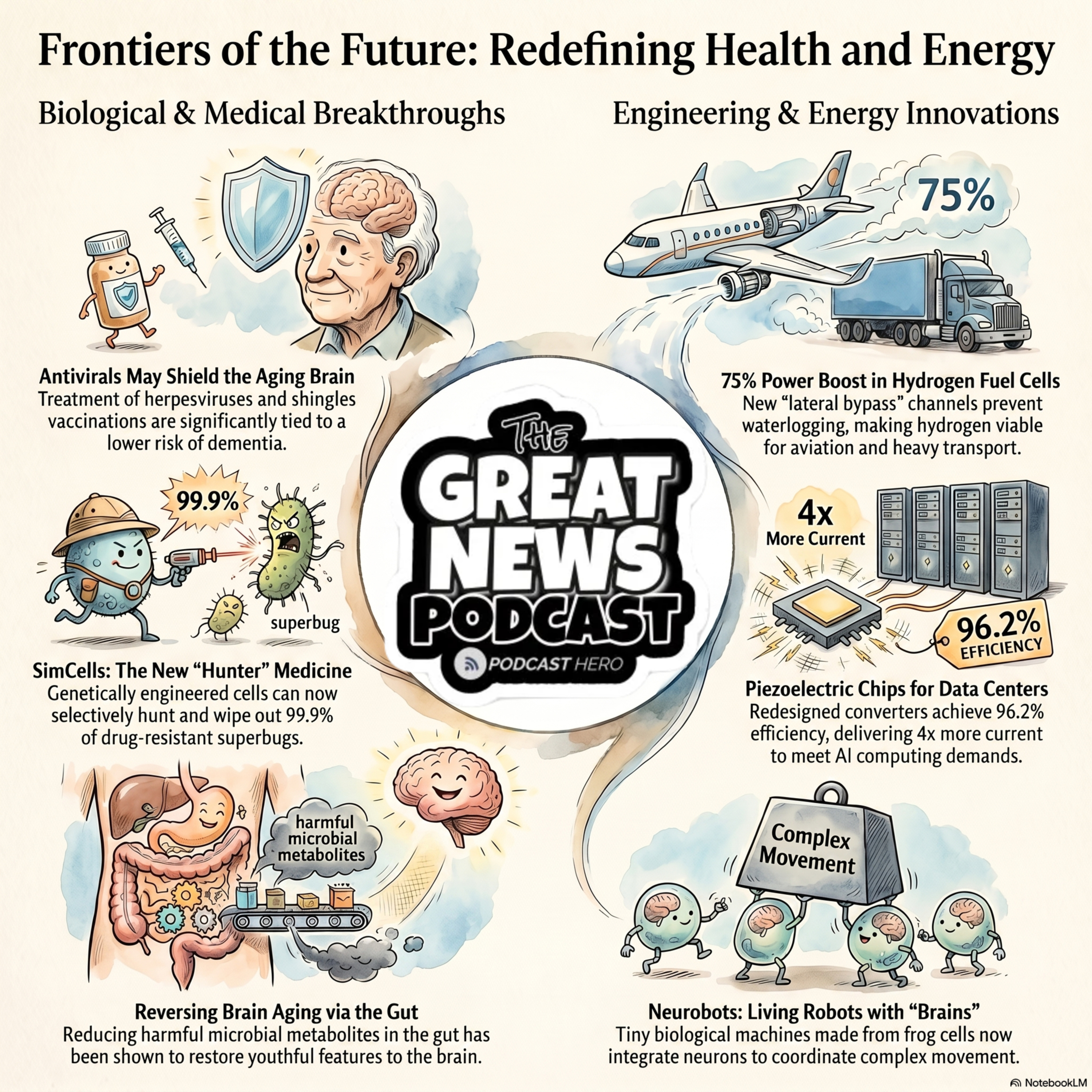
Researchers at the University of Oxford have developed a groundbreaking way to fight dangerous “superbugs” that does not rely on traditional antibiotics. These superbugs are bacteria that have evolved to survive our current medicines, creating a massive global health challenge that could cause millions of deaths in the coming decades.
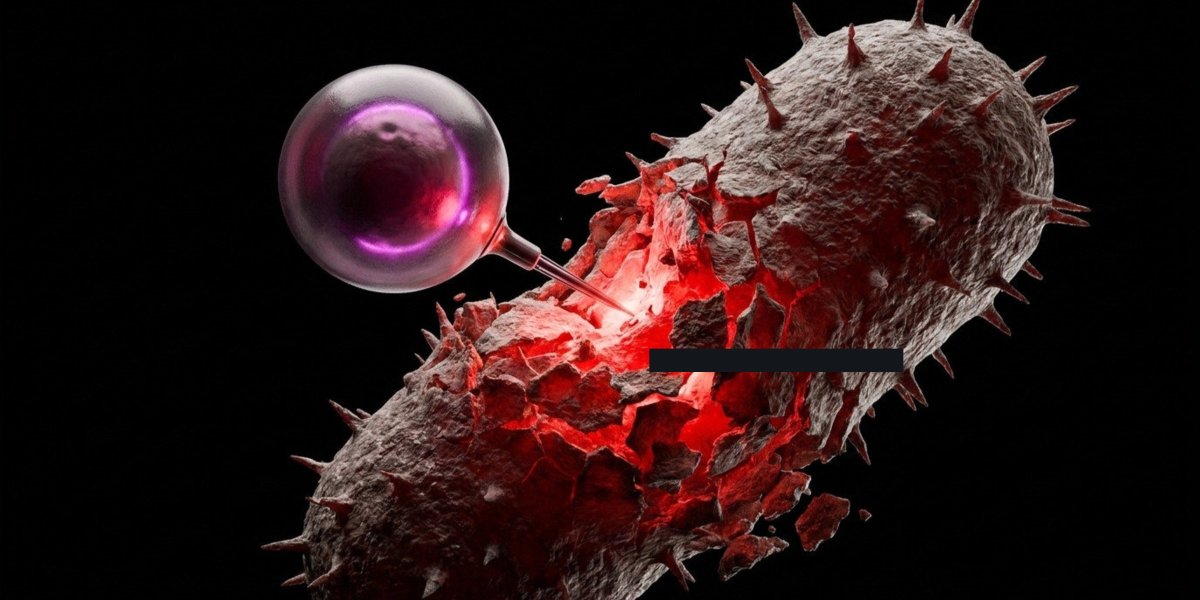
Instead of a standard drug, scientists are using something called “SimCells,” which are essentially harmless bacteria that have been rewired into tiny biological hunters. To ensure they are safe, the team stripped these cells of their ability to reproduce, meaning they can perform their mission without growing out of control inside a patient’s body.
These hunter cells work using a clever “one-two punch” system:
- The Search: They are equipped with tiny “hooks” that allow them to find and latch onto specific bad bacteria.
- The Strike: Once they find their target, they use “nano-needles” to inject toxins and chemicals that cause the bad bacteria to collapse and die.
In laboratory tests, this method was incredibly fast and effective, wiping out 99.9% of targeted bad bacteria in just 24 hours.
One of the most exciting benefits of this technology is its precision. Unlike traditional antibiotics, which often kill off the “good” bacteria in our guts as collateral damage, these hunters are designed to only attack the specific bad bugs they were programmed to find.
Because this approach is so different from how we currently fight germs, it is much harder for bacteria to develop a resistance to it. While this “smart living drug” still needs to undergo testing in humans, it represents a hopeful new frontier in protecting the world from future pandemics.
Read More – A new weapon in the fight against superbugs.
This topic was featured on Great News Episode 40

The Great News Podcast is your source for positive news, inspiring stories, and good news from around the world. We skip the doom and gloom of mainstream media to focus on scientific breakthroughs, environmental wins, and the inspiring news that proves the world is getting better. Join Andrew McGivern for a dose of optimism and uplifting stories that will change your perspective on human progress.
It is easy to find the
Keep looking for the good in the world, because it is not only there – its everywhere.
Here are the latest great news stories from greatnewspodcast.com, brought to you by the Daily Quote, a podcast designed to kickstart your day in a positive way.
I'm Andrew McGivern, and this is the Great News Podcast.
First up, our lead story:
A new weapon in the fight against superbugs.
Researchers at the University of Oxford have developed a ”smart living drug” that can hunt down and destroy deadly, antibiotic-resistant bacteria in a single day. Instead of traditional antibiotics, which are becoming less effective, they used ”SimCells” (short for simple cells).
Moving on to a major development in brain health: common vaccines might be doing more than just preventing infections.
A large-scale meta-analysis of 45 studies suggests that shingles vaccines and antiviral drugs are associated with a significantly lower risk of dementia.
Next, let's look at a breakthrough for the planet.
Researchers at UNSW have redesigned hydrogen fuel cells to solve a critical flaw that has long blocked their commercial use.
Finally, a team of medical biologists in the Czech Republic is testing a revolutionary ”personalized” cancer therapy that turns a patient's own tumor into a vaccine.
Speed Round:
- AI Power Boost: Engineers at UC San Diego developed a new hybrid piezoelectric chipfor AI data centers that is 96.2% efficient and delivers four times more current, potentially slashing energy losses in the age of AI.
- Italian firms are deploying humanoid robot welders to shipyards. Equipped with ”Physical AI,” these robots will work alongside humans to handle repetitive, dangerous tasks, improving safety and production quality.
- Scientists at Harvard’s Wyss Institute have created ”Neurobots”—tiny living robots made from frog cells that have their own integrated nervous systems.
- An online supermarket in Belgium is testing the Clevon 1, a fully driverless delivery robot. It navigates narrow city streets to bring groceries directly to customers' doors via a 5G connection.
- A new study suggests that microplastics in the environment may be overestimated because standard lab gloves (nitrile and latex) can shed particles that look identical to plastic under a microscope.
- Scientists discovered that depleting the gut microbiome in aged mice actually reversed aspects of brain aging, improving memory and vascular density, suggesting that targeting ”microbial inflammation” could be a non-invasive way to promote cognitive resilience.
That’s it for today’s episode of Great News. Until next time, I'm Andrew McGivern. Keep looking for the good in the world, because it's not only there, it’s everywhere.