
Today, we are celebrating everyone’s favourite bean with a special ”Coffee Edition.”
First up, our lead story: a scientific discovery that explains exactly why coffee is such a powerhouse for your health. Researchers at Texas A&M University have finally uncovered a hidden cellular switch that helps protect your cells from stress, inflammation, and damage. This finding provides a long-awaited biological mechanism for why coffee drinkers tend to live longer.
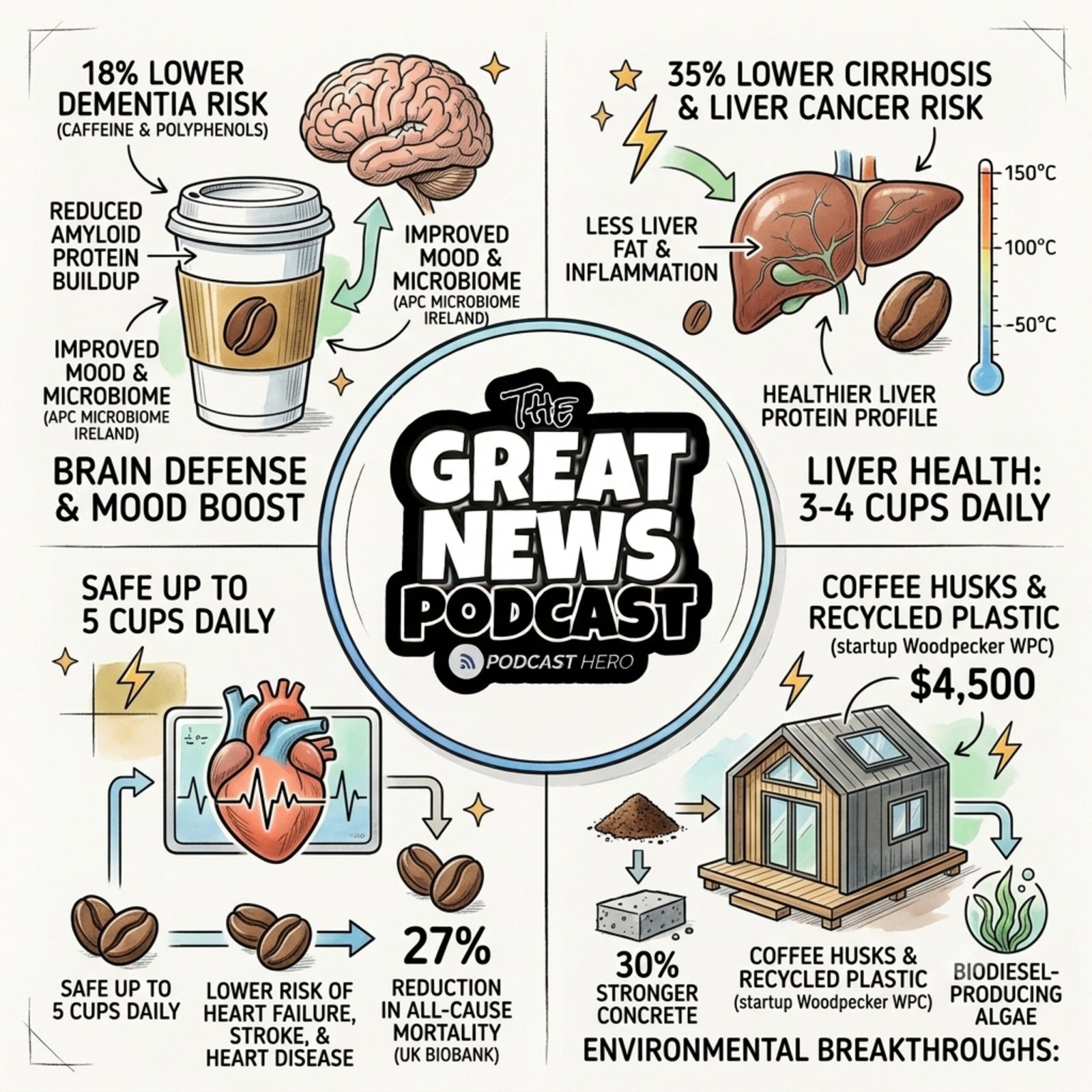
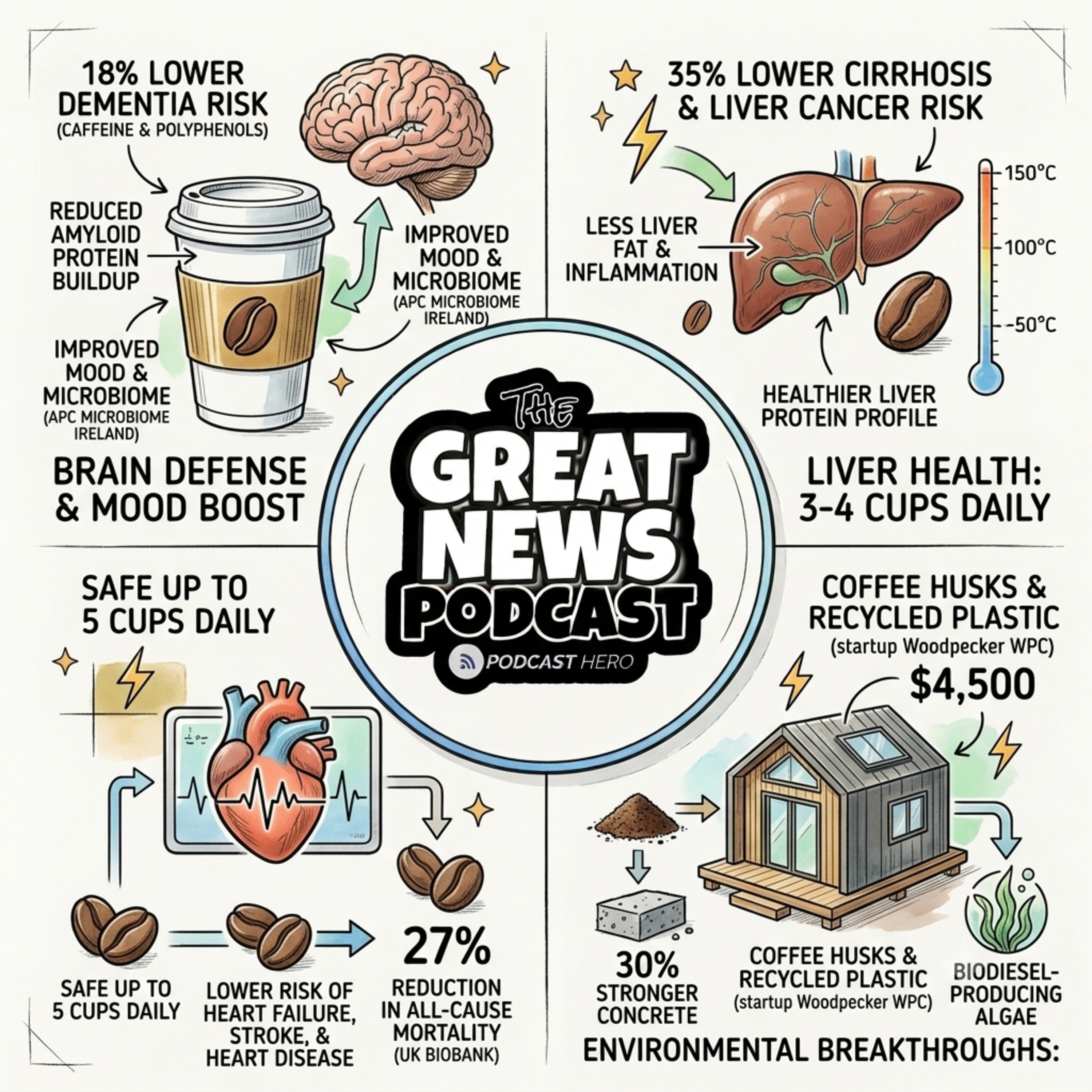
New research from APC Microbiome Ireland has revealed that coffee reshapes your microbiome in ways that significantly improve mood and lower perceived stress, regardless of whether you drink caffeinated or decaf.
Evidence from a massive study of more than 130,000 people, led by investigators from Harvard and Mass General Brigham, suggests that drinking two to three cups of coffee a day can reduce dementia risk and slow cognitive decline.
A large-scale study involving over 350,000 participants in the U.K. Biobank has linked regular coffee consumption to significantly lower rates of liver disease and cancer.
While coffee was once viewed as a cardiovascular risk, the American Heart Association now states that consuming up to five cups a day is generally safe for most adults and may actually lower the risk of heart failure, stroke, and heart disease. Furthermore, data from the UK Biobank shows that drinkers of ground coffee see a 27% reduction in all-cause mortality.
Now, if you like the Great News Podcast, you’ll love the Great News Letter, because the Great News Podcast is great, but the Great News Letter is greater. The link is in the show notes.
All right, let’s race through the latest improvements in coffee’s environmental impact:
- Colombian startup Woodpecker WPC is turning coffee husks and recycled plastic into sustainable housing kits that cost just $4,500 and can be built in a week.
- Researchers in Australia found that replacing 15% of sand in concrete with waste coffee grounds makes the material 30% stronger.
- A study from Aston University shows that spent coffee grounds can be used to grow biodiesel-producing algae, offering a sustainable alternative to palm oil.
- Ford and McDonald’s are teaming up to turn coffee ”chaff” into car parts like headlamp housings that are 20% lighter.
- Swiss company CoffeeB has launched compostable ”Coffee Balls” encased in a seaweed layer that breaks down in just four weeks.
- Designer Uyen Tran is recycling coffee grounds and shellfish waste into a biodegradable leather alternative called Tômtex.
- Seven Cafe is now using hydrogen roasting to cut CO2 emissions while creating a smoother, less bitter flavour.
- Czech platform Coffee!Up is turning office waste into a ”cascade” of products including premium skincare oil and carbon-negative biochar.
- The International Center for Circular Economy in Coffee (C4CEC) launched in Italy to eliminate waste across the entire industry, reminding us that coffee is a fruit and we currently waste 95% of it.
- The upcycled coffee fruit extract market is projected to reach $865 million by 2036, as brands like KonaRed turn cherry pulp into high-value antioxidants.
- Nescafé has already surpassed its 2025 goal, sourcing 32% of its coffee from farmers practicing regenerative methods to improve soil health.
- As of 2026, the industry is moving toward ”de-aluminumization,” with traditional foil bags being replaced by recyclable mono-materials and nano-barrier paper.
- 2026 Coffee Barometer: This milestone 20th-anniversary report is pushing the industry for unified collective action to ensure coffee remains a thriving, sustainable sector.
And finally, my favourite quote of the day from the Daily Quote podcast this week comes from punk legend and coffee enthusiast Henry Rollins, who once said: “What goes best with a cup of coffee? Another cup.”
Now we know that advice isn’t just rock and roll, it’s backed by life-saving science!