
Welcome to the Daily Quote, the podcast designed to kickstart your day in a positive way. I'm your host Andrew McGivern, and this episode is brought to you by the Great News podcast. Why should you listen… because good news should be heard. The link to all the podcast apps is in the show notes.
Today's quote comes from Dwight D. Eisenhower — Supreme Commander of Allied Forces in World War II, architect of the D-Day invasion, and 34th President of the United States.
He once said:
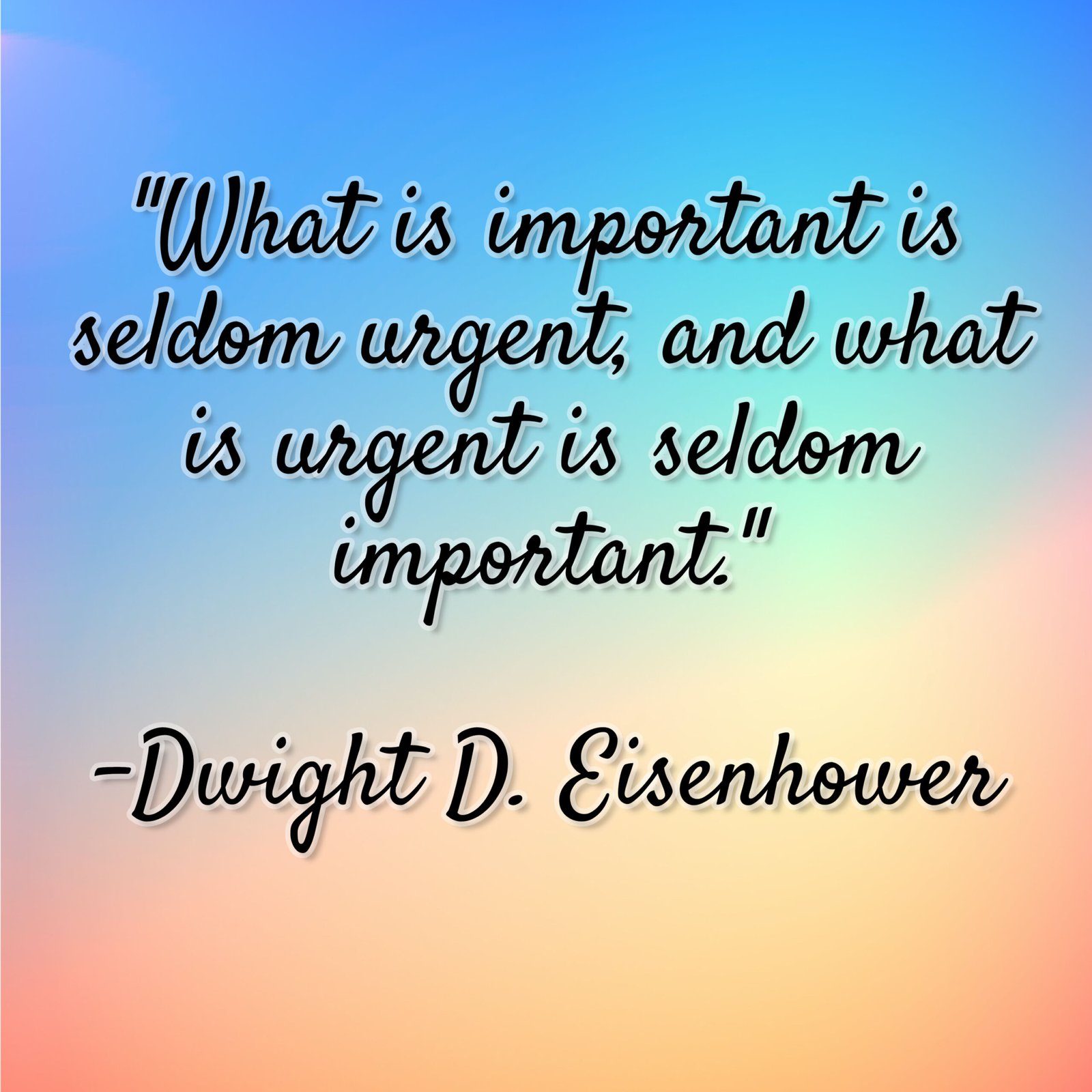
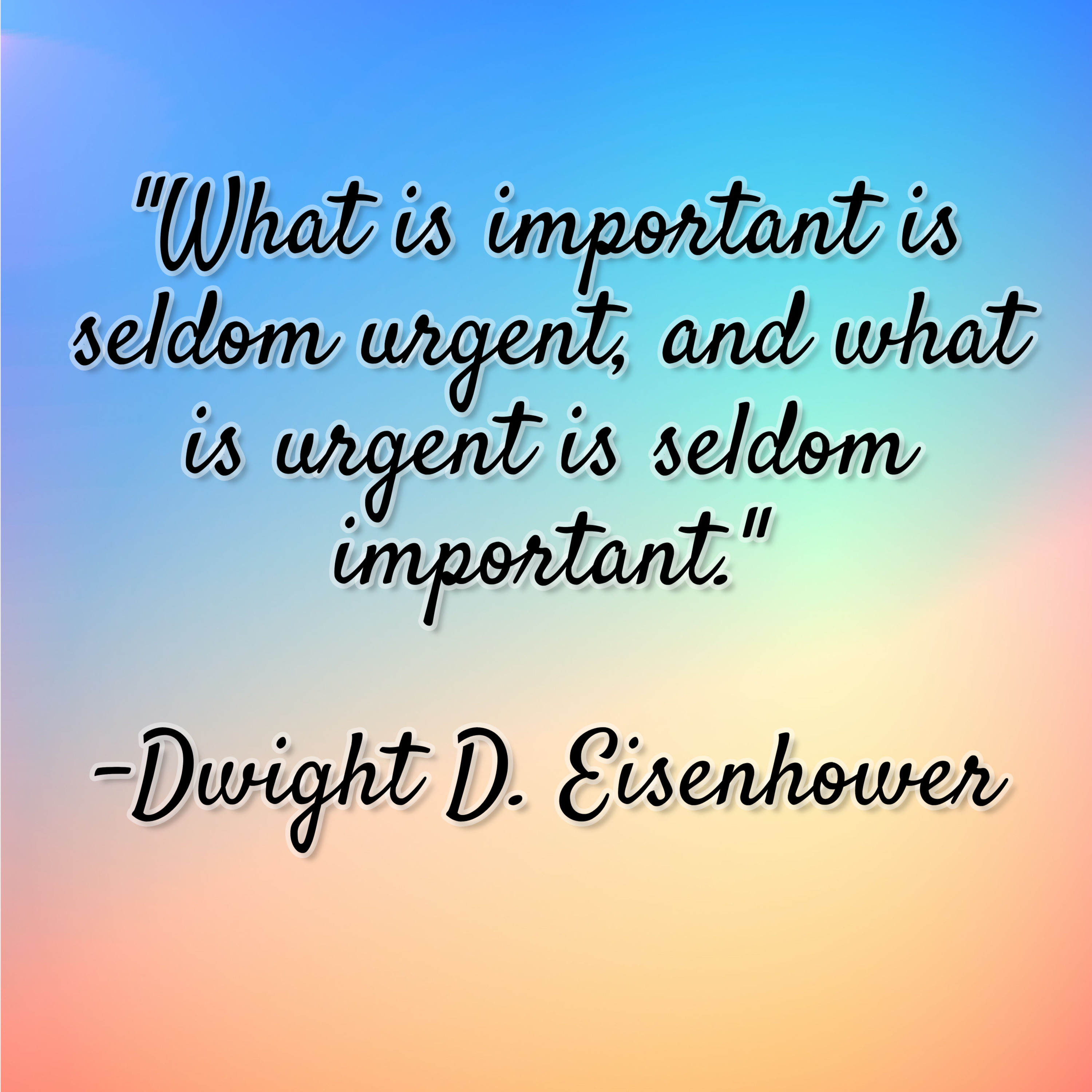
”What is important is seldom urgent, and what is urgent is seldom important.”That quote became the foundation of one of the most useful frameworks in all of personal development, the Eisenhower Matrix, brought to a global audience by Stephen Covey in The 7 Habits of Highly Effective People. And it works like this.Picture a simple grid — four boxes divided by two questions. Is this task important? And is it urgent?
Quadrant One: urgent and important. Your genuine crises. The deadline that's today. The emergency that can't wait. These get done immediately. Because they have to. But Covey warns that if you live here permanently, the quadrant keeps expanding until it consumes you. It's like a pounding surf, a huge problem comes and hits you, knocks you down, and just as you recover, another one comes. Crisis management is a trap, not a strategy.
Quadrant Two: important but not urgent. Your health. Your relationships. Your long-term planning. Your personal growth. The work that builds something meaningful over time. No deadline is screaming at you. Nobody is chasing you. And that's exactly why most people never get there because these things require more initiative and more proactivity. We must act to seize opportunity, to make things happen. Covey called this the Quadrant of Quality. It's where your best life is built.
Quadrant Three: urgent but not important. The ringing phone. The meeting that could have been an email. The request that feels pressing but serves someone else's priorities, not yours. Most people spend enormous time reacting to things that are urgent, assuming they are also important but the urgency of these matters is often based on the priorities and expectations of others. Delegate these wherever you can.
Quadrant Four: not urgent and not important. Distraction. Noise. The scroll. Eliminate it.Covey's central insight cuts through all four quadrants with one sentence:”The key is not to prioritize what's on your schedule, but to schedule your priorities.” Hmmm… that one could be a Daily Quote episode on its own.
Most people let urgency decide. Whatever is loudest, whatever is pressing hardest, whatever is making the most noise gets the time. And the important things, the ones that actually build the life they want, get the scraps. Whatever's left after the urgent is finished. Which is usually nothing.
The person who wins the long game inverts that. They protect Quadrant Two first. They block the time for what matters most before the urgent can colonize it. Then they handle everything else from a position of intention, not reaction.Building this podcast lives in Quadrant Two. No urgency because nobody is chasing me for an episode. No crisis if I skip a day. Just something important, that requires showing up consistently, that builds something meaningful over time.So here's the question: Look at where your time actually went this week, not where you intended it to go, where it actually went. Which quadrant did most of it land in?
Because Eisenhower understood that the loudest problems are rarely the most important ones. And Stephen Covey spent a career showing the rest of us exactly what to do about it.Schedule your priorities. Before the urgent does it for you.
That's it for today. I'm Andrew McGivern — I'll see you in the next one with another Daily Quote.