A New Weapon Against Solid Tumors:
CAR T-cell therapy has been a genuine revolution in treating blood cancers like leukemia and lymphoma… but for solid tumors, it has largely hit a wall. Two stubborn obstacles have stood in the way: solid tumors often lack a single, consistent surface target for engineered T cells to lock onto, and they’re frequently surrounded by dense scar tissue and immune-suppressive cells that block treatment from getting through.
A new study from researchers at Memorial Sloan Kettering Cancer Center, published in Cell on March 30, 2026, takes a fresh approach to both problems at once, and the results are striking.
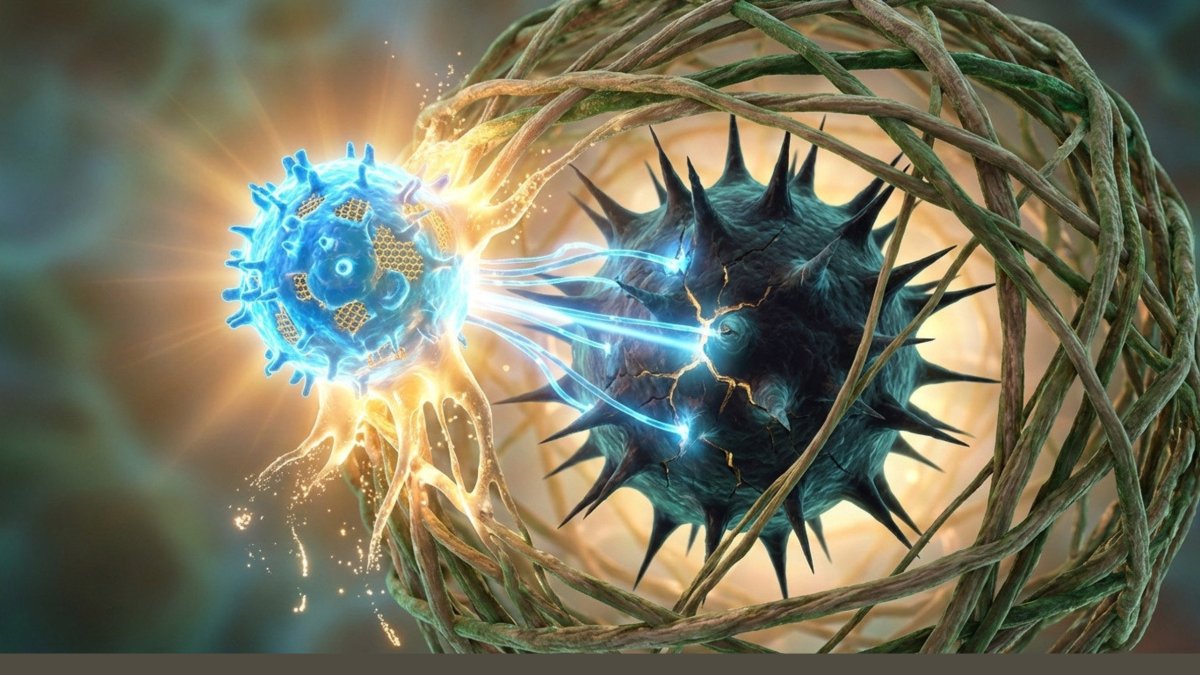
The key is a protein called uPAR (urokinase plasminogen activator receptor). In healthy tissue, uPAR is largely quiet, appearing mainly on a small subset of immune cells involved in wound healing. But in cancer, both tumor cells and their surrounding supportive cells ramp up uPAR production significantly. The MSK team engineered CAR T cells to target this protein, and in doing so, they attacked not just the tumor itself, but the protective “ecosystem” the tumor relies on to survive.
In laboratory models, the approach shrank lung, pancreatic, and ovarian cancers, and even cleared metastases in some experiments. In a mouse model of ovarian cancer, the uPAR-targeting CAR T cells produced durable remissions and mice that had cleared their tumors resisted developing new ones when cancer was reintroduced later, suggesting the engineered cells remained active long-term. Importantly, a single post-surgical dose of the cells also eliminated residual disease that surgery alone couldn’t fully address.
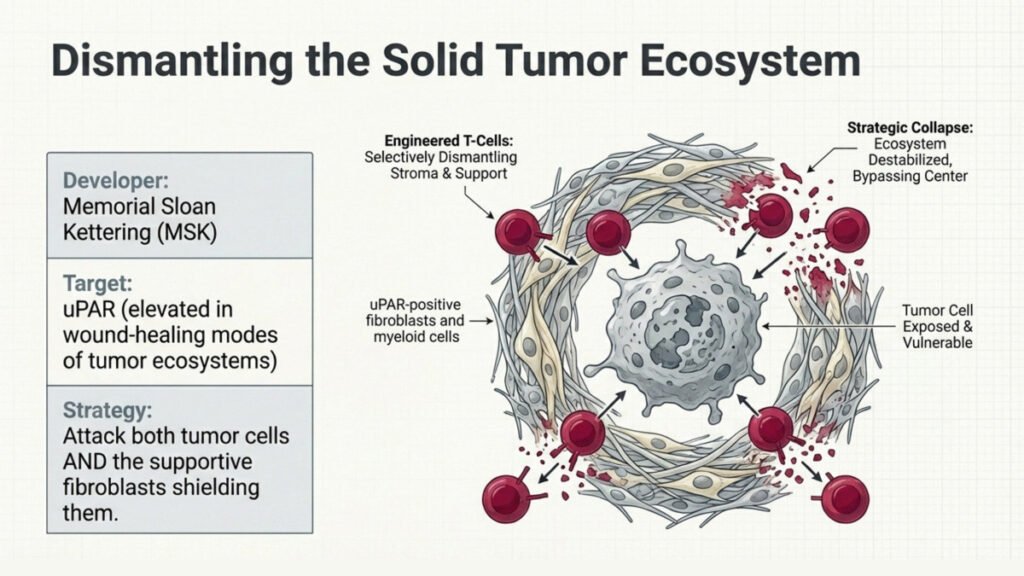
What makes this particularly promising is the breadth of the target. The researchers found uPAR was elevated in 12 out of 14 human cancer types analyzed, with especially high levels in ovarian, pancreatic, colon, lung, and brain cancers. The protein tends to mark the most dangerous, identity-shifting cancer cells, those associated with aggressive behavior, inflammation, and resistance to standard treatments.
The therapy can also be enhanced by pairing it with conventional chemotherapy agents like cisplatin, which induces a state of cellular senescence that raises uPAR levels further, making tumor cells easier for the engineered T cells to find and destroy.
The findings are still preclinical, human safety and efficacy trials are the essential next step. But the science points toward something genuinely new: a CAR T strategy that doesn’t just hunt individual cancer cells, but dismantles the entire tumor support network around them. For cancers that have long resisted immunotherapy, that could change the equation considerably.
This topic is covered in Great News podcast episode 39.

The Great News Podcast is your source for positive news, inspiring stories, and good news from around the world. We skip the doom and gloom of mainstream media to focus on scientific breakthroughs, environmental wins, and the inspiring news that proves the world is getting better. Join Andrew McGivern for a dose of optimism and uplifting stories that will change your perspective on human progress.
It is easy to find the
Keep looking for the good in the world, because it is not only there – its everywhere.
The Great News podcast is brought to you by the Daily Quote.
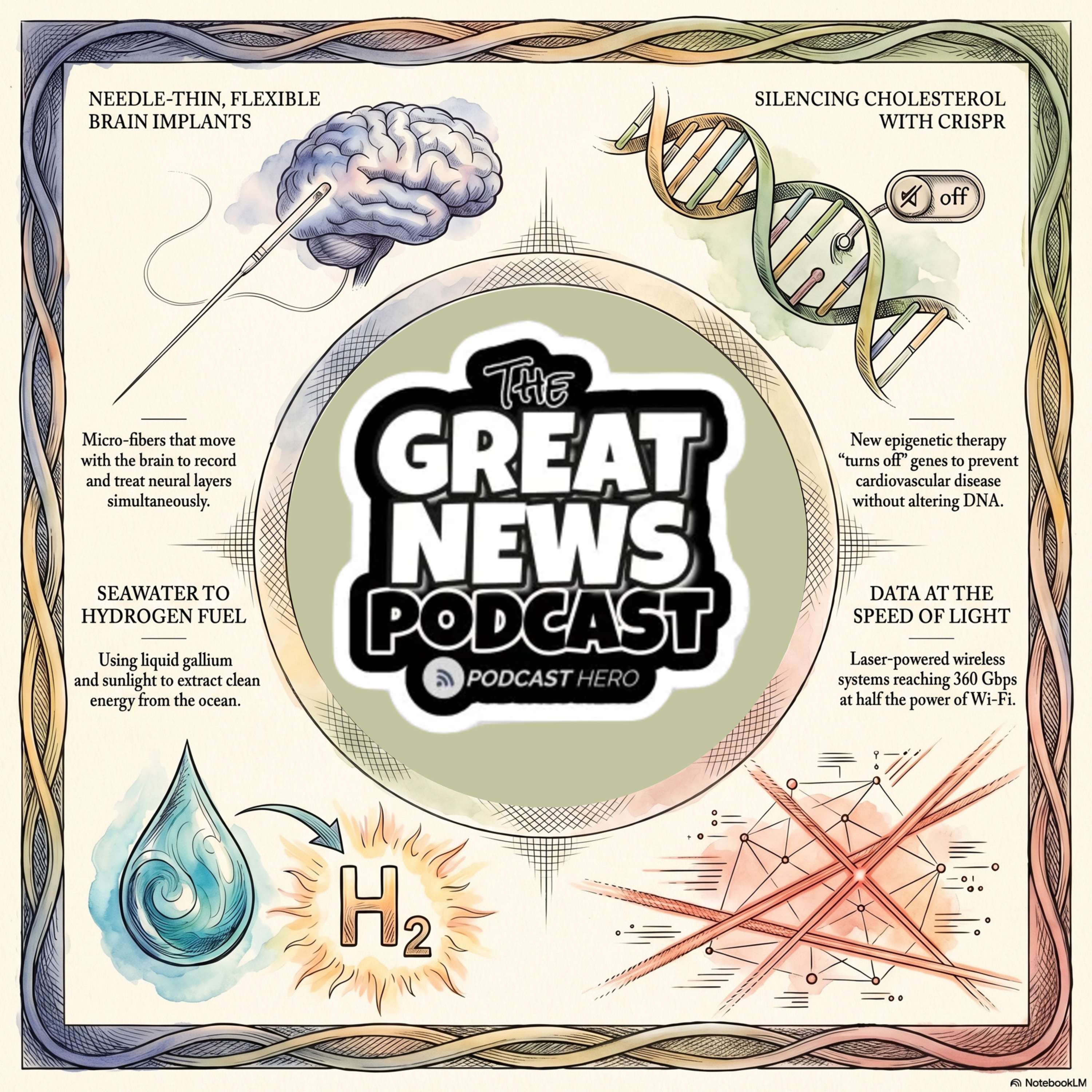
Today, a discovery that could turn our oceans into a source of clean, green fuel. That's our lead story today.
Plus, we’ll look at a ”molecular staple” for hard-to-treat cancers, a way to silence cholesterol without permanently altering your DNA, and a wireless system that’s twice as efficient as Wi-Fi.
Turning Sunlight and Seawater into Hydrogen
How Stapled Peptides Could Change Cancer Treatment
How Laser Tech Is Rewriting the Rules of WirelessAnd don’t forget to stick around for the speed round where we’ll celebrate a historic victory against an ancient disease.Chile Eliminates Leprosy
Revolutionizing Brain Research and Treatment!
How CAR T Therapy Is Learning to Fight Cancer Smarter
If you like the Great News Podcast, you will love the Great News Letter. Because the Great News Podcast is Great but the Great News Letter is Greater!
The Great News Letter is an email newsletter that you can subscribe to for FREE and get all the good news delivered to your email inbox.
For this episode we got some feedback from Brian de V. You can leave feedback for the show too by going to greatnewspodcast.com/feedback.
Or if you listen in Spotify – leave a comment right there as you listen.
Until next time… and there will be a next time.
Keep looking for the good in the world because no only is it there, its everywhere!
Source:
Memorial Sloan Kettering Cancer Center / Zhang et al., Cell, 2026