Canada’s Cancer Fight: Real Progress, Stubborn Challenges
Canada has reason to feel cautiously optimistic about its war on cancer — but also reason to stay vigilant. The Canadian Cancer Society’s latest biennial report paints a picture of meaningful gains, persistent gaps, and a growing urgency to act before hard-won progress slips away.
The Good News
Decades of investment in prevention, screening, and treatment are paying off. Cancer incidence has been declining across many cancer types, survival rates are up, and overall cancer mortality continues to fall. Researchers credit strong public health policies — particularly tobacco control legislation and organized screening programs — for driving down rates of lung and bladder cancers, both closely linked to commercial tobacco use.
“We’re seeing this progress thanks to decades of prevention efforts, as well as better screening and major advances in treatment,” said Jennifer Gillis, PhD, Director of Surveillance at the Canadian Cancer Society. Behind those advances are breakthroughs like liquid biopsy — a non-invasive alternative to traditional tumour biopsies — and the development of cancer vaccines, with clinical trials expected to begin within the next few years.
The Stubborn Reality
Despite the positive trends, the burden of cancer in Canada remains high. An estimated 255,000 Canadians were expected to be diagnosed in 2025, with over 87,000 deaths. Cancer remains the country’s leading cause of death and its leading cause of premature death — accounting for nearly 1.3 million potential years of life lost between 2020 and 2022 alone. As Canada’s population grows and ages, even declining rates translate to more people living with the disease.
A Troubling Outlier: Cervical Cancer
Perhaps the most urgent warning in the report concerns cervical cancer — a disease that is almost entirely preventable. Once steadily declining, cervical cancer rates have now plateaued, and the disease has become the fastest-increasing cancer in Canada, rising at roughly 3.7% per year since 2015.
Canada has set a goal to eliminate cervical cancer by 2040, in line with the World Health Organization’s global strategy. But experts warn that goal is now at risk. HPV vaccination — the cornerstone of prevention — is falling well short of the 90% uptake target needed to get there. Only Newfoundland currently exceeds that threshold. Nationally, uptake ranges from as low as 16% in some regions to 93% in others, leaving enormous gaps in protection.
Screening is also uneven. While some provinces, like British Columbia, have modernized their approach with home-based HPV self-testing, others remain in early stages of transition, slowed by lab capacity shortages, workforce gaps, and limited access to primary care.
Related – There is already a Cure for Cancer (Early Prevention)
What Needs to Happen
The report makes clear that eliminating cervical cancer is still within reach — but only with immediate, coordinated action. Key steps include expanding HPV vaccination programs, standardizing HPV-based screening across all provinces and territories, and removing barriers to access for the most vulnerable communities.
More broadly, Canada’s cancer fight requires sustained investment in research, equitable access to care, and vigilance about the populations being left behind — including Indigenous Canadians, rural communities, and those in lower socioeconomic circumstances.
“Nothing big gets solved by one person,” said Gillis. “We need to act together to keep prevention efforts moving forward for measurable, lasting impact.”
The progress is real. But so is the work still to be done.
This topic was featured on Great News podcast episode 33.

The Great News Podcast is your source for positive news, inspiring stories, and good news from around the world. We skip the doom and gloom of mainstream media to focus on scientific breakthroughs, environmental wins, and the inspiring news that proves the world is getting better. Join Andrew McGivern for a dose of optimism and uplifting stories that will change your perspective on human progress.
It is easy to find the
Keep looking for the good in the world, because it is not only there – its everywhere.
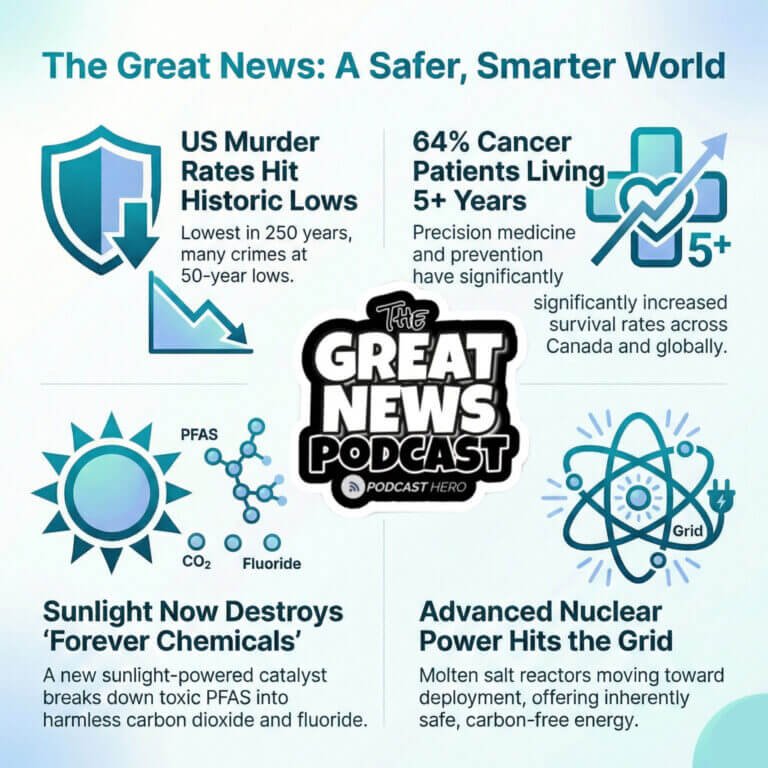
Today we are diving into some truly groundbreaking developments in public safety, medicine, and clean energy.
What if I told you that despite what you see on social media, we are living in one of the safest times in history? That’s our lead story today.
Plus, we have a major update on the fight against cancer, a way to destroy ”forever chemicals” using nothing but sunlight, and a partnership that’s bringing advanced nuclear power to the grid.
America’s Crime Drop Is Real — And That’s Worth Celebrating
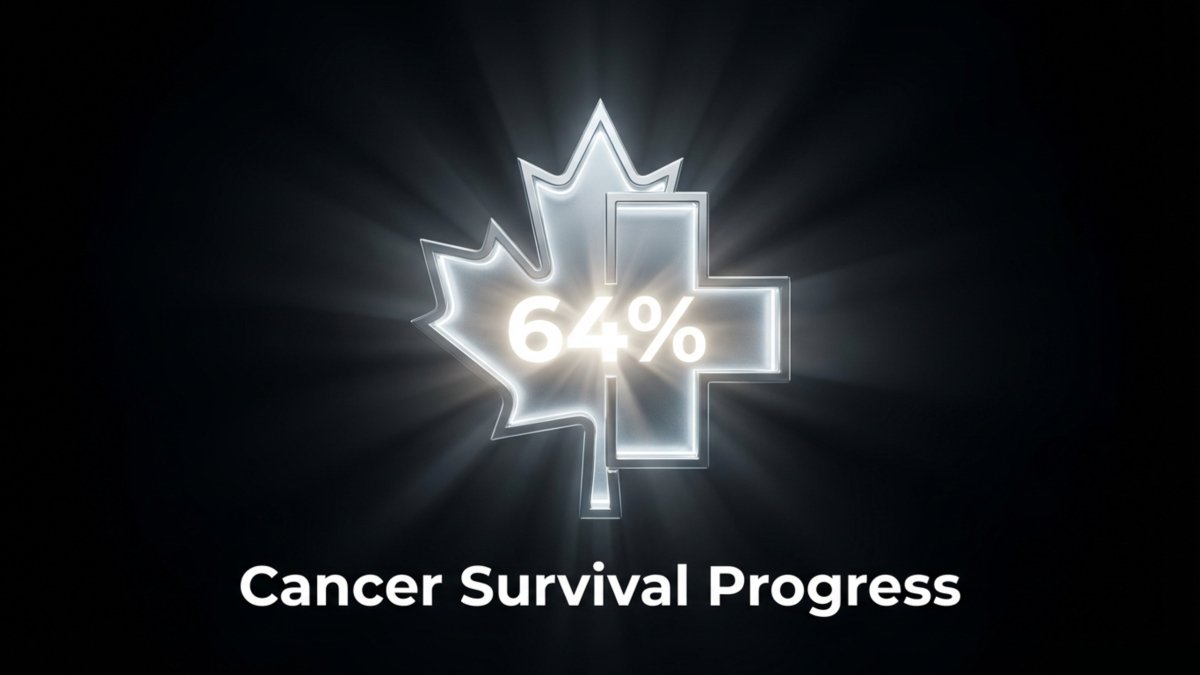
Canada’s Improved Cancer Survival Rate
Could Sunlight Be the Answer to “Forever Chemicals”The Next Generation of Nuclear Power Is Getting Closer to Reality
And don't forget to stick around for the speed round, where we'll dive into even more great news.70 People, 3,000 Cars: What Waymo Just Revealed About the Future of Self-Driving
The Battery Breakthrough Hidden in Plain Sight, Water
The Macrophages that could help fight Type 2 Diabetes
Making Hydrogen with Sun and Water?
And don't forget to follow the Daily Quote podcast. Kickstart Your Day in a Positive Way!
Source: Medscape