Ralph Waldo Emmerson – Live in the sunshine, swim the sea, drink the wild air
The Daily Quote podcast page The Great News Podcast page The Great News Letter Voicemail…

Good News and Inspiring Quotes
Because Good News should be heard…
“the podcast designed to kickstart your day in a positive way”

Tune in daily to get a short dose of daily inspiration to kick start your day in a positive way.
the Daily Quote brings you inspirational quotes to help motivate and inspire your day with positivity.
Listen to the show for positive quotes from Albert Einstein, Maya Angelo, Seth Godin, Tony Robbins, Winston Churchill, Martin Luther King Jr, John Lennon, William Shakespeare, Lao Tzu, Confucius and more…
Every single day you will hear a motivational quote to fire up your day.
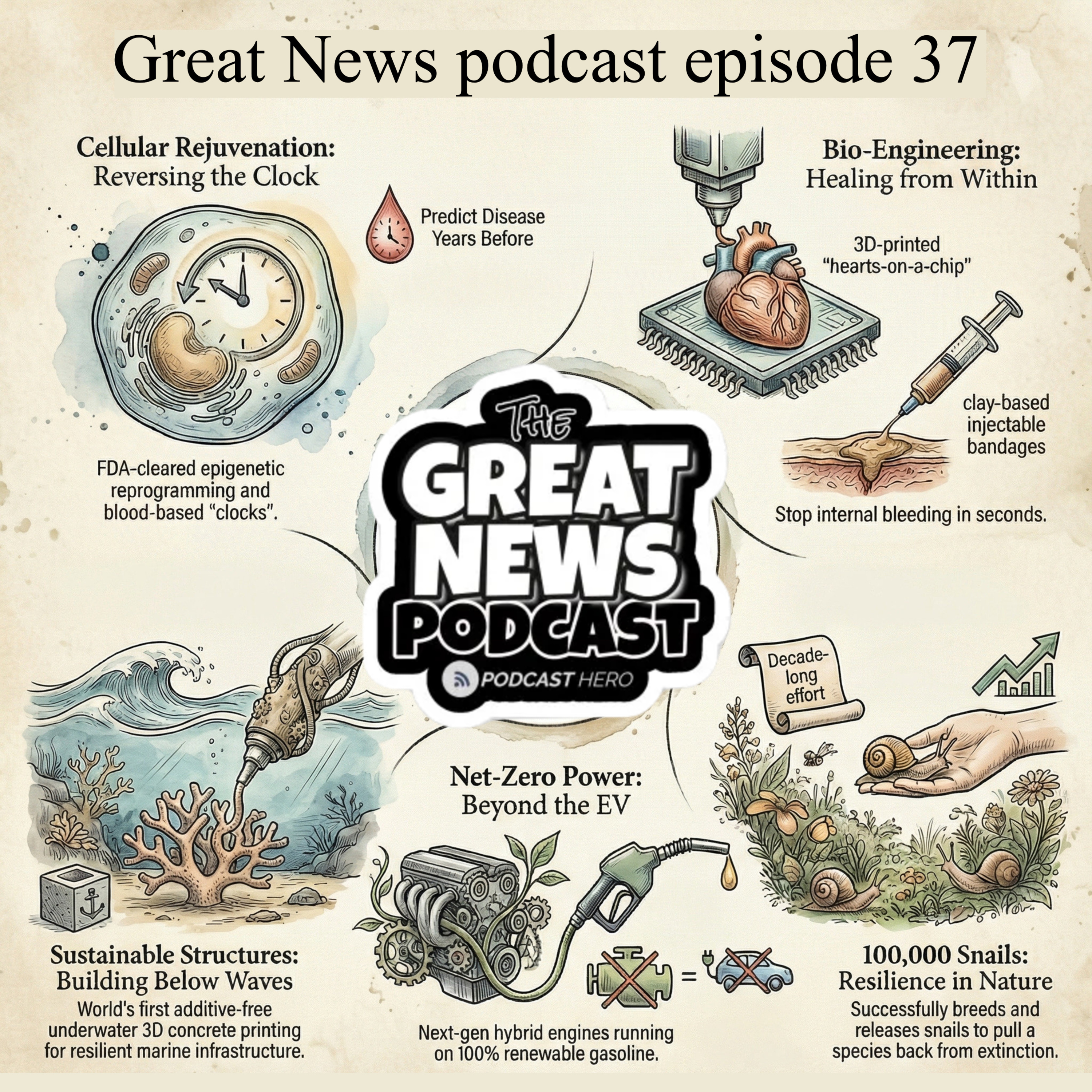
Welcome to the Daily Quote, I'm your host Andrew McGivern and this episode is brought to you by the Great News podcast… because we could all use some good news. Link is in the show notes.
Today we have two quotes separated by a century, from two men who could not have occupied more different positions in the world.
Yet they arrived at exactly the same profound truth.
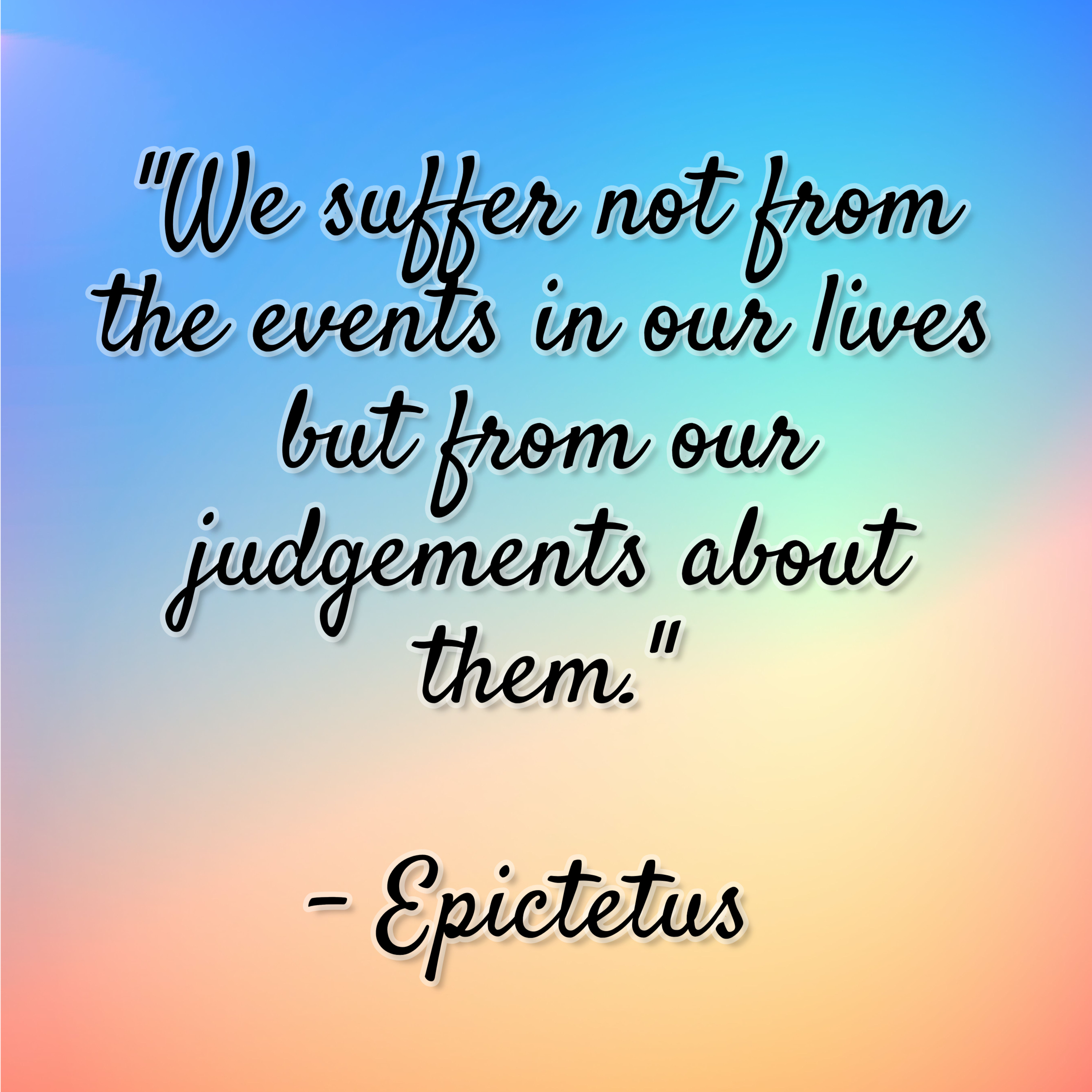
Our main quote of the day comes from Epictetus (eh-pik-TEE-tus), born a slave in ancient Rome, who studied philosophy in chains, earned his freedom, and went on to found one of the most respected schools of Stoic thought in history.
He said:
”We suffer not from the events in our lives but from our judgements about them.”
And then, a century later, the Emperor Marcus Aurelius, ruler of the most powerful empire on earth, who acknowledged Epictetus as the central influence on his own thinking, wrote in his Meditations:
”If you are distressed by anything external, the pain is not due to the thing itself but to your estimate of it, and this you have the power to revoke at any moment.”
A slave and an emperor. The same truth.
Think about what that convergence means. One man had nothing. No freedom, no possessions, no power over his own circumstances. The other had everything. Armies, an empire, absolute authority.
And both arrived, independently, at the same conclusion: the source of suffering is not what happens to us. It is what we tell ourselves about what happens to us.
Coming from these two men, it's a hard-won philosophical truth tested at both extremes of human experience.
Here's what they're pointing at. Two people can face the identical event: a job lost, a failed relationship, a plan that falls apart. And they can have completely different experiences of it.
Not because the event was different, but because their judgement of the event was different.
One calls it a catastrophe. The other calls it a redirection. Same event. Entirely different suffering.
For Epictetus, this was the cornerstone of all Stoic philosophy, that while external events are determined by circumstances beyond our control, we always retain the power to choose how we respond to them.
Good and evil live not in what happens, but in how we judge what happens.
And Marcus Aurelius adds the most liberating word of all, revoke.
You have the power to revoke your judgement at any moment. The suffering isn't locked in. The story you're telling yourself about the event… you can change that story. Right now. In this moment.
What Epictetus and Marcus Aurelius are offering isn't toxic positivity. It's not pretend the bad thing didn't happen. It's something far more powerful: the recognition that the meaning of what happens to you is never fixed. It belongs to you. And you can change it.
So here's the question: What are you currently suffering from that might be more about your judgement of the event than the event itself?
Because if a man who ruled an empire and a man born in chains both agree that the suffering is not locked in. The judgement is yours. And you have the power to revoke it at any moment.
That's it for today. I'm Andrew McGivern — I'll see you in the next one with another Daily Quote.