In the age of another Great Extinction there are some good news stories…
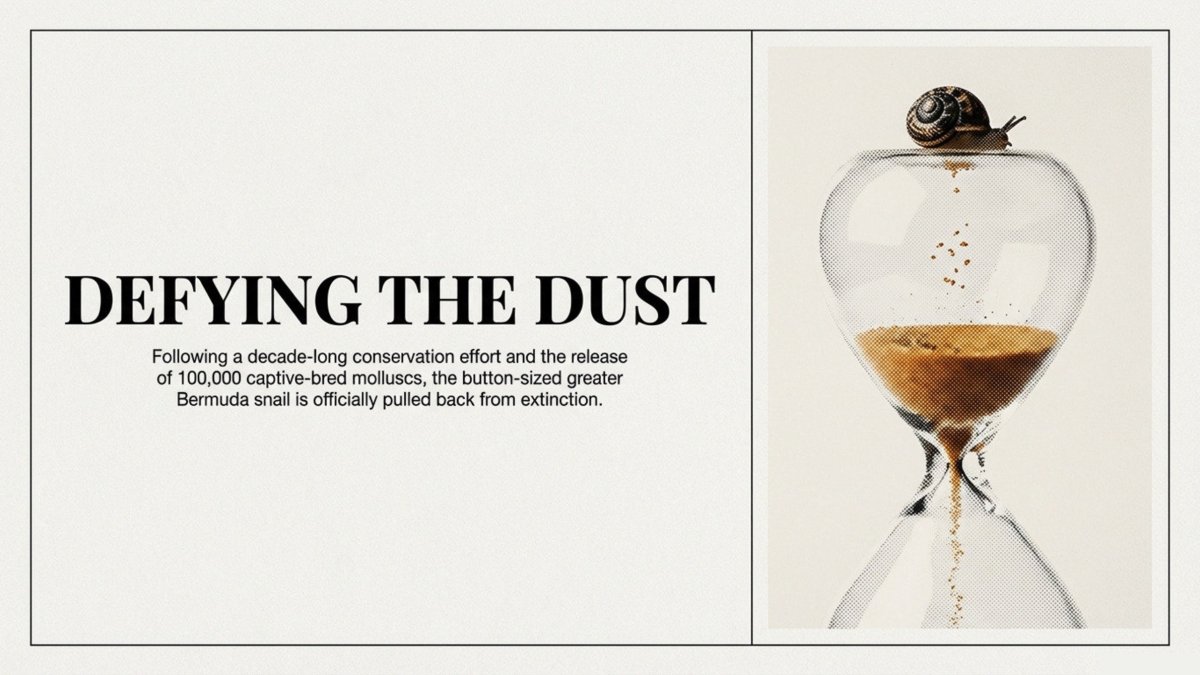
Some conservation stories feel too good to be true. The tale of the greater Bermuda snail (Poecilozonites bermudensis) is one of them — and it’s completely real.
For years, this button-sized mollusk was believed to be gone forever. Scientists knew it had once existed — the fossil record confirmed that — but the living animal had seemingly vanished from the North Atlantic archipelago of Bermuda. Then, in 2014, a small remnant population was found clinging to survival in a damp, overgrown alleyway in Hamilton, the island’s capital. It was an unlikely refuge for a species on the edge of oblivion.
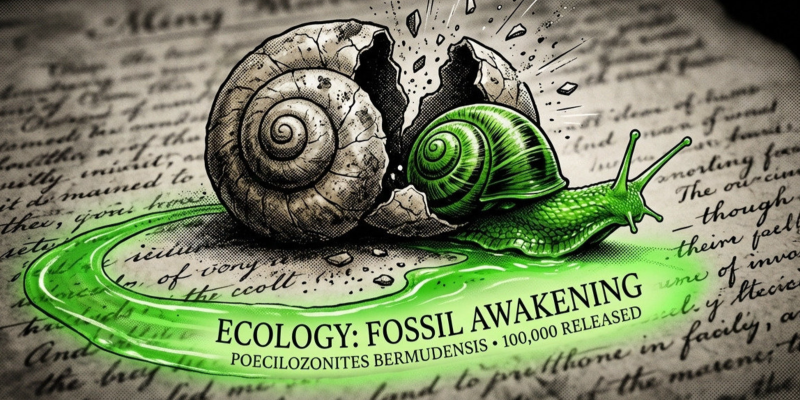
What followed was a decade-long race against extinction. Conservation scientists, the government of Bermuda, and Chester Zoo in the UK joined forces in an international breeding program. Thousands of snails were carefully raised at Chester Zoo and then transported back to Bermuda. In total, more than 100,000 snails have since been bred and released into the wild.
The result? The greater Bermuda snail has now been confirmed as safe from extinction.
It’s easy to overlook a story like this — after all, it’s about a snail, not a tiger or a whale. But that’s precisely what makes it so powerful. It demonstrates that with enough commitment, scientific ingenuity, and international cooperation, even the most seemingly lost causes can be turned around. Conservation doesn’t always make headlines, but it works.
The Bermuda snail’s comeback is a quiet, extraordinary reminder that extinction is not always the final word — and that the effort to prevent it is always worth making.
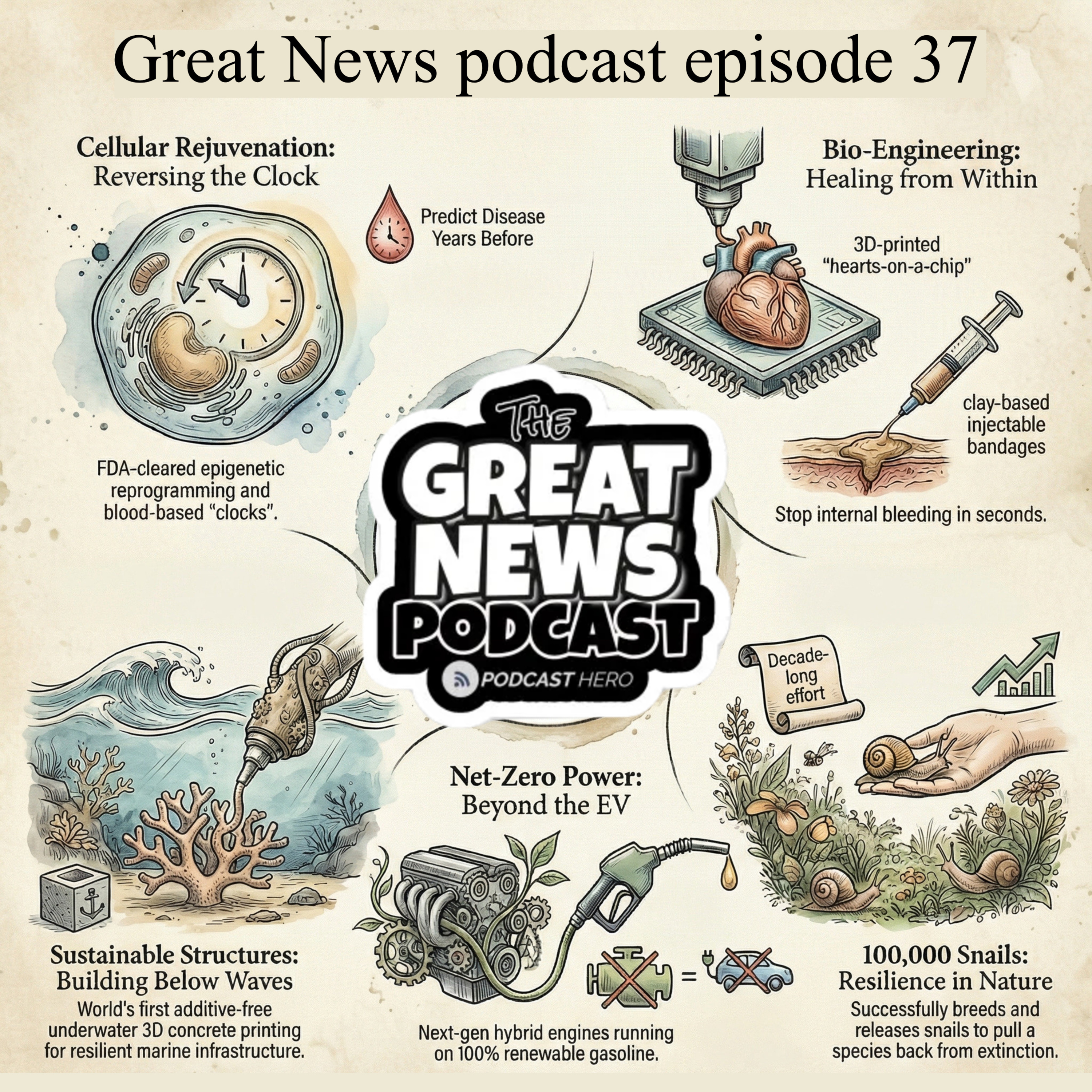
This topic was featured in Great News podcast episode 37.

The Great News Podcast is your source for positive news, inspiring stories, and good news from around the world. We skip the doom and gloom of mainstream media to focus on scientific breakthroughs, environmental wins, and the inspiring news that proves the world is getting better. Join Andrew McGivern for a dose of optimism and uplifting stories that will change your perspective on human progress.
It is easy to find the
Keep looking for the good in the world, because it is not only there – its everywhere.
This episode is brought to you by the Daily Quote. The podcast designed to kickstart your day in a positive way.Today, we’re exploring how scientists are turning back the clock on aging cells, printing infrastructure beneath the ocean waves, and building a ”heart-on-a-chip” to revolutionize medicine.And don't forget to stick around to the end for the speed round for even more great news!The First Epigenetic Reprogramming Therapy Enters Human TrialsThe World’s First Underwater 3D Concrete Printer
The Tiny Chip That Could Change Heart Medicine ForeverThe Horse H12 is a Cleaner Combustion Engine
Alright, Let's dive into the speed round for even more great news:
The greater Bermuda snail, once feared extinct, is officially safe after conservationists bred and released over 100,000 molluscs.
Researchers at Texas A&M have developed clay-based bandages that can be injected into deep wounds to stop severe internal bleeding, reducing clotting time by 70%.
A new blood test can now predict when Alzheimer’s symptoms will begin—with an accuracy within three to four years—long before memory problems appear.
Scientists are testing CAR T cell therapy to target and destroy the amyloid plaques in the brain that cause Alzheimer's, successfully reshaping the immune landscape in preclinical models.
And my favorite quote of the day from the Daily Quote podcast this week is from James Clear who said,
“Every action you take is a vote for the type of person you wish to become.”
Start your day with an inspiring quote every single day with the Daily Quote – available in your favourite podcast app.
From rejuvenating cells to printing structures underwater, today’s stories prove that those seeds of innovation are growing into a brighter world.
I’m Andrew McGivern, and until next time, and there will be a next time, keep looking for the good in the world, because it’s everywhere.
Source: Human Progress