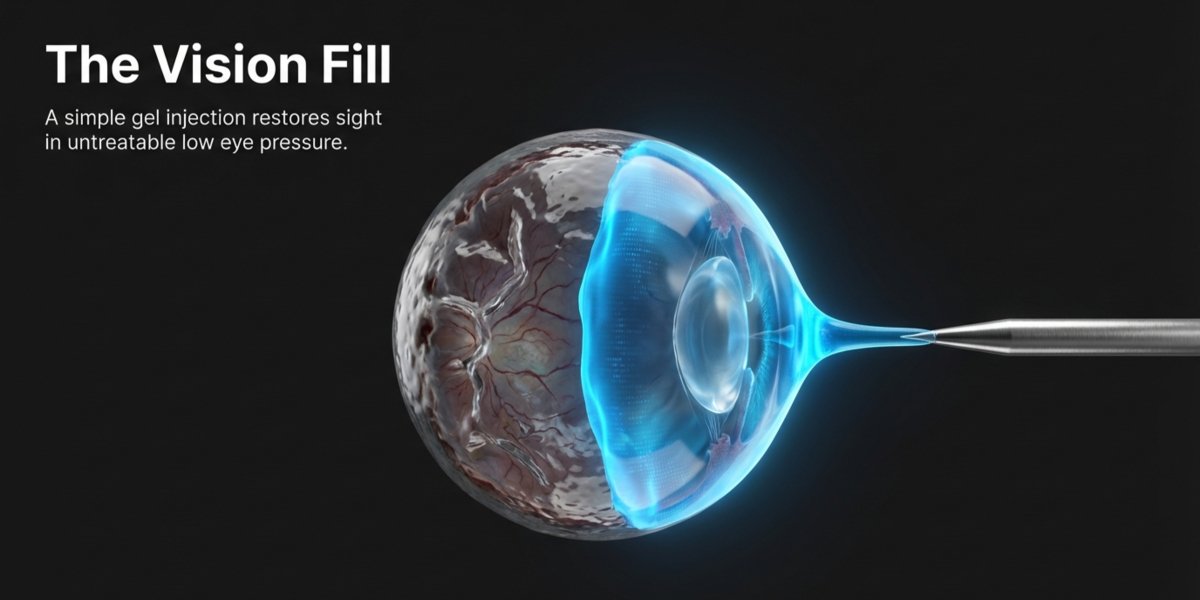
For patients with hypotony — a condition of abnormally low eye pressure — the medical options have long been bleak. The eye slowly loses its normal shape, vision deteriorates, and without an effective solution, blindness becomes the destination. Now, a remarkably simple intervention from researchers at University College London and Moorfields Eye Hospital is changing that story.
Hypotony is characterized by abnormally low eye pressure, which alters the eye’s normal shape and internal structure. Over time, this can lead to progressive and permanent vision loss, often taking several years to result in blindness. Hypotony may develop as a result of underlying eye conditions that damage the part of the eye responsible for producing the fluid that maintains normal eye pressure.
Until now, the standard treatment for eyes losing vision from low pressure has been to fill them with silicone oil. This has many benefits but is not ideal — it can be toxic to eye structures over long periods of time and is difficult to see through. In other words, even the best available option came with significant downsides. For many patients, it offered management without real hope of recovery.
A Common Ingredient, an Uncommon Result
The new approach, published in the British Journal of Ophthalmology, is disarmingly simple. Ocular injections containing HPMC (hydroxypropyl methylcellulose) — a low-cost gel used in most eye surgery — can be safely used to increase the volume of eyes with hypotony, increasing both their size and pressure. HPMC is not a novel compound; it has been a workhorse of ophthalmic surgery for decades. The innovation here lies in applying it in a new context, with striking results.
Seven of the eight patients who received the treatment experienced improvements in vision, eye pressure, and length restoration after a twelve-month course of treatment. Those are remarkable numbers for a condition that was previously considered untreatable.
The researchers are clear that this is still early-stage work. The trial involved only eight patients, and larger formal clinical trials will be needed before the treatment can be widely adopted. This preliminary data is already informing thinking on standardised hypotony treatment nationally, and provides a foundation for future, larger-scale formal clinical trials to evaluate the potential of this highly promising approach.
Professor Gus Gazzard, co-author of the study, put it plainly: “This is a truly transformative new therapy that brings hope to patients otherwise without options, for what was previously an untreatable blinding and disfiguring condition.”
In a field where breakthroughs often require years of complex development, there’s something quietly wonderful about a solution built from a gel that surgeons have had in their hands all along — waiting, it turns out, to be used in a way nobody had quite tried before.
This topic was featured on Great News podcast episode 29:

The Great News Podcast is your source for positive news, inspiring stories, and good news from around the world. We skip the doom and gloom of mainstream media to focus on scientific breakthroughs, environmental wins, and the inspiring news that proves the world is getting better. Join Andrew McGivern for a dose of optimism and uplifting stories that will change your perspective on human progress.
It is easy to find the
Keep looking for the good in the world, because it is not only there – its everywhere.
Today, we are diving into some truly groundbreaking advancements in medicine and brain health.
A New Brain Probe Could Transform Neurosurgery
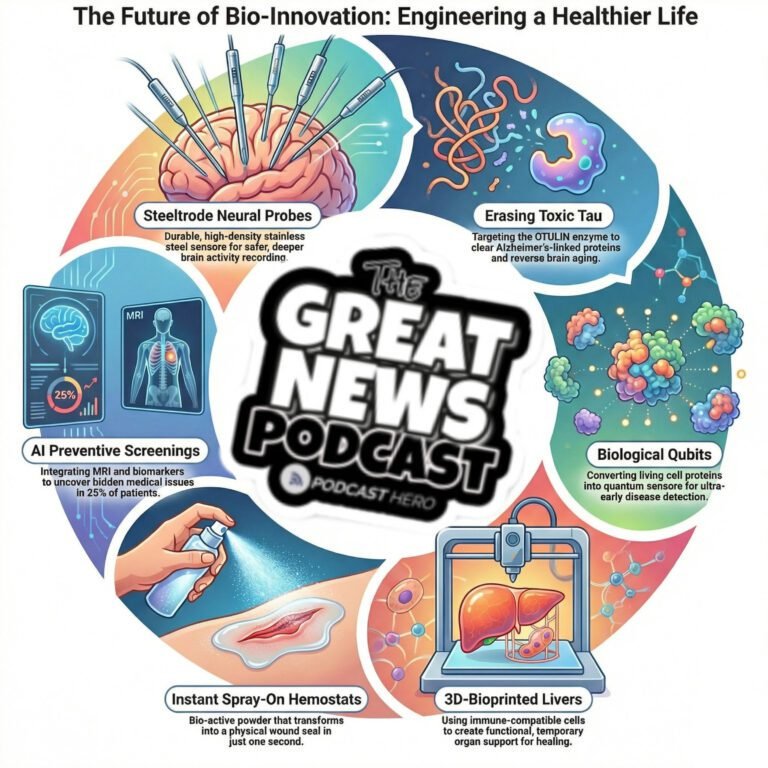
What if we could 3D-bioprint a functioning human liver to buy a patient enough time to heal without a full transplant? That is our lead story today.
Plus, we have a spray-on powder that can seal life-threatening wounds in just one second, a new type of stainless steel probe that makes brain sensing safer and cheaper than ever before.
And don't forget to stick around for the speed round, where we’ll dive into even more great news.
LINKS:
Source: Medical Life Sciences News