A New Road for Rare Disease: The FDA’s Plausible Mechanism Framework
For the millions of families living with ultra-rare genetic diseases, the path to treatment has always felt impossibly narrow. Clinical trials require large patient populations. Randomized controlled studies demand statistical power. And when a disease affects only a handful of people in the entire country, neither of those things is easy — or sometimes even possible — to achieve. For the first time, the FDA has formally addressed this reality.
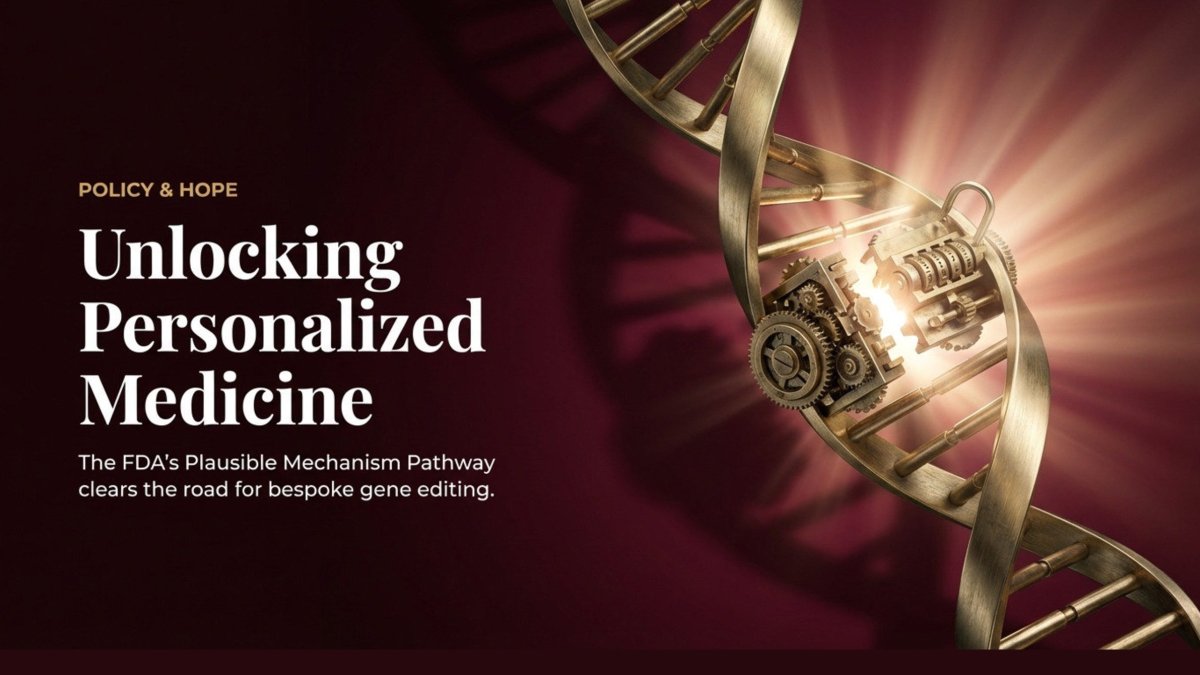
On February 23, 2026, coinciding with Rare Disease Week, the FDA issued a landmark draft guidance introducing the Plausible Mechanism Framework — a set of recommendations to help developers of individualized therapies generate sufficient clinical safety and efficacy data to demonstrate that a drug or biological product is safe and effective for the intended use.
The guidance applies to therapies that target a specific genetic, cellular, or molecular abnormality designed to correct or modify the underlying cause of disease. While it focuses primarily on genome editing and RNA-based approaches like antisense oligonucleotides, the FDA has signaled that the framework may extend to other individualized therapies that directly target the root biological cause of a condition.
The core problem the guidance tackles is one of scale. Historically, developing these treatments has been challenging in part because randomized controlled trials often are not feasible due to very small patient populations. Under the new framework, therapy developers could produce evidence from a limited number of patients to justify safety and efficacy aims, with the FDA anticipating that developers will often rely on data from a single externally controlled investigation paired with a plan to obtain confirmatory evidence post-approval. This means randomized trials are not necessarily required — a critical accommodation for conditions that may affect only dozens of patients worldwide.
The guidance was partly inspired by real-world breakthroughs. In May 2025, a research consortium announced the successful treatment of KJ Muldoon, an infant born with a rare metabolic disorder, using a bespoke base editing treatment that engineered a single-base substitution in the defective gene. Nine months later, KJ was reported to be thriving — a vivid proof of concept for what individualized genomic medicine can achieve.
The FDA’s own leadership framed the guidance in sweeping terms. “Designing treatments unique to individual patients has always been the promised goal of personalized medicine,” said CBER Director Vinay Prasad. “After 25 years the FDA has, for the first time, outlined a framework to facilitate these approvals.”
One particularly innovative element is the concept of platform-based approvals. A product targeting different mutations in a single gene could potentially be included in a single product application and evaluated using master protocols that assess multiple product variations within a single trial. AJMC This means that once a genome editing platform is approved for one mutation, that same approval could be extended to cover related variants — potentially opening the door for rapid scaling.
Public comments on the draft guidance are due by April 27, 2026. Stakeholders — particularly those who have already developed or are actively developing individualized treatments — are encouraged to engage, as their real-world experience will be critical in shaping the final policy.
For patients with ultra-rare diseases, this framework represents something that regulatory documents rarely deliver: genuine hope.
This topic was featured in Great News podcast episode 34.

The Great News Podcast is your source for positive news, inspiring stories, and good news from around the world. We skip the doom and gloom of mainstream media to focus on scientific breakthroughs, environmental wins, and the inspiring news that proves the world is getting better. Join Andrew McGivern for a dose of optimism and uplifting stories that will change your perspective on human progress.
It is easy to find the
Keep looking for the good in the world, because it is not only there – its everywhere.
Welcome to the Great News podcast.
Tired of all the doom and gloom news from mainstream media? You'll get none of that here! Instead, you'll find inspiring stories and developments making the world a better place.
Brought to you by the Daily Quote, the podcast designed to kickstart your day in a positive way!
Today, we are diving into a massive regulatory shift that could save millions of lives, electric semi-trucks that double as mobile supercomputers, and a way to ”bottle” sunlight for use months later.
–Unlocking Personalized Medicine
–The Data Center that Drives Itself
–The Liquid That Could Change Solar Energy Forever
–The Tiny Green Machines Cleaning Our Water
And don't forget to stick around for the speed round, where we'll dive into even more great news!
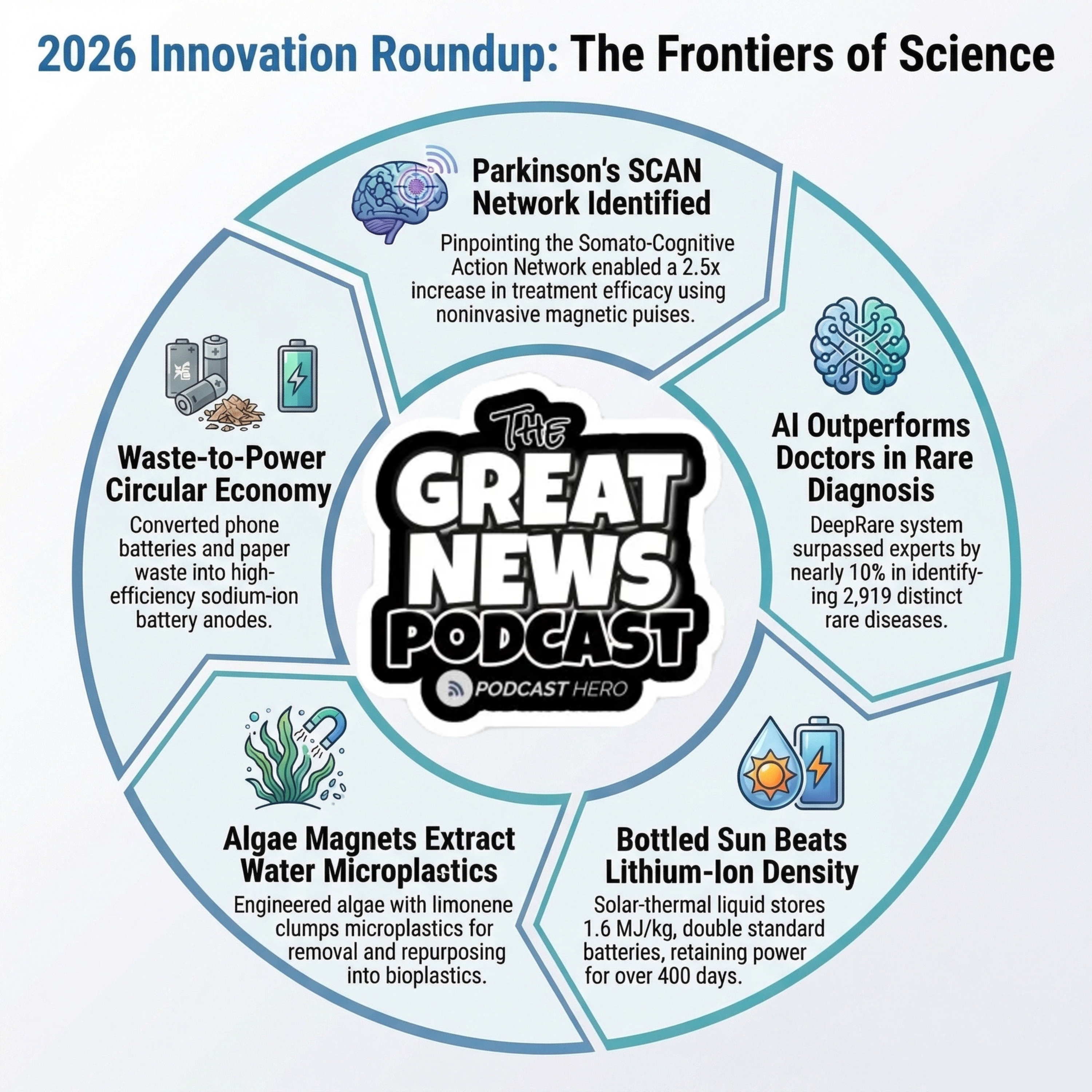
–AI Just Beat Expert Doctors at Diagnosing Rare Diseases
–A Breakthrough in Parkinson’s Research
–The Philippines Recognizes Same-Sex Property Co-Ownership
–U.S. Organ Transplants Hit New Heights for the Fifth Year in a Row
Source: Inside Precision Medicine