A new mega colony has been found in Australia
Sometimes the most extraordinary scientific discoveries don’t happen in laboratories — they happen when curious, dedicated people jump into the ocean and simply look.
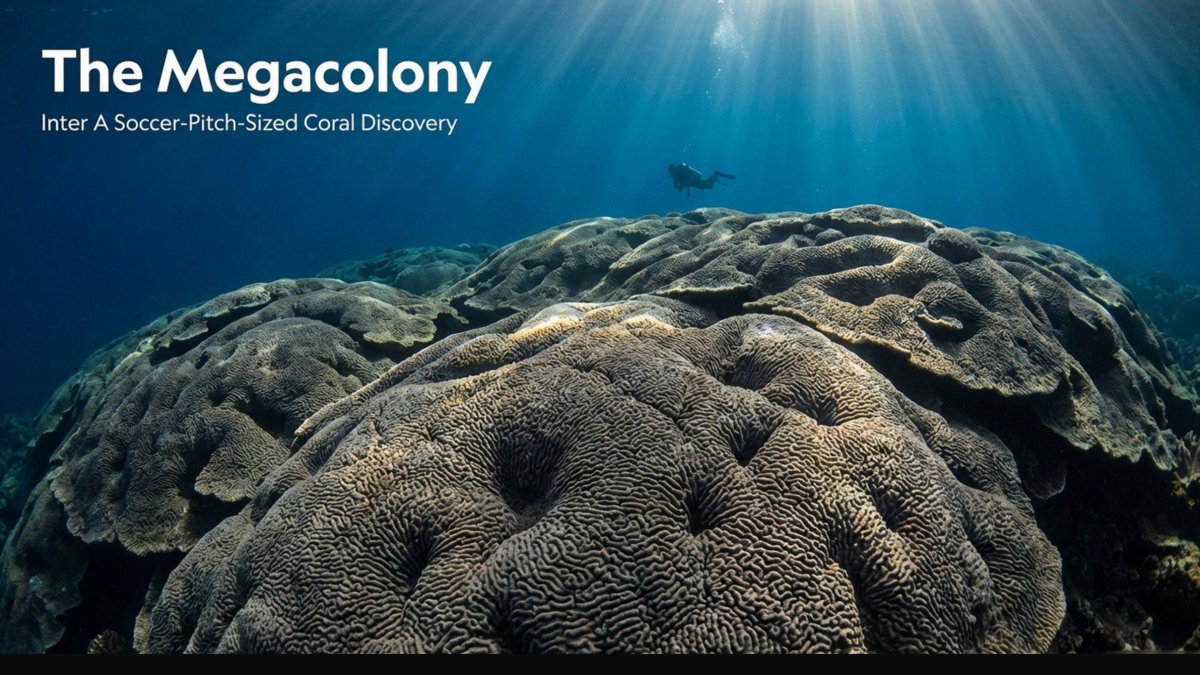
That’s exactly what occurred when Jan Pope, a diver with 35 years of experience, and her daughter Sophie Kalkowski-Pope descended into the waters off Cairns, Queensland, as part of Australia’s Great Reef Census. What they found was unlike anything documented before: a colossal single coral colony stretching roughly 364 feet — about the length of a soccer field — and covering more than 4,000 square meters of the seafloor.
The colony belongs to the species Pavona clavus, commonly known as “elephant skin” coral for its wrinkled, plate-like texture. Sophie, who serves as marine operations coordinator for Citizens of the Reef, described the experience of swimming from one end of the J-shaped giant to the other as taking a continuous three-minute video. Her mother, Jan, called it a “very surreal underwater landscape” resembling a rolling meadow beneath the waves.
What makes this discovery particularly striking is its context. More than 80% of coral reefs globally have been affected by mass bleaching events since 2023, driven by rising ocean temperatures. This colony, however, appears to be thriving — scientists believe it may have survived for hundreds, possibly thousands, of years, protected by strong tidal currents that bring cooler water and shield it from destructive cyclones.
Researchers from Queensland University of Technology used high-resolution surface imagery and underwater measurements to build a detailed 3D model of the structure, creating a baseline to track any changes over time. Scientists are still debating whether it’s a single organism or multiple fused colonies — genetic testing will be needed to confirm — but either way, its scale is unprecedented.
For conservationists, the significance goes beyond the record books. Resilient formations like this one are considered vital “source reefs,” capable of releasing larvae to help regenerate surrounding areas damaged by climate change. Identifying and protecting them is one of the core goals of the Great Reef Census, which deploys over 100 volunteer vessels to map the 2,300-kilometer reef system.
To protect it from anchor damage or excessive tourist attention, the colony’s exact location is being kept secret.
The story is a timely reminder that citizen science — powered by passion, persistence, and a willingness to look closely — can still yield world-changing discoveries. As marine biologist Professor Michael Sweet put it, this find showcases that everyone can play a meaningful part in monitoring and protecting our planet.
For Jan and Sophie Pope, a shared dive turned into a landmark moment in marine science. Not a bad day’s work for a mother-daughter team.
This topic is covered in Great News podcast episode 32

The Great News Podcast is your source for positive news, inspiring stories, and good news from around the world. We skip the doom and gloom of mainstream media to focus on scientific breakthroughs, environmental wins, and the inspiring news that proves the world is getting better. Join Andrew McGivern for a dose of optimism and uplifting stories that will change your perspective on human progress.
It is easy to find the
Keep looking for the good in the world, because it is not only there – its everywhere.
Today, we are diving into a ”fountain of youth” for the brain, a massive underwater discovery by a mother-daughter duo, and a plan to save the world's most popular fruit. Plus a new water free data center…
Can We Reprogram Our Way Out of Alzheimer's?
A Mother, a Daughter, and the World's Largest Coral Discovery
Protecting Commercial Bananas From Fungus
New AI Data Center to Use Zero Water?
And don't forget to stick around for the speed round:
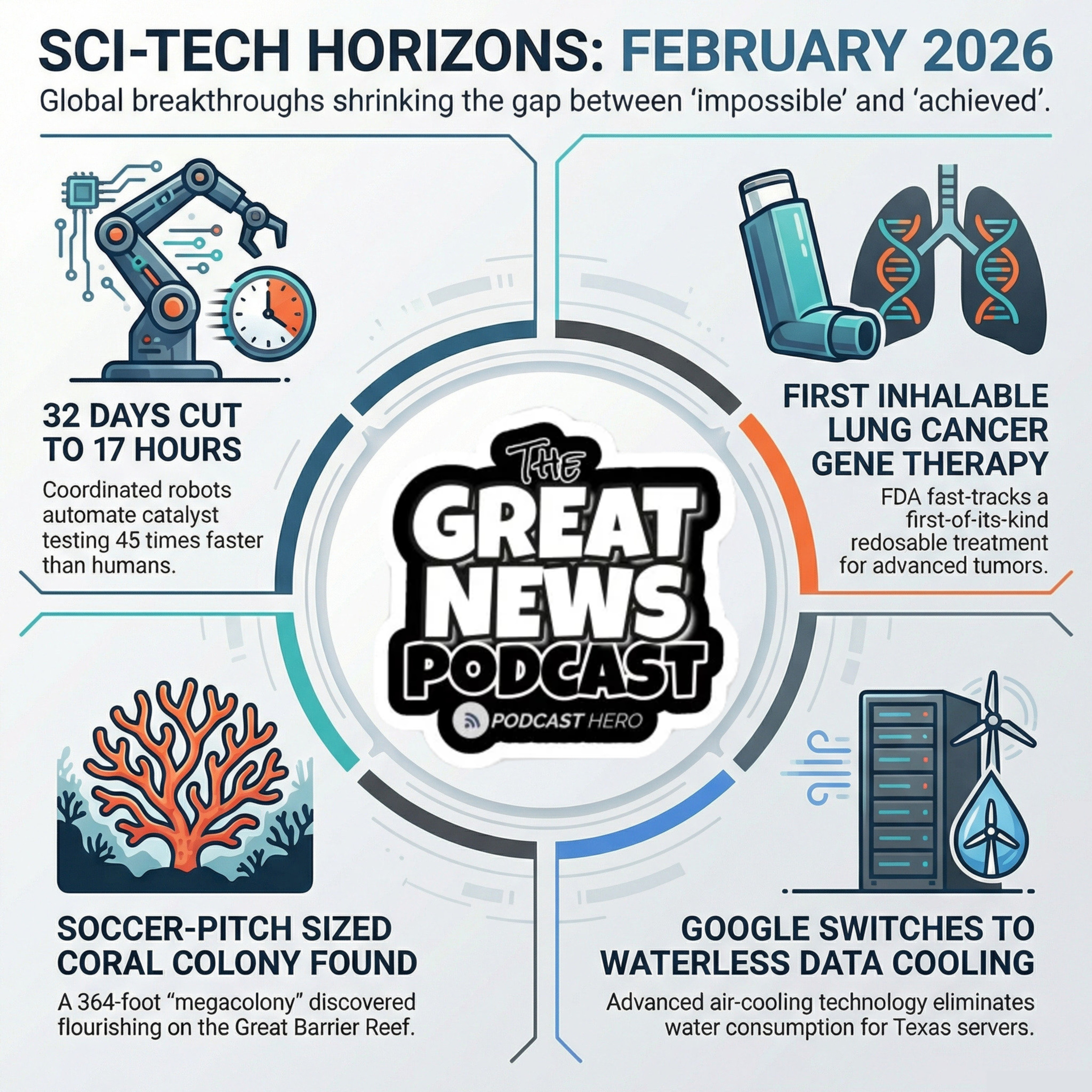
Robots Are Transforming the Chemistry Lab — One Catalyst at a Time
Breathe In, Fight Back: The World's First Inhalable Gene
Therapy for Cancer Just Got Fast-Tracked
Why Your Funniest Teacher Was Probably Your Best Teacher
Source: Interesting Engineering