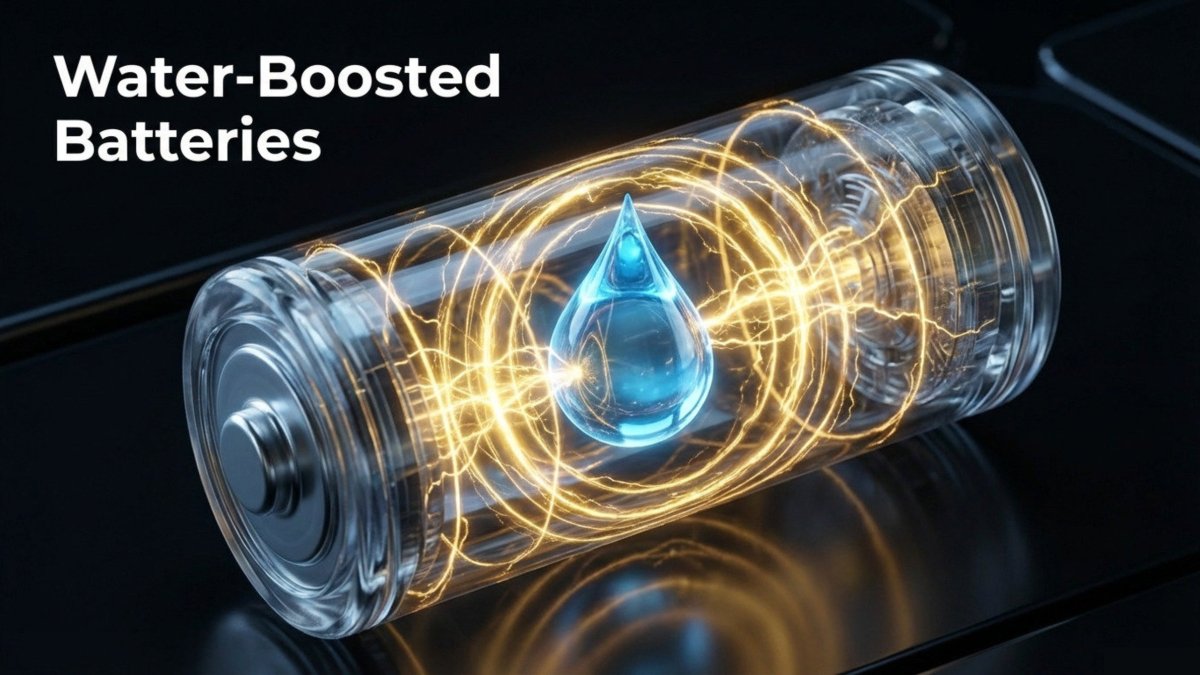
Improving Sodium-Ion Batteries with Water?
For years, battery researchers have been quietly working to make sodium-ion batteries a viable alternative to lithium-ion. Sodium is cheap, abundant, and doesn’t come with the ethical and environmental baggage of lithium mining. The catch? Sodium-ion batteries have always lagged behind in one crucial area: energy storage. A new discovery from the University of Surrey might just change that — and the secret ingredient is something we’ve had all along.
Rethinking What We “Know”
When making sodium-ion battery cathodes, researchers have traditionally used a compound called nanostructured vanadate hydrate (NVOH) — but only after carefully removing its water content. Water in batteries has long been considered a problem, something to be eliminated before the real work begins.
The Surrey team decided to challenge that assumption. What happened next surprised even them.
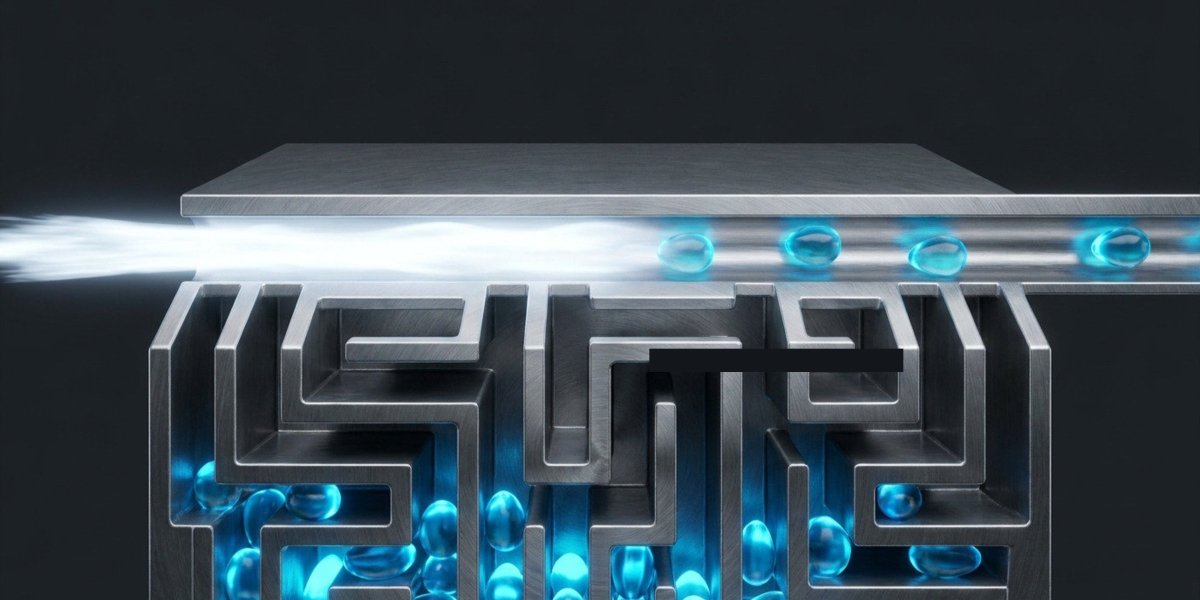
By keeping the water in the NVOH cathode material rather than heat-treating it away, the team nearly doubled the battery’s energy storage capacity. The hydrated material also proved remarkably stable, maintaining performance over more than 400 charge cycles. It now ranks among the top cathode materials for sodium-ion batteries.
The reason, it turns out, is elegant: the water causes the material’s layers to spread apart slightly, giving sodium ions more room to move in and out. More room means more ions stored, which means more energy.
A Discovery That Keeps Giving
The surprises didn’t stop there. When the researchers tested the hydrated cathode material in saltwater, it performed as well as — or better than — conventional electrodes used in desalination. This opens up a fascinating possibility: batteries that use seawater as an electrolyte, storing energy while simultaneously producing fresh water as a byproduct.
It sounds almost too good to be true, but the underlying chemistry supports it. The same properties that make the material excellent at storing sodium ions make it effective at pulling them out of salty water.
Why This Matters
Lithium-ion batteries remain dominant, and for good reason — they pack a lot of energy into a small, light package. But the world is increasingly waking up to the problems that come with them: volatile lithium prices, supply chains tied to geopolitically sensitive regions, and a battery chemistry that can catch fire under the wrong conditions.
Sodium-ion batteries sidestep many of these issues. Sodium is essentially everywhere, costs a fraction of lithium, and results in batteries that are safer and more stable at temperature extremes. The main hurdle has always been energy density — getting enough power out of a heavier cell.
This discovery doesn’t close that gap entirely, but it represents a meaningful leap forward. And the potential dual-use as a desalination tool hints at applications far beyond electric vehicles or consumer electronics — think off-grid communities, coastal energy storage, or emergency water purification systems.
The Takeaway
Sometimes the biggest breakthroughs come not from adding something new, but from questioning why we removed something in the first place. In this case, the answer was sitting in the material the whole time, waiting for someone to stop treating water as the enemy.
The findings have been published in the Journal of Materials Chemistry A. Whether this discovery makes it from the lab to commercial production at scale remains to be seen — but it’s a reminder that the next generation of battery technology may be closer, and simpler, than we think.
This topic was featured in Great News podcast episode 33.

The Great News Podcast is your source for positive news, inspiring stories, and good news from around the world. We skip the doom and gloom of mainstream media to focus on scientific breakthroughs, environmental wins, and the inspiring news that proves the world is getting better. Join Andrew McGivern for a dose of optimism and uplifting stories that will change your perspective on human progress.
It is easy to find the
Keep looking for the good in the world, because it is not only there – its everywhere.
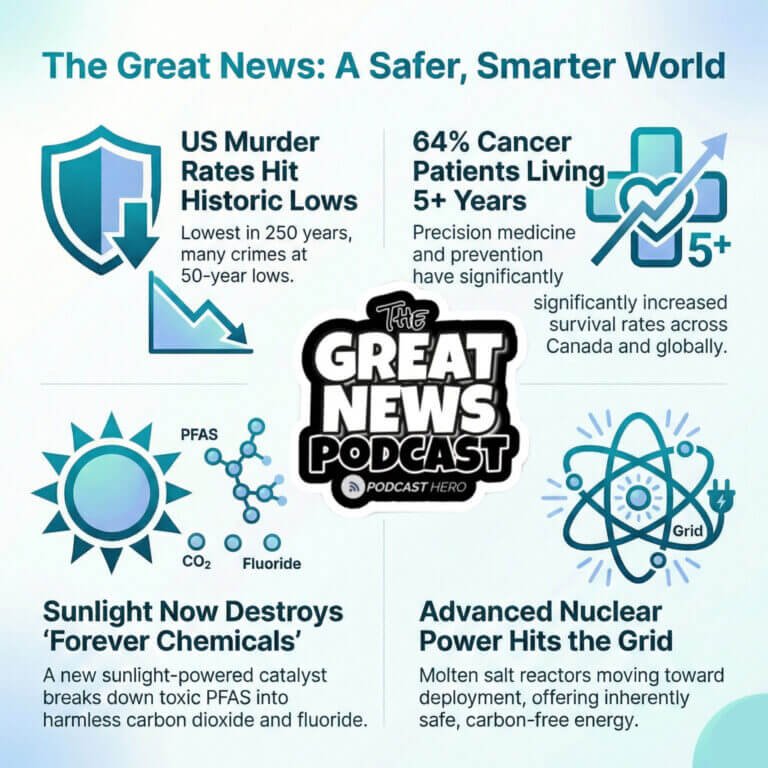
Today we are diving into some truly groundbreaking developments in public safety, medicine, and clean energy.
What if I told you that despite what you see on social media, we are living in one of the safest times in history? That’s our lead story today.
Plus, we have a major update on the fight against cancer, a way to destroy ”forever chemicals” using nothing but sunlight, and a partnership that’s bringing advanced nuclear power to the grid.
America’s Crime Drop Is Real — And That’s Worth Celebrating
Canada’s Improved Cancer Survival Rate
Could Sunlight Be the Answer to “Forever Chemicals”The Next Generation of Nuclear Power Is Getting Closer to Reality
And don't forget to stick around for the speed round, where we'll dive into even more great news.70 People, 3,000 Cars: What Waymo Just Revealed About the Future of Self-Driving
The Battery Breakthrough Hidden in Plain Sight, Water
The Macrophages that could help fight Type 2 Diabetes
Making Hydrogen with Sun and Water?
And don't forget to follow the Daily Quote podcast. Kickstart Your Day in a Positive Way!
Source: New Atlas