
America’s Crime Drop Is Real — And That’s Worth Celebrating
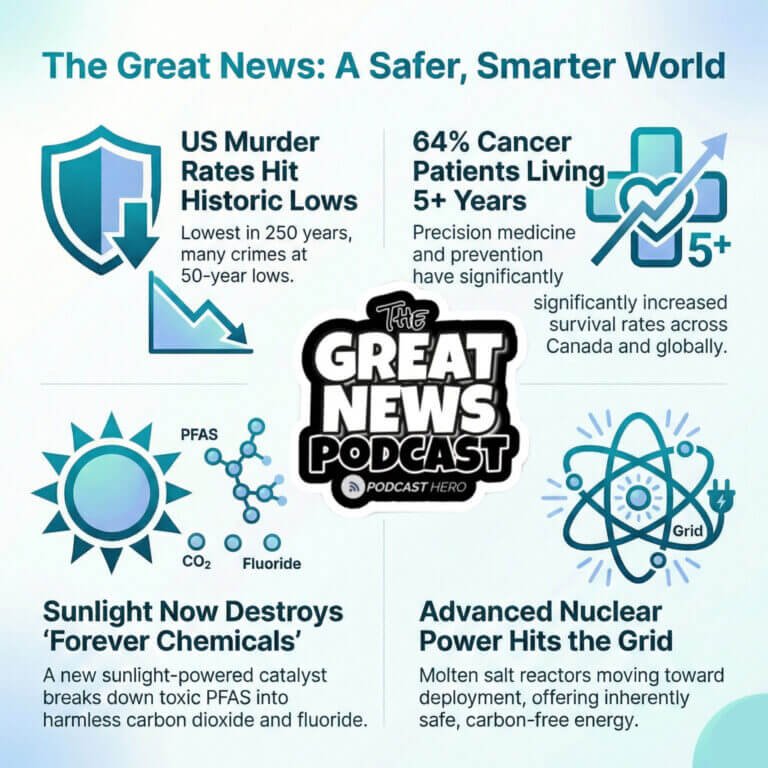
Something remarkable is happening in the United States, and it’s barely getting the attention it deserves: crime may be at its lowest levels in the country’s entire 250-year history.
The U.S. murder rate last year potentially hit an all-time low — lower than in the 1950s, lower than in the 1920s, possibly lower than any point since the founding of the republic. Property crimes like burglary, theft, and car theft have plummeted to around 50-year lows. If you opened a newspaper from 1990 and read these statistics, you’d think someone was pulling your leg.
So why aren’t we talking about this more?
“But Is It Just Underreporting?”
A common and reasonable objection is that crime hasn’t actually gone down — people have simply stopped bothering to report it. Maybe they’ve lost faith in the police. Maybe the process is too cumbersome. Maybe low-level crime is so normalized that victims shrug and move on.
This is a good hypothesis, but the evidence doesn’t support it. The National Crime Victimization Survey (NCVS), run by the federal government, sidesteps this problem entirely. Instead of relying on police reports, researchers go directly to a nationally representative sample of 240,000 Americans and ask them if they were victims of crime. No police involvement required. The NCVS numbers mirror the trends seen in police data, which is a powerful sign that the decline is real.
What’s more, reporting rates to police appear to have actually increased over the past few decades. The 9-1-1 emergency system wasn’t widely available until the 1970s. As it became easier and more normalized to report crimes, more people did. Underreporting would push the numbers in the opposite direction.
Car theft is another useful sanity check: because insurers require a police report before paying out a claim, victims have a strong financial incentive to file regardless of their feelings about law enforcement. Car theft rates have fallen just as sharply as everything else.
“But What About Better Hospitals?”
A more sophisticated objection targets murder statistics specifically. If trauma care has improved — and it genuinely has — then a gunshot victim who would have died in 1980 might survive today. The body count goes down without any actual change in violent intent. Murders get reclassified as aggravated assaults, and the murder rate looks artificially rosy.
This argument gained traction from a 2002 study that noted aggravated assaults rose much faster than murders between 1960 and 1999 — suggesting that better medicine was keeping potential murder victims alive, masking the true scale of violence.
But more recent research throws cold water on this. Much of that divergence, it turns out, was driven by better reporting of aggravated assault (partly thanks to wider 9-1-1 availability) and changes in how police classify borderline incidents. When you look at NCVS data — again, bypassing police classification entirely — murder and aggravated assault tracked together much more closely.
There’s also a grimly counterintuitive wrinkle: while medicine has improved, gun wounds themselves have gotten worse. The proportion of gunshot victims arriving at hospitals with three or more wounds nearly doubled between 2000 and 2011. Improved lethality of weapons has partially offset improved trauma care, meaning we can’t simply assume that hospitals are quietly absorbing a mountain of would-be murders.
So What’s Actually Going On?
The honest answer is that nobody fully knows why crime fell so dramatically — it’s one of the most debated questions in criminology. Lead paint removal, the end of the crack epidemic, an aging population, smarter policing, and dozens of other factors have all been proposed. No single explanation commands a consensus.
But the fact of the decline is solid. The data, from multiple independent sources using different methodologies, all point the same direction. We are, by most measures, living through one of the safest periods in American history.
That’s an astonishing achievement — one that spans decades, crosses political administrations of every stripe, and has touched nearly every corner of the country. It deserves more acknowledgment than it gets, especially in an era when crime fear tends to dominate political discourse regardless of what the numbers actually say.
The world is genuinely better in some real, measurable ways. That’s worth knowing.
This topic was covered in Great News podcast episode 33.

The Great News Podcast is your source for positive news, inspiring stories, and good news from around the world. We skip the doom and gloom of mainstream media to focus on scientific breakthroughs, environmental wins, and the inspiring news that proves the world is getting better. Join Andrew McGivern for a dose of optimism and uplifting stories that will change your perspective on human progress.
It is easy to find the
Keep looking for the good in the world, because it is not only there – its everywhere.
Today we are diving into some truly groundbreaking developments in public safety, medicine, and clean energy.
What if I told you that despite what you see on social media, we are living in one of the safest times in history? That’s our lead story today.
Plus, we have a major update on the fight against cancer, a way to destroy ”forever chemicals” using nothing but sunlight, and a partnership that’s bringing advanced nuclear power to the grid.
America’s Crime Drop Is Real — And That’s Worth Celebrating
Canada’s Improved Cancer Survival Rate
Could Sunlight Be the Answer to “Forever Chemicals”The Next Generation of Nuclear Power Is Getting Closer to Reality
And don't forget to stick around for the speed round, where we'll dive into even more great news.70 People, 3,000 Cars: What Waymo Just Revealed About the Future of Self-Driving
The Battery Breakthrough Hidden in Plain Sight, Water
The Macrophages that could help fight Type 2 Diabetes
Making Hydrogen with Sun and Water?
And don't forget to follow the Daily Quote podcast. Kickstart Your Day in a Positive Way!
Source: Astral Codex Ten