Did they just invent the energon cube?
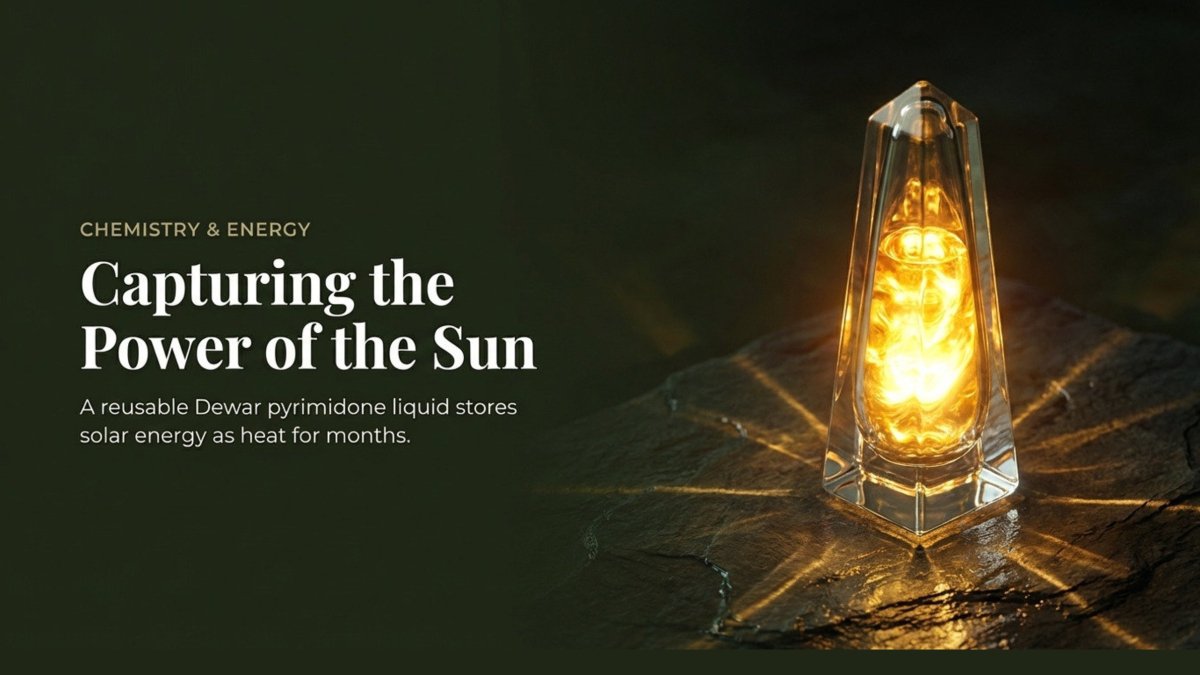
What if you could store sunlight in a bottle, the way we store water in a jug, and release the energy weeks or months later, exactly when you need it? That’s no longer a fantasy. Researchers at UC Santa Barbara have developed a liquid that does precisely that — and it might be one of the most exciting energy storage breakthroughs in years.
This reminds me of the Transformers storing energy in cubes. Do you remember energon cubes?
The technology is called Molecular Solar Thermal (MOST) energy storage, and the UCSB team’s version uses a specially engineered fluid based on modified pyrimidone molecules. When sunlight hits the liquid, each molecule undergoes a reversible structural change, shifting from a low-energy configuration into a strained, high-energy form, picture a tiny spring being wound up and locked in place. There it stays, patiently holding that energy until you’re ready to use it.
Releasing the energy is simple: apply a trigger such as heat or a mild acid, and the molecules snap back to their original shape, releasing the stored energy as heat.The whole process is completely reversible and can be repeated over and over again without the liquid degrading.
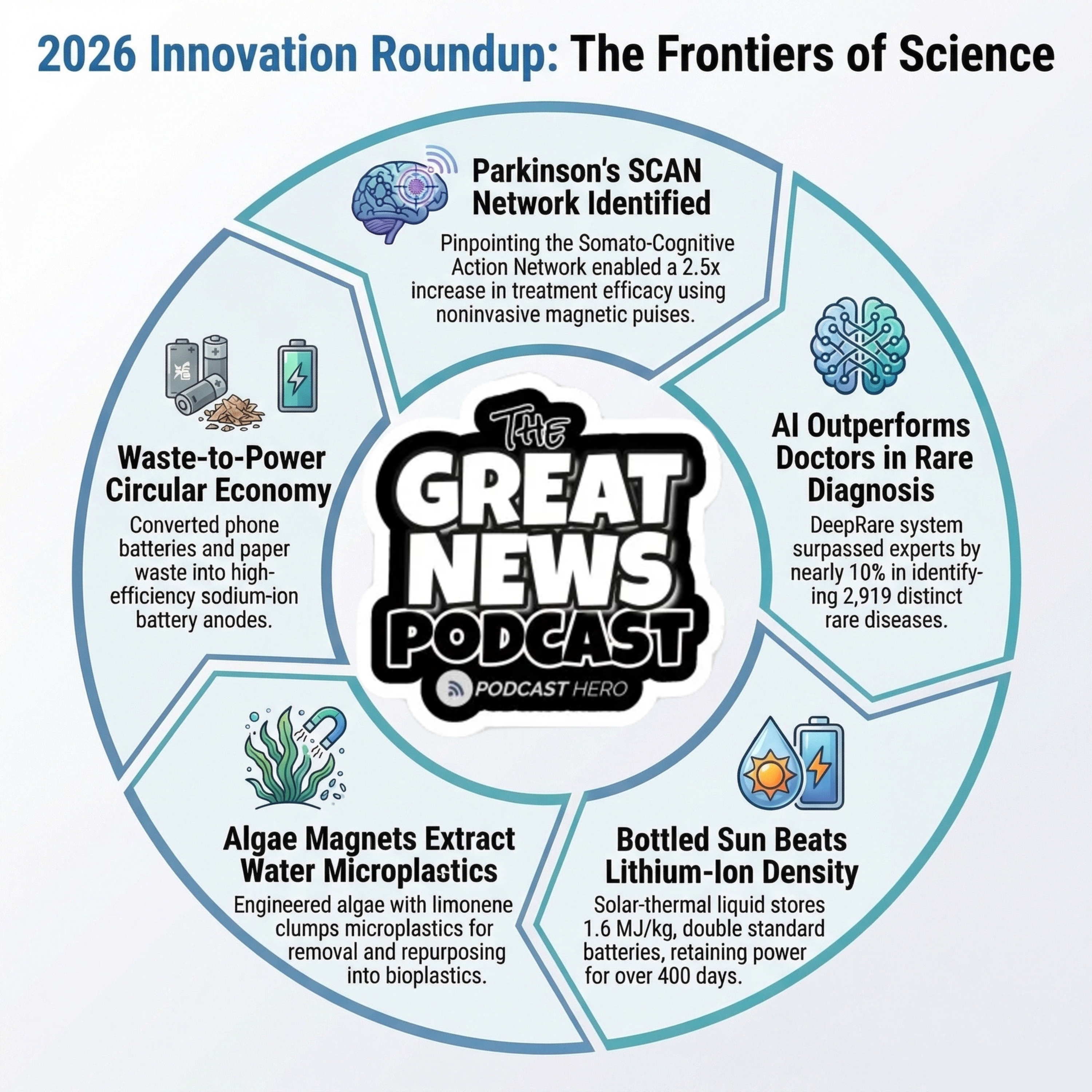
What makes this stand out from ordinary batteries? A few things. For starters, the Dewar isomer is extremely stable, with a calculated half-life of up to 481 days at room temperature, meaning you could charge the liquid in summer and tap into that stored warmth in the depths of winter. Then there’s energy density: the system achieves an energy density of about 1.6 MJ per kilogram, approximately double that of a standard lithium-ion battery. In testing, the stored energy was sufficient to boil water under normal ambient conditions — a meaningful demonstration of real-world usability.
Perhaps the most practical advantage is scalability. Because it’s a liquid, increasing energy storage capacity is a simple matter of using a larger quantity of the solution, and it can be pumped and transported using ordinary plumbing. No rare earth metals, no complicated electrochemical systems — just a clever fluid doing chemistry.
The applications are wide-ranging: rooftop solar collectors could circulate the liquid during the day to “charge” it, then feed it through a reactor to deliver heat for hot water, cooking, or home heating on demand. Further down the line, the technology could even be paired with thermoelectric systems to generate electricity.
There are still open questions — cost at scale, long-term cycle performance, and catalyst separation among them — but the fundamentals are compelling. The research was published in the journal Science, and it marks the first MOST system to demonstrate genuinely practical heat output. The idea of bottled sunlight, once poetic, is starting to look a lot like engineering.

The Great News Podcast is your source for positive news, inspiring stories, and good news from around the world. We skip the doom and gloom of mainstream media to focus on scientific breakthroughs, environmental wins, and the inspiring news that proves the world is getting better. Join Andrew McGivern for a dose of optimism and uplifting stories that will change your perspective on human progress.
It is easy to find the
Keep looking for the good in the world, because it is not only there – its everywhere.
Welcome to the Great News podcast.
Tired of all the doom and gloom news from mainstream media? You'll get none of that here! Instead, you'll find inspiring stories and developments making the world a better place.
Brought to you by the Daily Quote, the podcast designed to kickstart your day in a positive way!
Today, we are diving into a massive regulatory shift that could save millions of lives, electric semi-trucks that double as mobile supercomputers, and a way to ”bottle” sunlight for use months later.
–Unlocking Personalized Medicine
–The Data Center that Drives Itself
–The Liquid That Could Change Solar Energy Forever
–The Tiny Green Machines Cleaning Our Water
And don't forget to stick around for the speed round, where we'll dive into even more great news!
–AI Just Beat Expert Doctors at Diagnosing Rare Diseases
–A Breakthrough in Parkinson’s Research
–The Philippines Recognizes Same-Sex Property Co-Ownership
–U.S. Organ Transplants Hit New Heights for the Fifth Year in a Row
This topic was featured in Great News podcast episode 34.
Source: New Atlas