Polystyrene is everywhere — protecting your new fridge, cradling wine bottles, padding out delivery boxes. And then, after roughly 72 hours of usefulness, it goes in the bin. From there, it heads to landfill, where it will sit for approximately 500 years, slowly breaking down into microplastics that end up in our oceans, our food chain, and ultimately, us. It’s one of the most persistent and problematic materials we’ve ever invented — and we keep making more of it.
But there’s a compelling alternative quietly growing in factories across the UK and Europe, and it’s made from mushrooms.
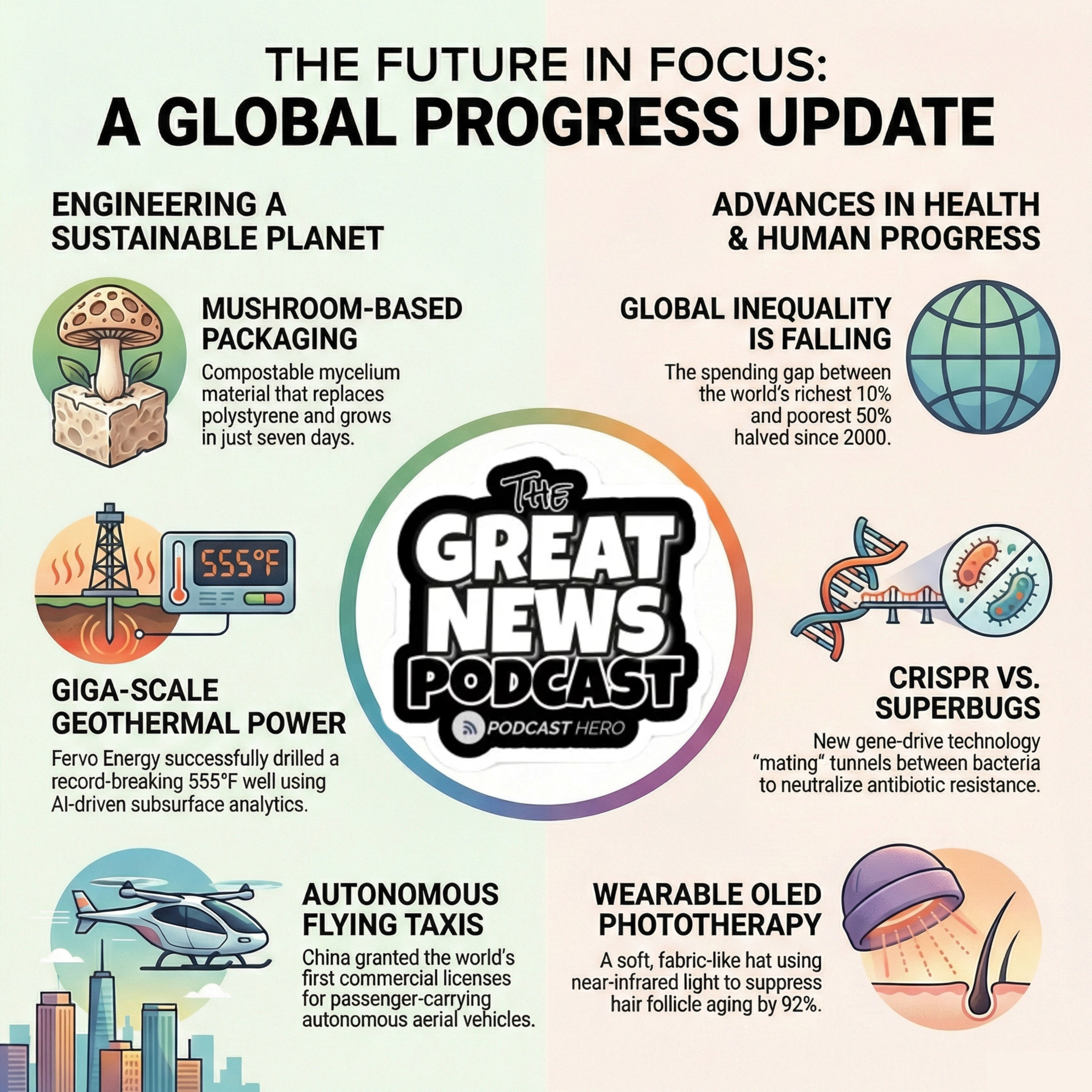
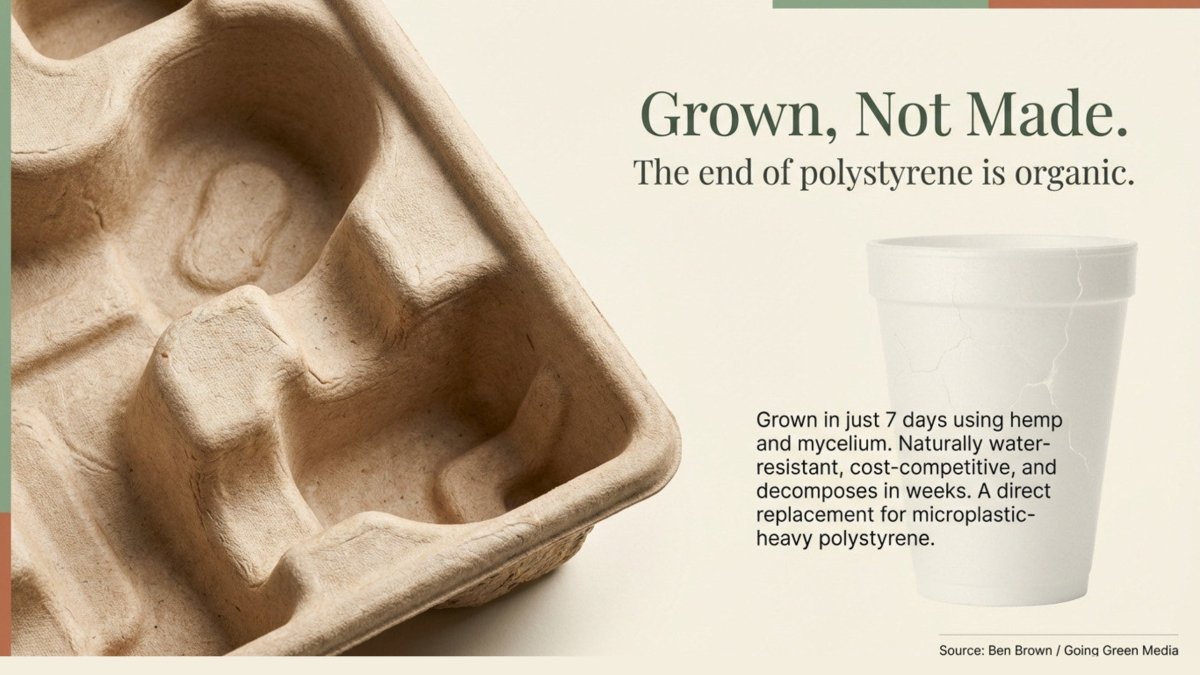
Magical Mushroom Company® (MMC) has developed a packaging material grown from mycelium — the root-like structure of fungi — combined with agricultural waste like hemp, cork, and sawdust. The chitin naturally present in mycelium acts as a binder, holding everything together without any synthetic additives. The result is grown, not manufactured, in as little as seven days. It’s naturally water resistant, cost-competitive with polystyrene, and robust enough to protect everything from glass bottles to heat pumps to home audio systems.
What happens at the end of its life? It goes in your food waste bin or compost heap and breaks down in weeks — not centuries.
Since launching in 2019, MMC has produced millions of pieces of mushroom packaging, working with brands including Diageo and Raymarine, and they’re just getting started. Their ambition is to become Europe’s largest sustainable packaging company, with factories across the UK and EU, and a goal of removing thousands of tonnes of polystyrene from landfills in the years ahead. They’ve already been awarded a £1.1 million Innovate Loan to open Europe’s first liquid mycelium inoculation plant — a move that’s expected to reduce both raw material costs and carbon footprint by 70%.
The challenge, as always, is scale. The solution exists. The technology works. The business case stacks up. What’s needed now is adoption — from manufacturers, retailers, and consumers willing to ask the question: why are we still using polystyrene?
Millions of pieces have already been replaced. The question is whether we have the collective will to make it the rule, not the exception.
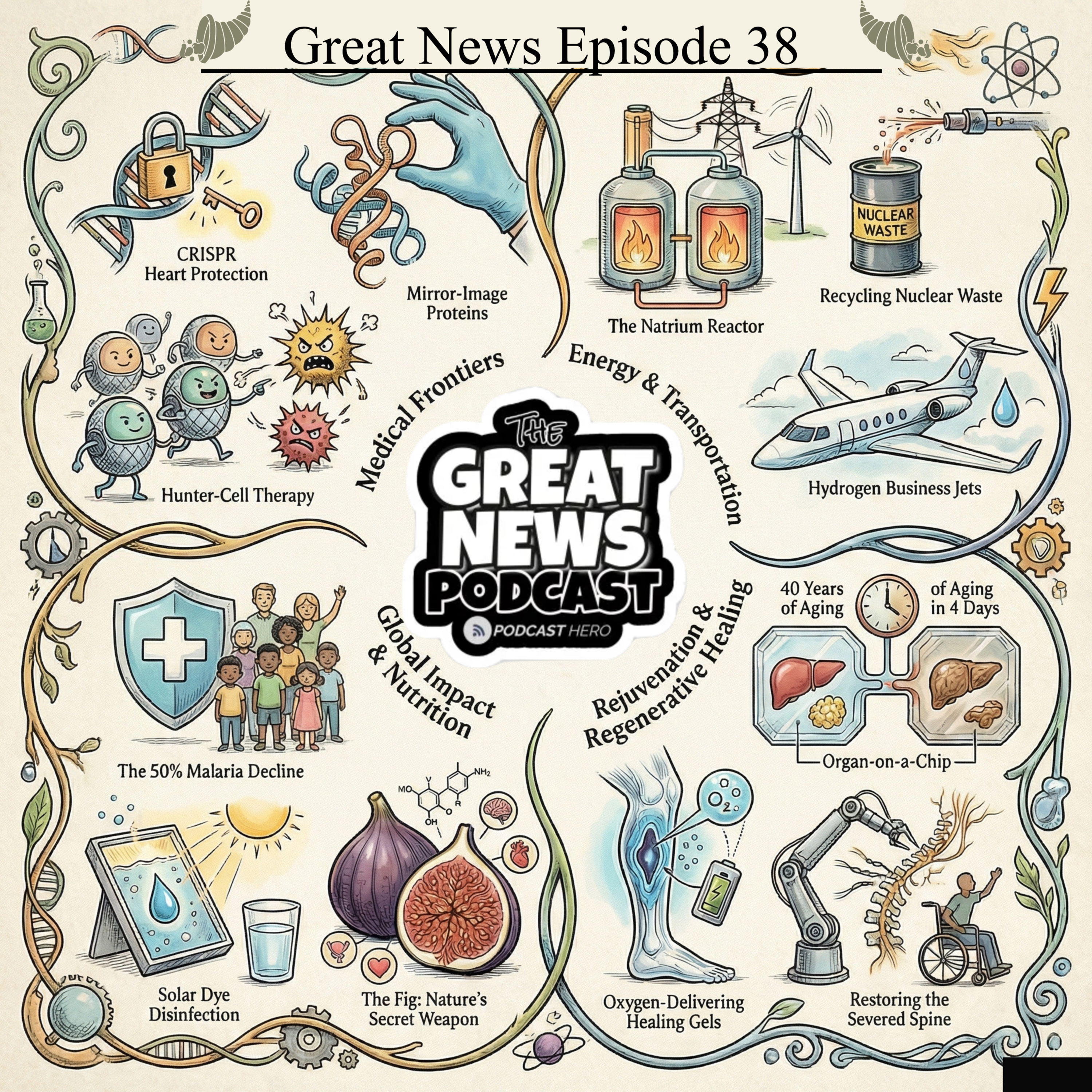
This topic was covered in Great News podcast episode 31.

The Great News Podcast is your source for positive news, inspiring stories, and good news from around the world. We skip the doom and gloom of mainstream media to focus on scientific breakthroughs, environmental wins, and the inspiring news that proves the world is getting better. Join Andrew McGivern for a dose of optimism and uplifting stories that will change your perspective on human progress.
It is easy to find the
Keep looking for the good in the world, because it is not only there – its everywhere.
Today we’re diving into some truly groundbreaking advancements in biotechnology, sustainable energy, and global economics. What if we could actually reverse antibiotic resistance in bacteria instead of just trying to keep up with it?
Plus, we have packaging that grows itself from mushrooms, a giga-scale geothermal breakthrough in Utah, and new data showing the world is more equal than you might think.
- What If We Could Teach Bacteria to Forget How to Resist Antibiotics?
- Global Inequality Declines Substantially
- Geothermal Breakthrough
And don't forget to stick around for the speed round where we'll dive into even more great news.
- The Screen Time Panic May Be Missing the Point
- China grants commercial flying taxi licenses
- The Future of Hair Loss Treatment Might Just Be a Hat
- Your Immune System Could Be the Key to Slowing Ageing
- AI has identified 15 new magnetic materials
And don't forget to follow the Daily Quote