

Welcome to the Daily Quote, the podcast designed to kickstart your day in a positive way. I'm your host Andrew McGivern, and this episode is brought to you by the Great News podcast.
Today's quote comes from Fyodor Dostoyevsky, Russian novelist, philosopher, and one of the most psychologically penetrating writers in the history of literature.
A man who was sentenced to death by firing squad, reprieved at the last possible moment while already standing before the guns, sent to four years of hard labour in Siberia, and who spent much of his life in the grip of epilepsy and crippling debt.
A man who had every reason to count only troubles but understood something that allowed him to see past all of his.
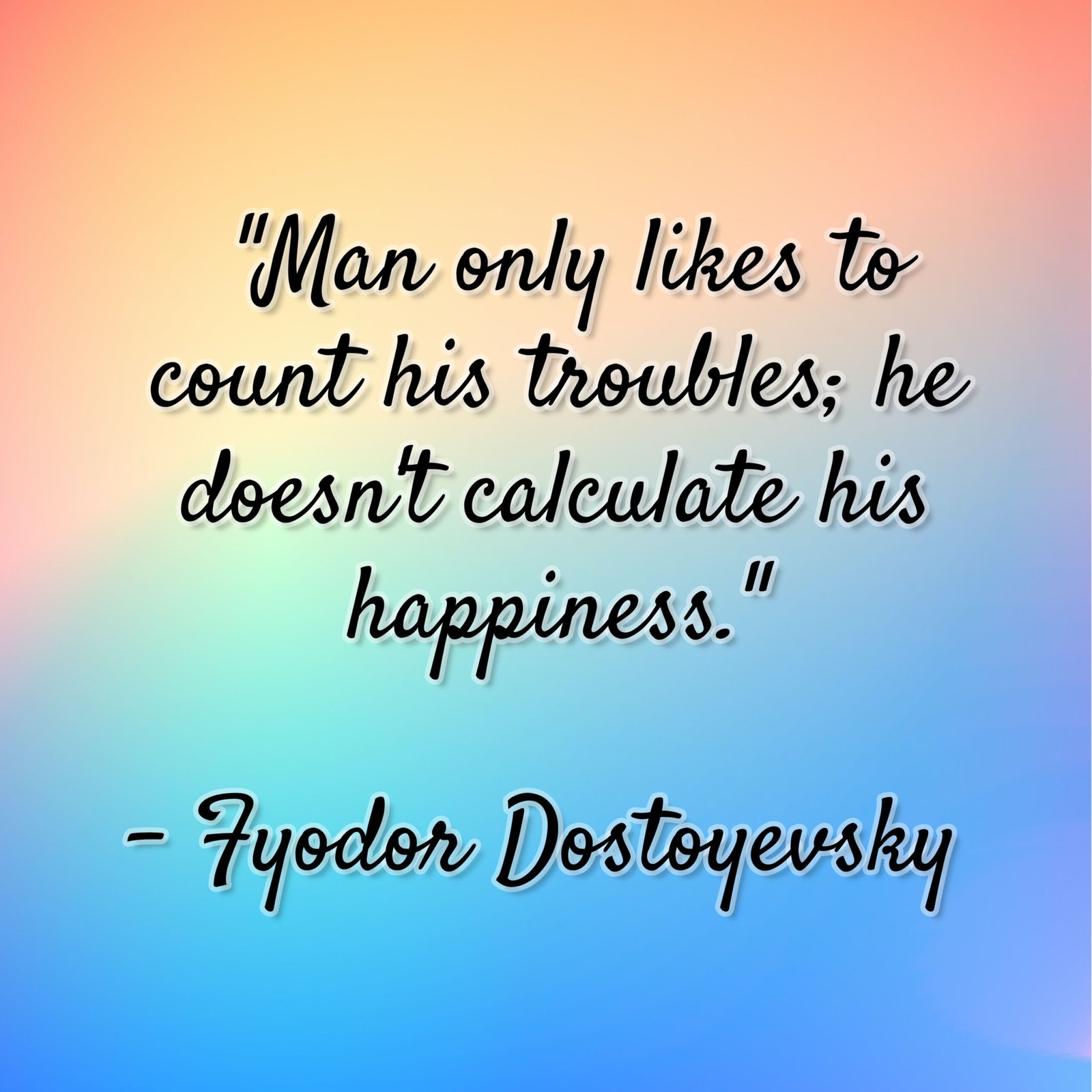
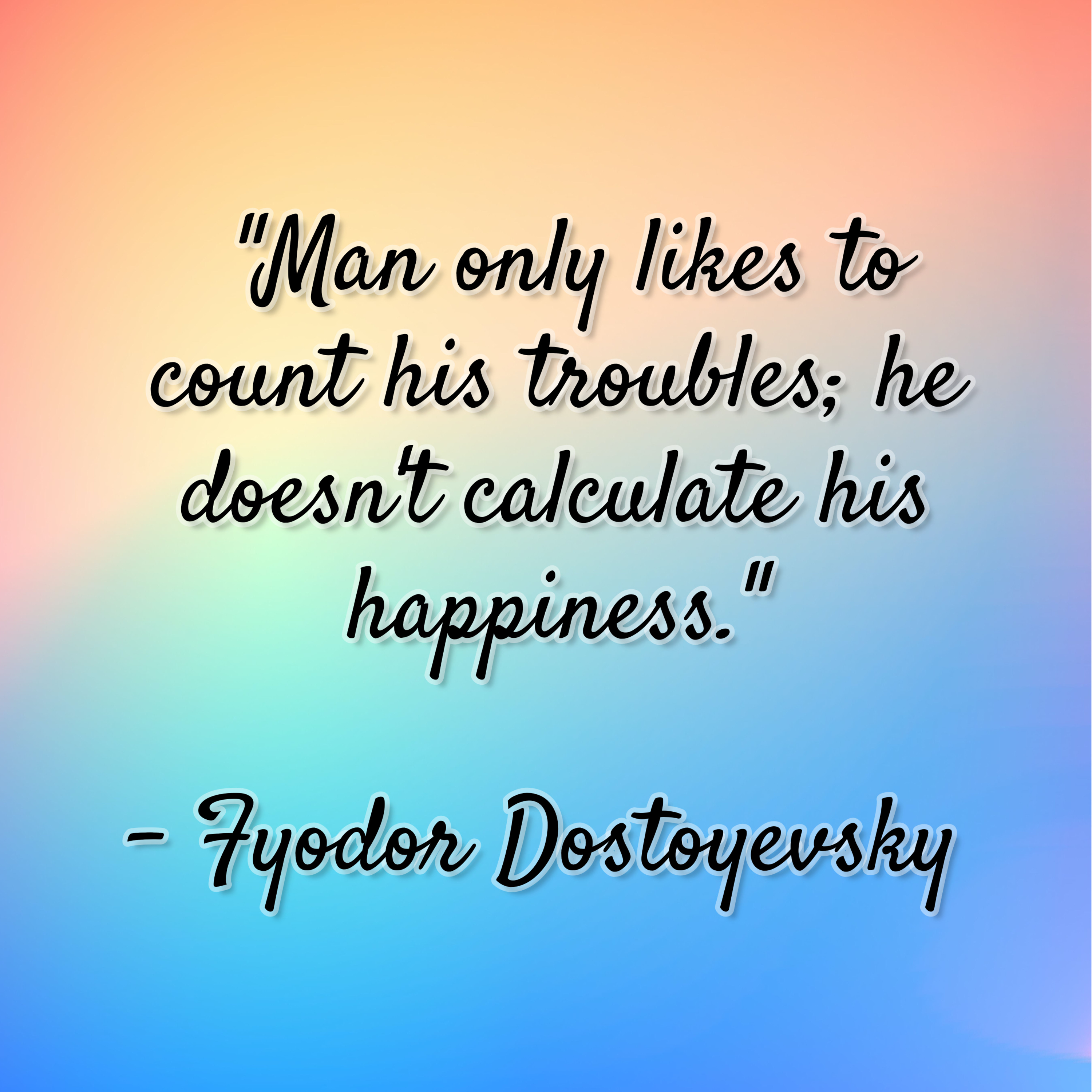
From his collection Notes from Underground, he wrote:
”Man only likes to count his troubles; he doesn't calculate his happiness.”Dostoyevsky wrote that in the 19th century. A hundred and fifty years later, neuroscience caught up with him and confirmed every word.
Psychologist Rick Hanson put it this way: the brain is like Velcro for negative experiences and Teflon for positive ones. It isn't a character flaw. It isn't weakness or ingratitude. It's biology.
Our brains evolved to prioritize threats. The amygdala, the brain's threat-detection centre, responds to negative stimuli with roughly twice the neural activation of positive ones.
Hanson describes how negative experiences are instantly registered and intensely stored in what he calls implicit memory, the deep feeling of what it is like to be alive. And that implicit memory bank gets shaded darker and darker by the slowly accumulating residue of negative experiences, while positive ones largely pass through without sticking.
Here's what that means in practical terms. Think about a day where nine things went well and one thing went wrong. Where does your mind go at the end of that day? Where does it go at 2am when you can't sleep? The nine disappear. The one expands until it fills the room. Not because you're pessimistic. Because your brain was built that way.
Researcher John Gottman found that it takes at least five positive interactions to make up for the emotional weight of a single negative one. The deck is structurally stacked against happiness, unless you actively intervene.
And that intervention is exactly what Dostoyevsky is pointing toward. Not toxic positivity. Not pretending the troubles aren't real. But the deliberate, conscious act of calculating your happiness with the same attention you automatically give to your troubles. Counting what went right. Noticing what is already good. Holding the positive long enough for it to actually register.
Hanson's research suggests that for a positive experience to encode into long-term memory, it needs to be held in conscious attention for at least ten to twenty seconds, otherwise it simply disappears. And now with the internet and social media amplifying bad news and and catastrophe from all all around the world it makes things even worse.
Because news media knows very well that our brains are wired to pay attention to negative news so that is what they give us. In the attention economy the money is in the doom and gloom.
And that is why I started the Great News podcast and the Daily Quote. To spread the good news and prove that the world is a better place than you might think.
So here's the question: At the end of today, before you fall asleep tonight, what if you spent two minutes calculating your happiness with the same diligence your brain automatically applies to your troubles? Or maybe write it down in a gratitude journal. We've talked about those recently too.Do not deny the hard things. Don't pretend the problems don't exist. But count the other column too, the one your brain skips over by default. The kindness you received. The moment that worked. The small thing that was, quietly, good.
That's it for today. I'm Andrew McGivern and I'll see you in the next one with another Daily Quote.