
Welcome to the Daily Quote, the podcast designed to kickstart your day in a positive way. I'm your host Andrew McGivern and this episode is brought to you by the Great News podcast. Listen… because good news should be heard. The link is in the show notes.
Today's quote is widely attributed to Michelangelo: sculptor, painter, architect, and poet of the Italian Renaissance, the man behind the Sistine Chapel ceiling, the statue of David, and some of the most breathtaking works of human creation ever produced. The original source of the quote can't be verified but as you'll hear, no one in history lived its truth more completely.
It goes like this:
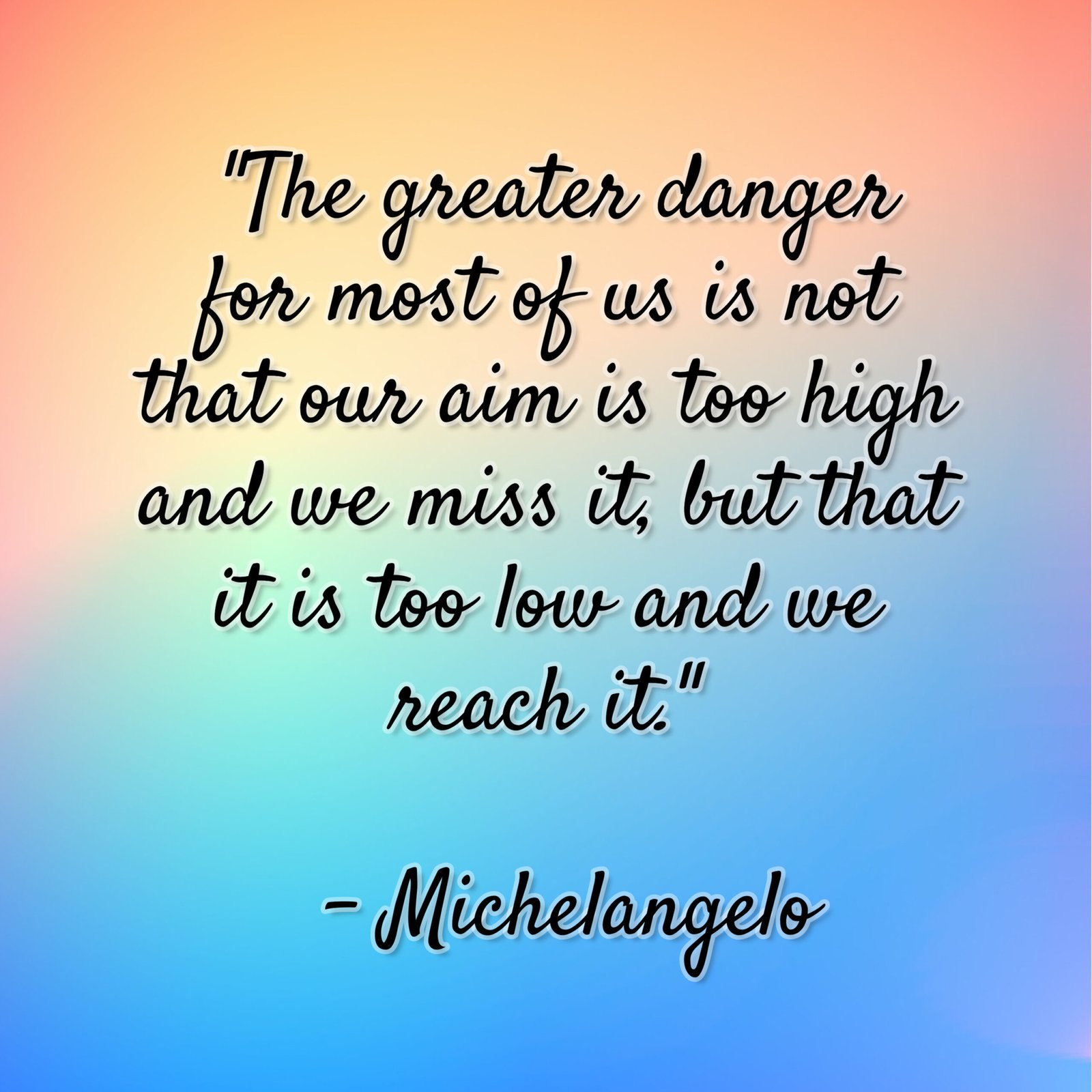
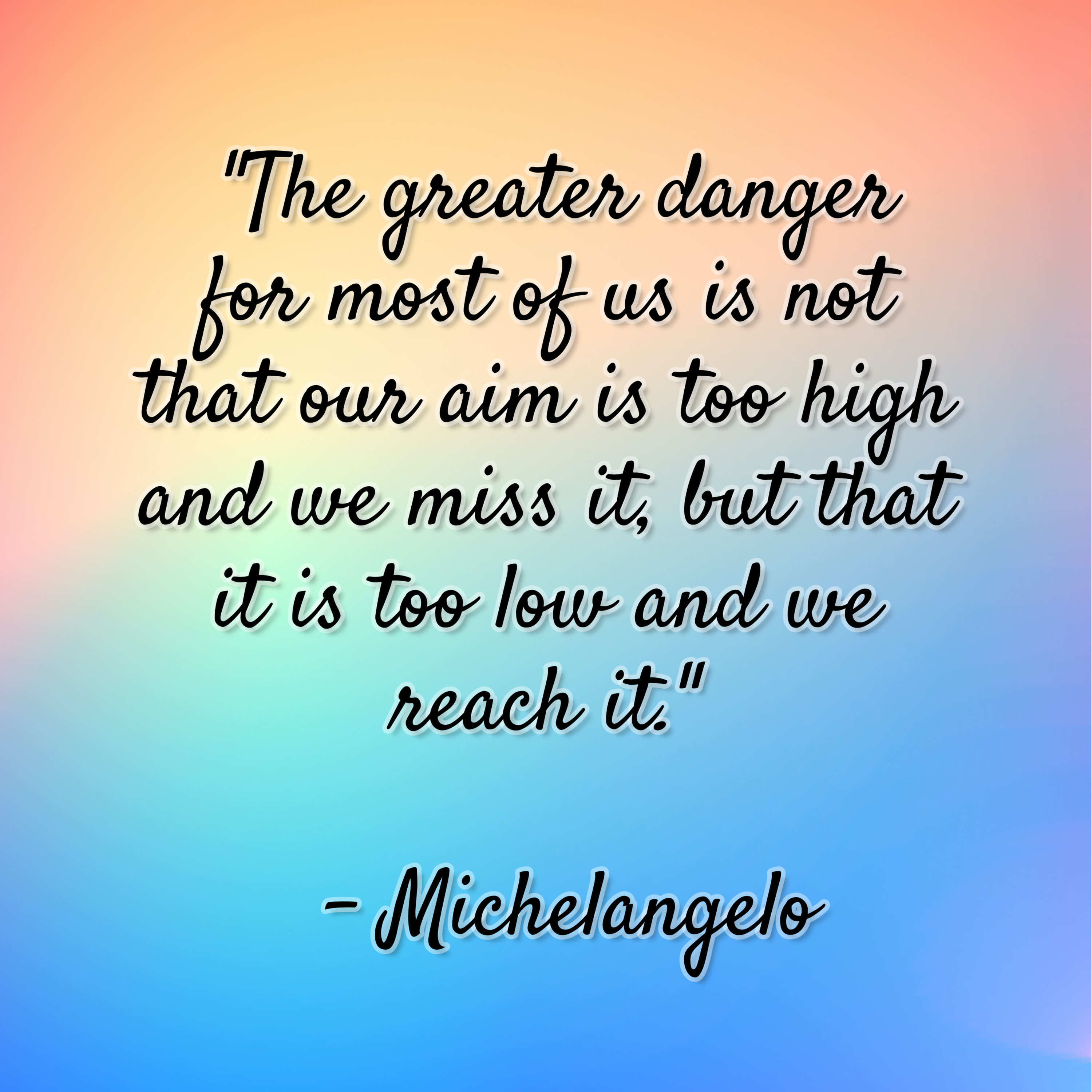
”The greater danger for most of us is not that our aim is too high and we miss it, but that it is too low and we reach it.”
This quote is profound because it inverts the fear most of us carry through our entire lives.
We are terrified of aiming too high. Of reaching for something beyond our current capability and falling short. Of being seen trying and failing. Of the gap between ambition and outcome being visible to others. That fear is so powerful and so pervasive that most people quietly negotiate their dreams downward before they've even begun. Setting targets they know they can reach, pursuing goals that won't embarrass them if they achieve less, building a life sized carefully to avoid the specific pain of falling short.
And Michelangelo, or at least the wisdom attributed to him, is saying: that's the wrong fear… entirely. The danger isn't the miss. The danger is the reach that was never attempted. The aim that was set so low that achieving it left everything that mattered most untouched.
Consider what Michelangelo himself chose to aim at. He undertook projects of almost incomprehensible ambition, years of relentless, solitary effort on the Sistine Chapel ceiling, lying on scaffolding painting above his head until his neck and eyes failed him. He could have aimed lower. He could have produced work that was merely excellent rather than transcendent. Nobody was forcing him toward the ceiling of possibility. He chose it.
And here's what the low aim costs that most people never calculate: not just the outcome, but the person. When you set your aim deliberately within what you already know you can achieve, you don't grow. You confirm. You arrive at the destination exactly the same person who set out, no larger, no more capable, no more alive and no way to know what you're actually capable of.
The low aim reached is a kind of comfortable stagnation dressed up as success. The high aim missed is something completely different. Even in the missing, even in the falling short, you become someone you weren't before. Your capacity expands in the attempt. The distance between where you started and where you fell short is ground you now occupy that you didn't before. As conductor Herbert von Karajan put it: ”Those who have achieved all their aims probably set them too low.” The fully achieved goal is its own confession.
The miss at least proves you were aiming at something worth going for.
So here's the question: Where in your life have you quietly negotiated your aim downward, not because the higher target was impossible, but because falling short of it felt more frightening than never attempting it at all?
Because the wisdom attributed to Michelangelo isn't asking you to be reckless. It's asking you to be honest about which fear is actually the more dangerous one.
Falling short of a high aim builds something. Reaching a low one confirms nothing.
Aim higher. The miss is better than the mark.
That's it for today. I'm Andrew McGivern — I'll see you in the next one with another Daily Quote.