Quitting smoking is notoriously hard. Most people who try will relapse. Many will try and fail multiple times before it sticks — if it ever does. So when a large-scale analysis finds a tool that triples your chances of success, it’s worth paying attention. That tool, according to new research, might already be sitting in your pocket.
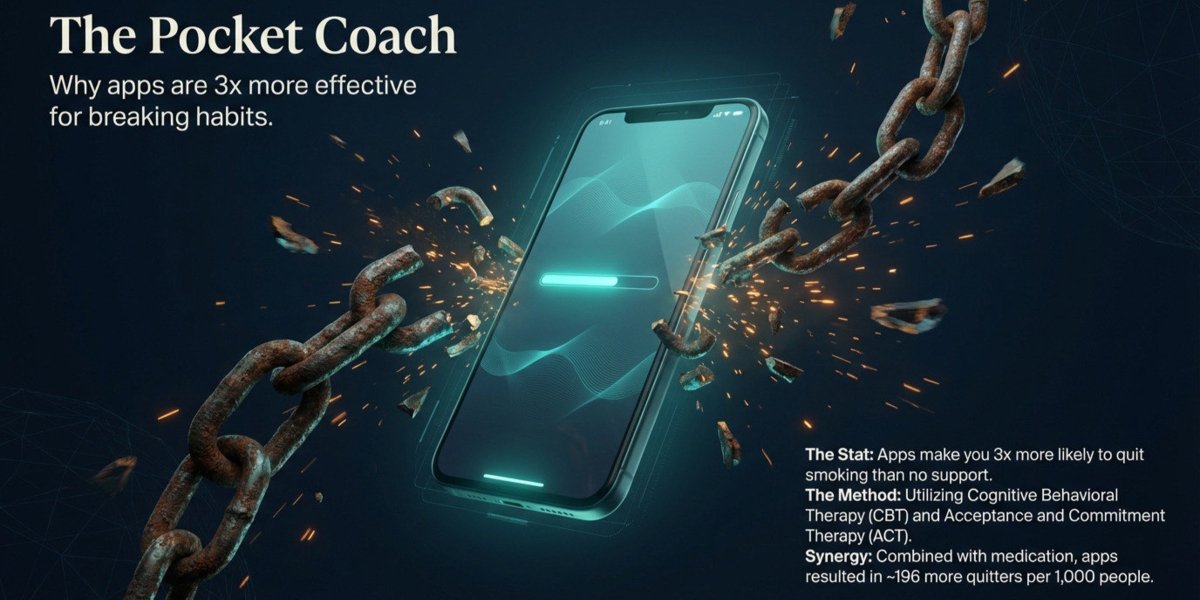
A meta-analysis published in BMJ Evidence Based Medicine examined 31 clinical trials involving more than 12,000 participants to assess how effective smartphone apps are at helping people quit smoking. The conclusion was striking: people using a smoking cessation app were roughly three times more likely to stay smoke-free for at least six months compared to those who received little or no support. Translated into real numbers, that works out to approximately 40 additional successful quitters for every 1,000 people who use an app versus those who go it alone.
Even more impressive were the results when apps were combined with traditional cessation methods. When paired with medication like nicotine patches or prescription pills, app users saw dramatically better outcomes — around 196 more successful quitters per 1,000 people compared to those relying on medication alone. In other words, the apps don’t just work as a standalone tool; they amplify everything else you’re already doing.
What Makes These Apps Different
The apps included in the meta-analysis weren’t just simple step-counters or reminder tools. Many were built on well-established psychological frameworks — Cognitive Behavioral Therapy (CBT), Acceptance and Commitment Therapy (ACT), and other mindfulness-based approaches. Some, like the mindfulness training app Craving to Quit, work by helping users observe and sit with cravings rather than fight or suppress them. Others, like the gamified Tobbstop (developed for Spanish smokers), use behavioral design to keep engagement high.
The breadth of approaches matters because smokers aren’t a monolithic group. A young casual smoker in their twenties has different needs than a long-term heavy smoker in their fifties. The variety of frameworks across apps means there’s likely something suited to different personalities, motivations, and smoking histories.
Why Apps Work When Other Methods Fall Short
Part of what makes smoking so difficult to quit is the nature of nicotine cravings: they’re unpredictable, intense, and often strike at inconvenient moments — late at night, during stressful commutes, after meals. Traditional cessation support like in-person counseling or group therapy is enormously helpful, but it can’t follow you into those moments.
A smartphone can. That 3 AM craving doesn’t care that your therapist’s office is closed. But an app can deliver a breathing exercise, a motivational nudge, a distraction game, or a progress update the moment you need it most. The immediacy and accessibility of mobile support fills a gap that even the best structured programs leave open.
There’s also something psychologically powerful about tracking your own progress. Seeing the days, dollars saved, and health milestones accumulate in an app creates a tangible record of effort and success that reinforces the identity shift from “smoker trying to quit” to “non-smoker.” That shift in self-perception, even in small doses, can be genuinely meaningful.
The Caveats Worth Knowing
The researchers were careful not to overstate their findings. The overall quality of the evidence is currently rated as low, for a few important reasons. Many of the trials were relatively small, and a significant proportion relied on self-reported abstinence rather than objective medical confirmation through breath or urine tests. More concerningly, dropout rates were high — over 30% in some studies — which can skew results in favor of the app.
The geographic coverage also has a notable gap: most of the studies were conducted in high-income countries like the US, Germany, Spain, and Japan. It remains unclear how well these results would translate to lower-income settings where smartphone access, digital literacy, and healthcare infrastructure vary considerably.
The research reviewed was published between 2018 and 2025, which helps address an older critique — that prior app studies relied on outdated software. But the technology continues to evolve rapidly, and today’s best apps may already outpace what was studied.
What This Means If You’re Trying to Quit
The evidence isn’t perfect, but it’s pointing in a clear and consistent direction: apps work, they work better when combined with other methods, and the ones grounded in behavioral psychology seem to work best of all.
If you’ve tried to quit before and struggled, or if you’re considering quitting for the first time, it’s worth adding an app to your toolkit — particularly one that uses CBT or mindfulness techniques. You don’t have to choose between an app and medication or counseling. The research suggests doing all three at once gives you the best odds.
Quitting smoking is one of the most impactful things a person can do for their long-term health. That the most powerful tool for doing it may be free, available instantly, and already in billions of hands is genuinely good news.
This topic was featured in Great News podcast episode 30.

Because good news should be heard…
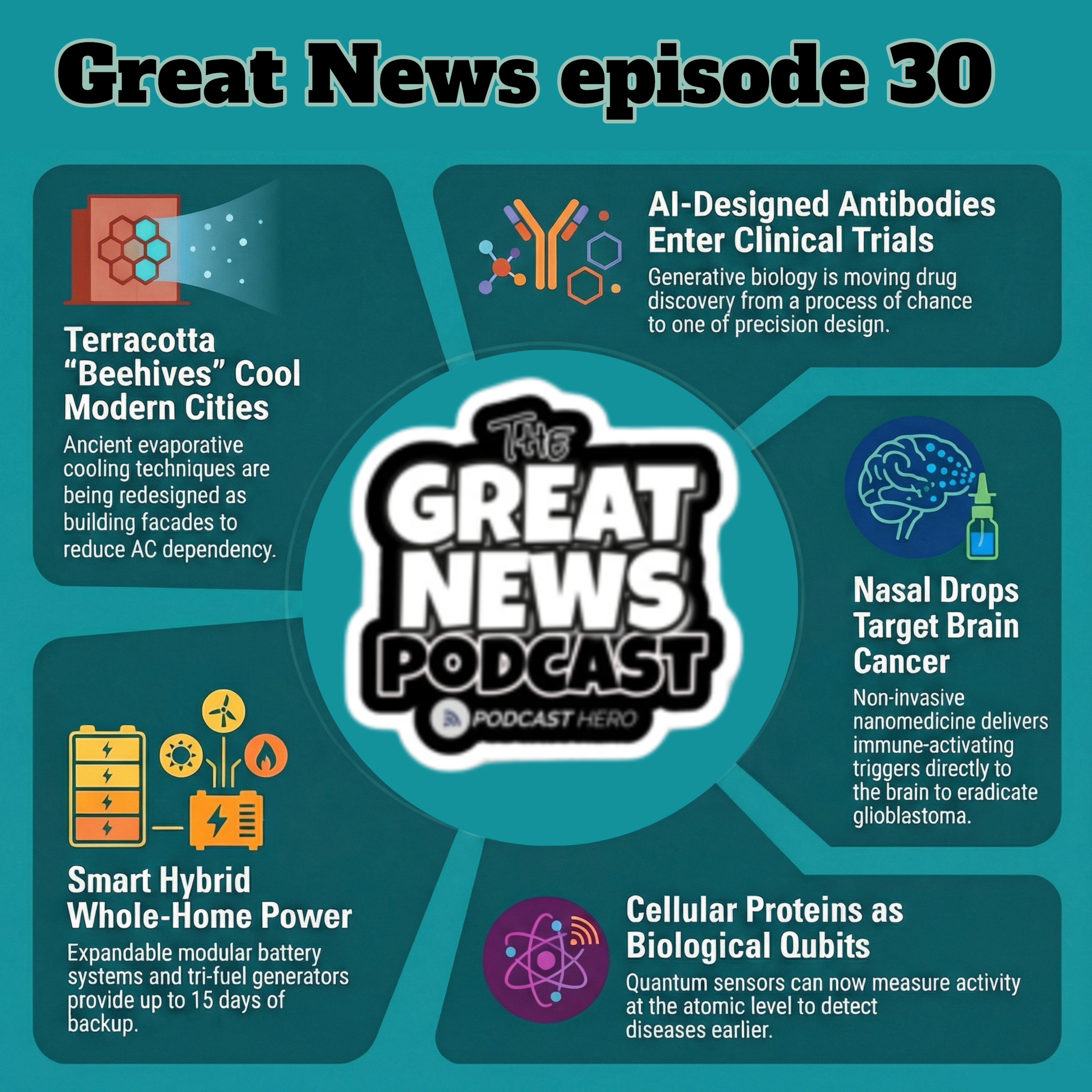
Today, we are exploring how artificial intelligence is moving medicine from a game of chance to a masterwork of design. Plus, we’ll look at a cooling system inspired by ancient beehives, a non-invasive nasal drop that could tackle the deadliest brain cancers, and a backup power system that ensures you’ll never even notice a blackout.
How AI Is Reinventing the AntibodyClay, Cool Air, and a 5,000-Year-Old IdeaNasal Nanodrops: A Promising New Weapon Against the Deadliest Brain CancerNever Get Caught in the Dark Again
And stay tuned for our speed round, where we’ll cover everything from quantum biological sensors to the ”switch” that might repair the human liver.
Source: New Atlas