
Mirror-Image Proteins: A Novel Strategy to Combat Alzheimer’s Disease
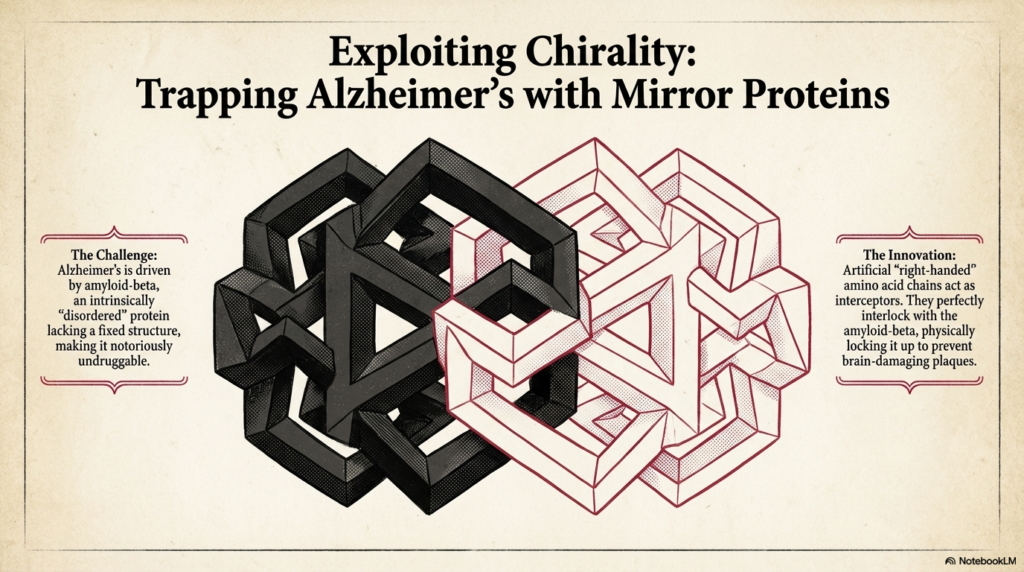
Alzheimer’s disease, a devastating neurodegenerative disorder, continues to pose one of the greatest challenges to modern medicine. Characterized by progressive memory loss and cognitive decline, the disease is strongly linked to the accumulation of abnormal protein aggregates in the brain, primarily amyloid-beta (Aβ) peptides . For decades, researchers have struggled to develop effective treatments, partly because Aβ is an “intrinsically disordered protein” (IDP)—lacking a stable, fixed three-dimensional structure, which makes it notoriously difficult to target with conventional drugs . However, a groundbreaking study from Kobe University in Japan offers a new ray of hope, leveraging the fundamental chemical principle of chirality to design mirror-image proteins that can effectively disable the Alzheimer’s-causing Aβ .
The Enigma of Amyloid-Beta and the Chirality Solution
Proteins, the workhorses of our cells, are typically composed of amino acids that exist in a specific spatial arrangement, often referred to as “left-handed” or L-amino acids. This inherent handedness, or chirality, is crucial for their biological function. The Kobe University team, led by biochemical engineer Maruyama Tatsuo, recognized that this very property could be exploited to tackle the Aβ problem. Their innovative approach involves creating small protein fragments made of “right-handed” or D-amino acids—the mirror images of those found in nature .
The concept is elegantly simple yet profoundly effective. Imagine trying to shake hands with your own reflection; your right hand fits perfectly with its left-handed mirror image. Similarly, the designed D-amino acid protein fragment acts as a molecular “left hand” that can specifically bind to the naturally occurring L-amino acid Aβ peptide, which acts as a “right hand.” This unique interaction effectively “handcuffs” the Aβ, preventing it from aggregating with other Aβ peptides and forming the toxic plaques that disrupt brain cell function .
A Systematic Approach to an “Undruggable” Target
Published in Chemistry—A European Journal in 2026, the research details a systematic study that elucidated the molecular mechanisms governing the efficient binding between L- and D-amino acid proteins . This understanding allowed the team to rationally design a short D-amino acid chain capable of binding to Aβ with high affinity. In comparative tests, this mirror-image interceptor demonstrated superior efficacy in inhibiting Aβ aggregation compared to other promising drug candidates .
The team further validated their findings using mouse brain cell cultures. When brain cells were exposed to Aβ, their viability plummeted to 50%. Crucially, cells that were also treated with the mirror-image interceptor showed no reduction in viability, indicating that the D-amino acid fragment successfully neutralized the toxic effects of Aβ . Moreover, the interceptor protein itself was found to be non-toxic to brain cells, a critical safety consideration for any potential therapeutic .
Broader Implications for Neurodegenerative Diseases
This breakthrough extends beyond Alzheimer’s disease. Intrinsically disordered proteins are implicated in a range of other challenging conditions, including Parkinson’s disease and certain cancers . For years, these IDPs have been considered “undruggable” due to their flexible nature. The Kobe University team’s chirality-guided molecular recognition strategy offers a new paradigm for drug development, shifting from a trial-and-error approach to a more systematic and rational design process for a new class of therapeutic molecules .
While this research is still in its early stages, it represents a significant leap forward in our understanding of how to combat diseases driven by protein misfolding and aggregation. The ability to precisely target and disable these elusive proteins with mirror-image counterparts opens up exciting avenues for future therapies, potentially transforming the landscape of treatment for neurodegenerative disorders.
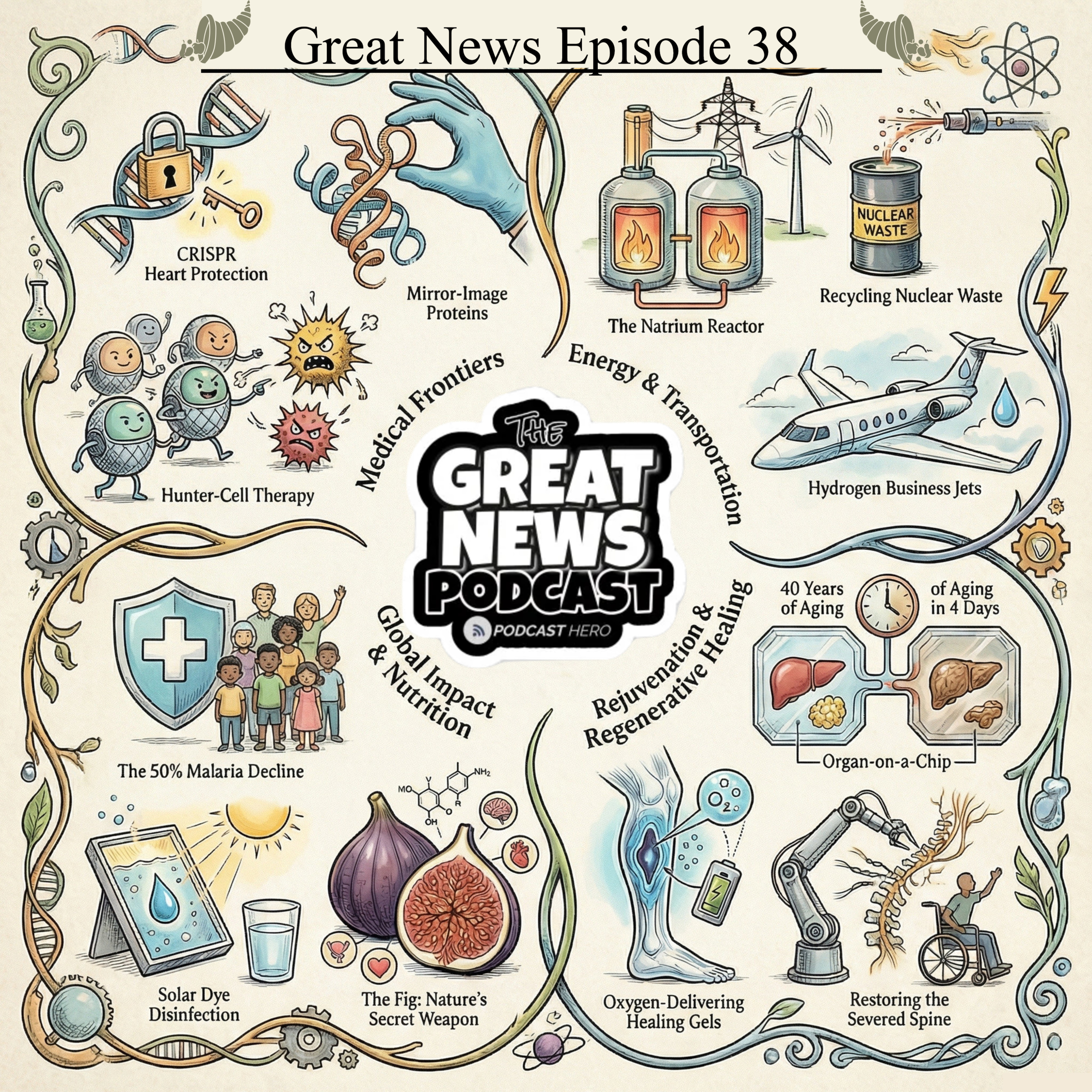
This topic is featured in Great News podcast episode 38.

The Great News Podcast is your source for positive news, inspiring stories, and good news from around the world. We skip the doom and gloom of mainstream media to focus on scientific breakthroughs, environmental wins, and the inspiring news that proves the world is getting better. Join Andrew McGivern for a dose of optimism and uplifting stories that will change your perspective on human progress.
It is easy to find the
Keep looking for the good in the world, because it is not only there – its everywhere.
The Great News podcast is brought to you by the Daily Quote.
Today, we have a packed episode! What if we could study forty years of human aging in just four days? That is our lead story. Plus, we’ll look at a hydrogen-powered business jet hitting major milestones, a healing gel that could prevent amputations from chronic wounds, and a solar device that makes drinking water safe in under an hour.
Organ-on-a-Chip Replicates Decades of Aging in Days
Hydrogen Business Jet Moves Closer to Reality
How a New Oxygen-Delivering Gel Could Save Limbs from Chronic Wounds
Solar-Powered Device Disinfects Water in Just One Hour
Stick around for the speed round, where we’ll cover even more breakthroughs in medicine and energy!
Terminating Super-Bugs in a single day!
Mirror-Image Proteins: A Novel Strategy to Combat Alzheimer’s Disease
Figs: Your Sweet Secret Weapon for Health and Wellness
Bill Gates’ TerraPower Gets Green Light for Advanced Reactor
Turning Nuclear Waste into Power and Reducing its Deadly Lifespan
Miraculous Advances in Spinal Cord Injury TreatmentMalaria Vaccine Saving Children in NigeriaA New Way to Fight Alzheimer’s Disease
Sources:
News-Medical.net. “Mirror image proteins offer new way to disable Alzheimer’s disease.”
Kobe University. “Mirror fragments intercept Alzheimer’s-causing protein.”