New Tech Eliminates Drug Resistant Bacteria in One Day!
The human body is home to trillions of bacteria, most of which are benign or even beneficial, aiding in digestion and supporting our immune system. However, when a deadly, drug-resistant strain infiltrates this delicate ecosystem, the consequences can be catastrophic. Antimicrobial resistance (AMR) is a looming global crisis, projected to cause over 10 million deaths annually by 2050 . As our arsenal of traditional antibiotics dwindles, scientists are turning to radical new strategies. A groundbreaking approach developed by researchers at the University of Oxford is fighting fire with fire: deploying genetically engineered “killer cells” to hunt down and eliminate superbugs in a matter of hours .
This innovative strategy, known as minicell therapy, represents a paradigm shift in how we combat bacterial infections. Instead of relying on chemical compounds that bacteria can eventually outsmart, this method utilizes synthetic biology to create living, programmable weapons that selectively target pathogens while leaving healthy microbiomes intact .
The Growing Threat of Antimicrobial Resistance
For decades, antibiotics have been the cornerstone of modern medicine, turning once-fatal infections into easily treatable conditions. However, the widespread use and misuse of these drugs have accelerated the evolutionary arms race between humans and bacteria. When exposed to antibiotics, susceptible bacteria die off, but those with random mutations that confer resistance survive and multiply. Over time, these resistant strains become dominant, rendering our most potent drugs ineffective .
The pipeline for new antibiotics has largely stalled. The last entirely new class of antibiotics introduced into clinical practice dates back to the 1980s . While recent discoveries, including AI-designed antibiotics, offer a glimmer of hope, the development and testing process is notoriously slow. Bacteria, on the other hand, mutate and share resistance genes with alarming speed. Alternative treatments, such as phage therapy (using viruses to kill bacteria) and neutralizing antibodies, have shown promise but face significant hurdles, including stability issues, potential toxicity, and high manufacturing costs .
Enter the SimCell: A Smart, Living Drug
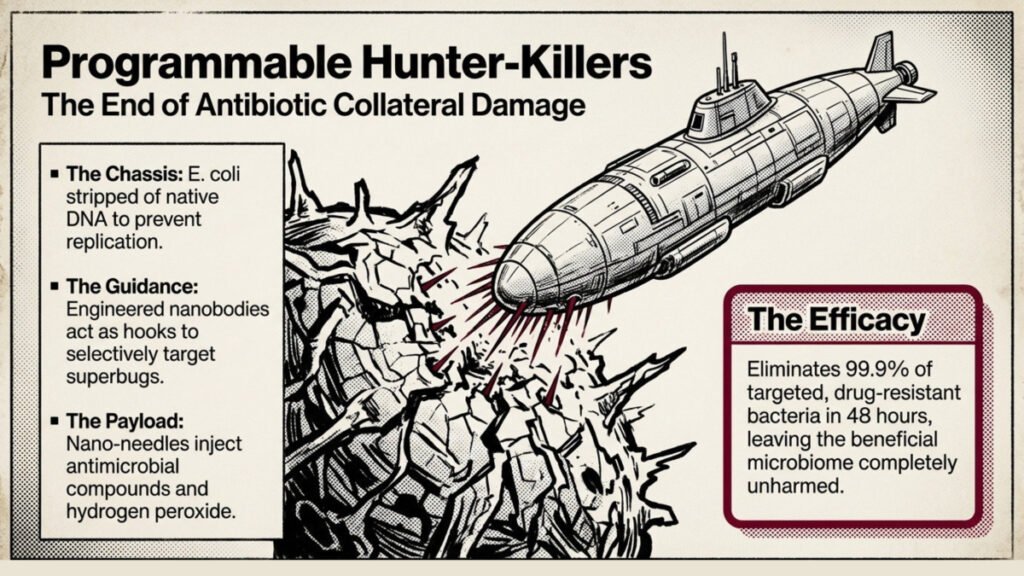
To overcome these challenges, the Oxford team turned to a unique biological tool: the SimCell (short for “simple cell”). SimCells are created by stripping Escherichia coli (E. coli) bacteria of their native DNA, rendering them incapable of replication . By deleting an additional gene, researchers can create even smaller versions known as mini-SimCells, which are roughly five times smaller than their parent cells .
While E. coli is often associated with foodborne illness, benign strains are workhorses in synthetic biology. They are robust, easy to cultivate, and highly amenable to genetic modification. However, using live bacteria as therapeutics carries inherent risks, such as uncontrolled growth within the body or triggering severe immune responses. SimCells mitigate these risks entirely. Because they lack a chromosome, they cannot reproduce or evolve, yet they retain the cellular machinery necessary to synthesize proteins from introduced designer DNA .
This makes SimCells an ideal canvas for synthetic biology. They have already demonstrated a promising safety profile in clinical trials as delivery vehicles for cancer drugs, with one formulation even receiving “Fast-Track” status from the FDA .
The “One-Two Punch” Mechanism
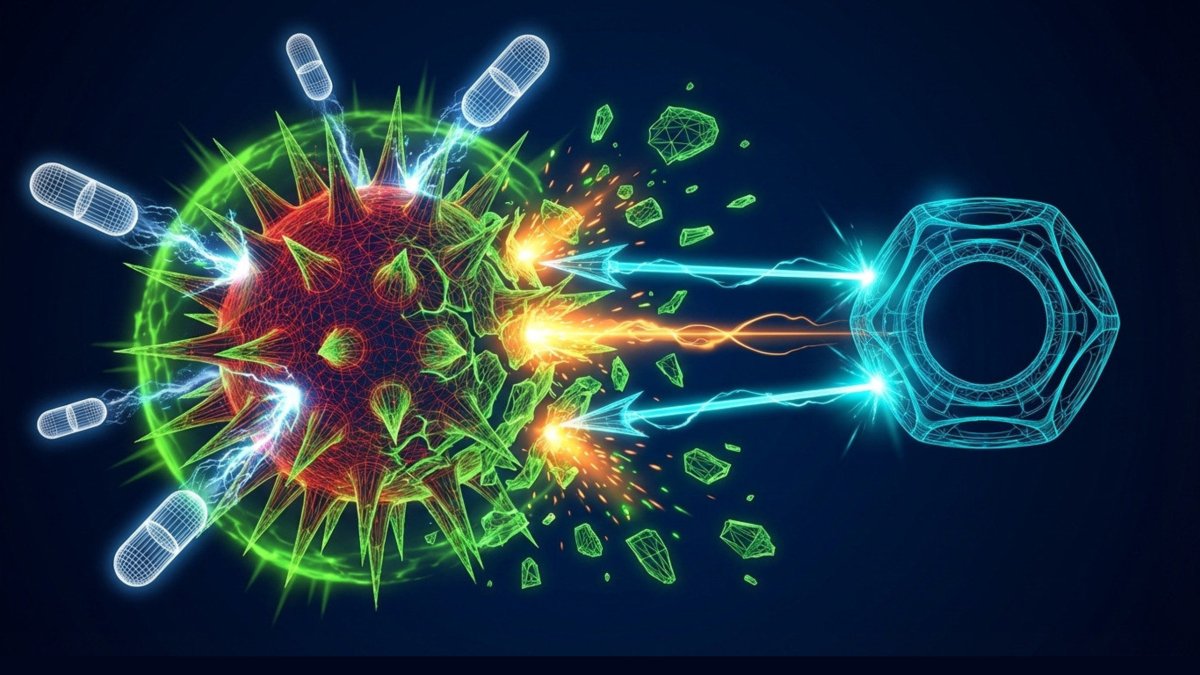
To transform these harmless, non-replicating cells into precision-guided superbug assassins, the researchers engineered them with a sophisticated “plug-and-play” genetic payload. The resulting therapy operates through a highly coordinated, two-pronged attack .
First, the SimCells are equipped with surface-displayed nanobodies—tiny protein hooks designed to recognize and latch onto specific antigens present only on the target bacteria. In their study, the researchers targeted OmpA, an outer membrane protein found on a clinically relevant, multidrug-resistant strain of E. coli (ST131) .
Once the SimCell physically binds to its prey, it deploys its weapons:
1.Direct Injection: The SimCells utilize a Type VI Secretion System (T6SS), essentially a molecular syringe, to puncture the target bacterium’s outer shell and inject high doses of toxic antimicrobial compounds directly into its cytoplasm .
2.Environmental Toxicity: The cells are also engineered with an enzyme called salicylate hydroxylase. When administered alongside a small dose of aspirin, this enzyme converts the drug into a chemical that produces hydrogen peroxide (H2O2). This creates a highly toxic localized environment that ruptures the target bacteria and prevents any survivors from dividing .
This combined approach is devastatingly effective. In laboratory tests, the engineered mini-SimCells eliminated over 97 percent of the targeted antimicrobial-resistant strain within 24 hours, and 99.9 percent within 48 hours .
Precision Medicine for the Microbiome
One of the most significant advantages of minicell therapy is its unparalleled specificity. Traditional broad-spectrum antibiotics act like a biological carpet bomb, wiping out both harmful pathogens and the beneficial bacteria that make up our microbiome. This collateral damage can lead to secondary infections, digestive issues, and long-term health complications .
In contrast, SimCells act like microscopic snipers. When introduced into a mixed microbial community, the engineered cells precisely identified and eradicated their intended targets while leaving non-target bacteria completely unharmed . This level of precision is crucial for maintaining a healthy microbiome during and after treatment.
Furthermore, the modular nature of the SimCell platform means it can be easily adapted to target different bacterial strains simply by swapping out the genetic instructions for the nanobody hooks . This adaptability, combined with the dual-action killing mechanism, makes it exceedingly difficult for bacteria to develop resistance.
Looking Ahead
While minicell therapy represents a monumental leap forward in the fight against superbugs, it is still in its early stages. The researchers must now demonstrate how these designer cells perform inside the complex environment of the human body, particularly how they interact with the immune system .
However, given the established safety profile of SimCells in oncology trials, there is ample reason for optimism. As the threat of antimicrobial resistance continues to grow, synthetic biology is providing us with entirely new ways to fight back. Programmable killer cells may soon become a vital weapon in our medical arsenal, ensuring that a post-antibiotic era remains a dystopian fiction rather than a grim reality.
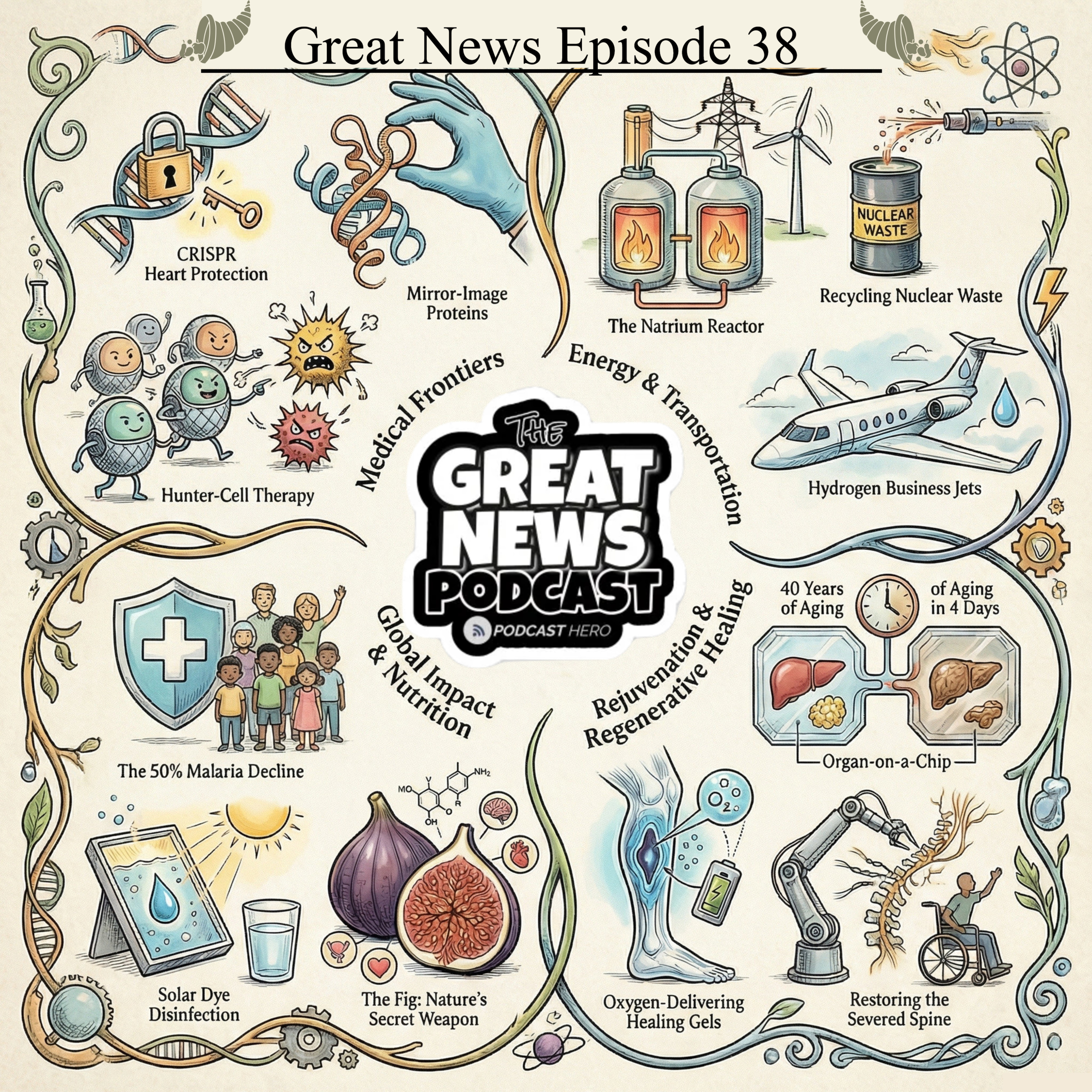
This topic was featured in Great News podcast episode 38.

The Great News Podcast is your source for positive news, inspiring stories, and good news from around the world. We skip the doom and gloom of mainstream media to focus on scientific breakthroughs, environmental wins, and the inspiring news that proves the world is getting better. Join Andrew McGivern for a dose of optimism and uplifting stories that will change your perspective on human progress.
It is easy to find the
Keep looking for the good in the world, because it is not only there – its everywhere.
The Great News podcast is brought to you by the Daily Quote.
Today, we have a packed episode! What if we could study forty years of human aging in just four days? That is our lead story. Plus, we’ll look at a hydrogen-powered business jet hitting major milestones, a healing gel that could prevent amputations from chronic wounds, and a solar device that makes drinking water safe in under an hour.
Organ-on-a-Chip Replicates Decades of Aging in Days
Hydrogen Business Jet Moves Closer to Reality
How a New Oxygen-Delivering Gel Could Save Limbs from Chronic Wounds
Solar-Powered Device Disinfects Water in Just One Hour
Stick around for the speed round, where we’ll cover even more breakthroughs in medicine and energy!
Terminating Super-Bugs in a single day!
Mirror-Image Proteins: A Novel Strategy to Combat Alzheimer’s Disease
Figs: Your Sweet Secret Weapon for Health and Wellness
Bill Gates’ TerraPower Gets Green Light for Advanced Reactor
Turning Nuclear Waste into Power and Reducing its Deadly Lifespan
Miraculous Advances in Spinal Cord Injury TreatmentMalaria Vaccine Saving Children in NigeriaA New Way to Fight Alzheimer’s Disease
Sources:
World Health Organization. “Antimicrobial resistance.”
Singularity Hub. “Forget Antibiotics: These Killer Cells Wipe Out Deadly Superbugs in a Day.”