A Ray of Hope for Water Safety
Access to clean, safe drinking water remains a critical challenge for billions worldwide, particularly in regions of the Global South where advanced municipal water treatment infrastructure is often lacking. While developed nations rely on complex filtration and UV disinfection technologies, many communities in Africa and South America possess a powerful, untapped resource: abundant sunlight. Leveraging this natural advantage, researchers from the University of Connecticut (UConn) and Yale University have developed a groundbreaking solar-powered device that can disinfect drinking water in under an hour, offering a dignified and effective solution to a pervasive global problem .
The Multi-pronged Approach to Water Safety
Traditional methods for water purification, such as boiling, are energy-intensive, while simple solar disinfection (SODIS)—leaving water bottles in the sun—can take up to six hours for bacteria and even longer for viruses . The innovative system, led by UConn Assistant Professor Eric Ryberg and detailed in npj Clean Water in 2026, combines several existing techniques into a compact, highly efficient device . Ryberg emphasizes this synergistic approach, stating, “Many hands make light work in drinking water disinfection” .
The device integrates:
- Physical Filtration: An initial step to remove larger contaminants like protozoa and worms.
- Solar Pasteurization: Utilizes sunlight to heat water to temperatures sufficient to inactivate many pathogens, a more energy-efficient process than boiling.
- Solar Disinfection (UV): Harnesses UVA and UVB radiation from the sun to induce oxidative stress and DNA damage in bacteria.
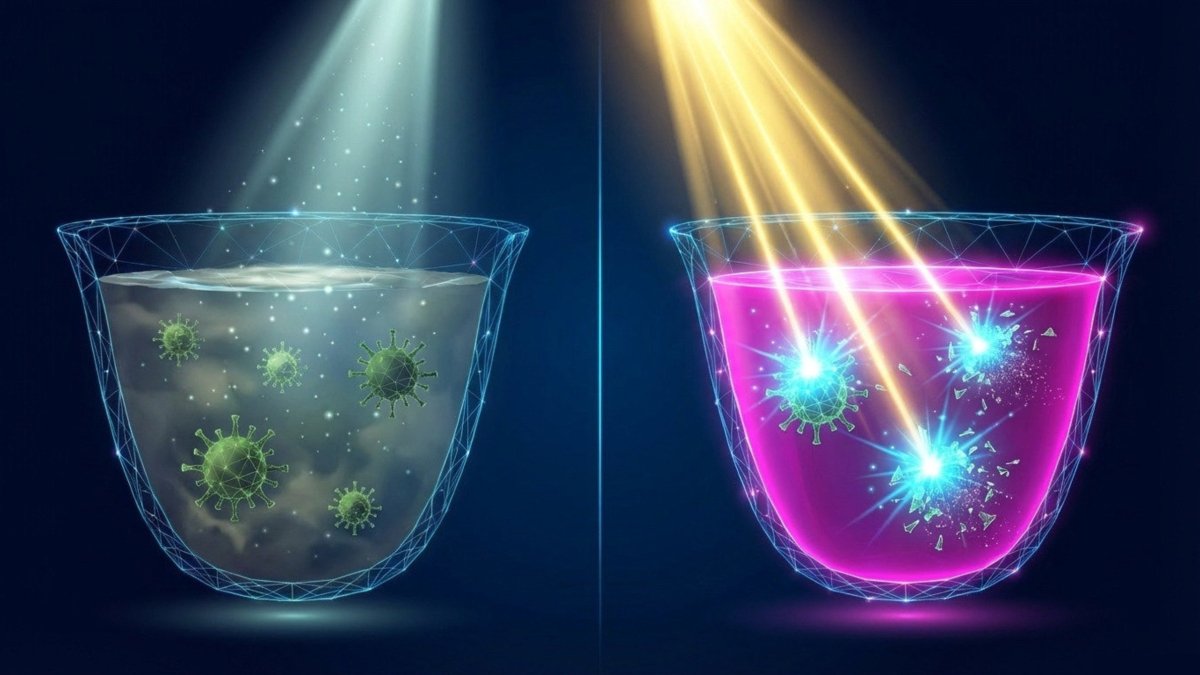
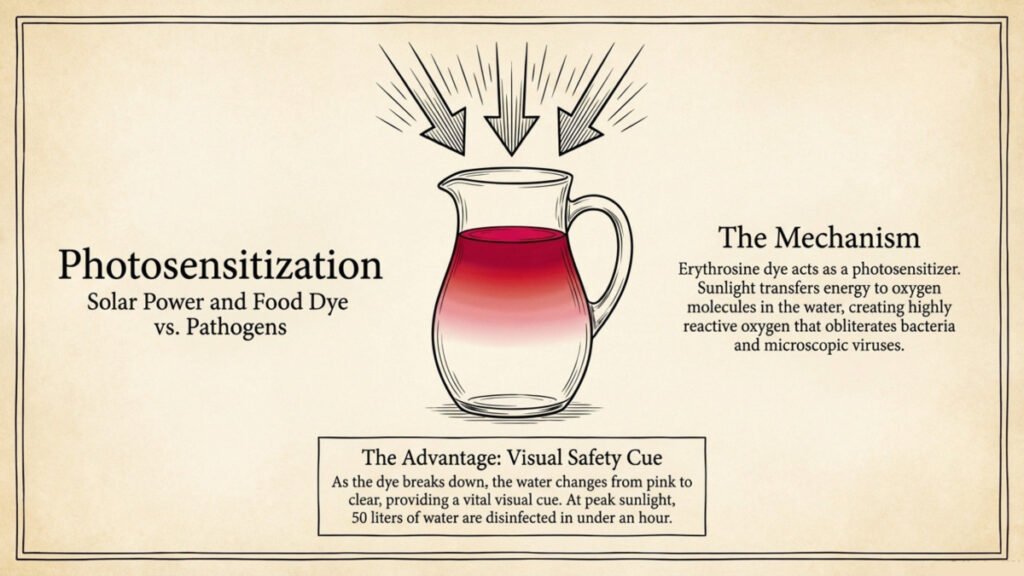
- Photosensitization: This is the key innovation. The device incorporates photosensitizers, compounds that react to sunlight by transferring energy to oxygen molecules in the water. This process creates highly reactive oxygen species that are exceptionally effective at inactivating viruses, which are notoriously difficult to eliminate with other methods .
A Visual Cue for Safety
One of the most practical features of this new system is its built-in safety indicator. The researchers utilized erythrosine, a common food dye, as the photosensitizer. As the erythrosine breaks down during the disinfection process, the water changes color, providing a clear and unambiguous visual signal to users that the water is safe to drink . This simple yet ingenious mechanism eliminates guesswork and instills confidence in the treated water.
Rapid Results and Global Potential
The device demonstrates remarkable efficiency. At peak sunlight, the system can disinfect water to a safe standard in less than an hour, with subsequent batches taking as little as 28 minutes. Field tests conducted in Sololá, Guatemala, under real-world sunlight conditions, confirmed the accuracy of their models .
Crucially, the system is designed for year-round reliability. Computational models, simulating conditions in diverse climates like Cape Town, South Africa; Sololá, Guatemala; and Phoenix, Arizona, indicated that the device could consistently provide the United Nations-recommended 50 liters of clean water per person per day for all but approximately 20 days a year . This robust performance, even during periods of lower solar availability, addresses a major limitation of previous solar water treatment systems.
Towards a Sustainable and Natural Future
Looking ahead, Ryberg and his team are exploring the use of natural photosensitizers, such as chlorophyll (from plants) or hypericin (from St. John’s Wort), to replace synthetic dyes like erythrosine. This move aims to further reduce any toxicological concerns and enhance the sustainability of the technology .
This solar-powered water disinfection device represents a significant leap forward in providing accessible, affordable, and effective clean water solutions. Its ability to rapidly purify water, particularly targeting resilient viruses, and its clear safety indicator make it a game-changer for communities striving for better health and dignity worldwide. Whether deployed at individual households or scaled up for entire communities, this innovation harnesses the power of the sun to bring a fundamental human right within reach.
This topic was featured in Great News podcast episode 38.

The Great News Podcast is your source for positive news, inspiring stories, and good news from around the world. We skip the doom and gloom of mainstream media to focus on scientific breakthroughs, environmental wins, and the inspiring news that proves the world is getting better. Join Andrew McGivern for a dose of optimism and uplifting stories that will change your perspective on human progress.
It is easy to find the
Keep looking for the good in the world, because it is not only there – its everywhere.
The Great News podcast is brought to you by the Daily Quote.
Today, we have a packed episode! What if we could study forty years of human aging in just four days? That is our lead story. Plus, we’ll look at a hydrogen-powered business jet hitting major milestones, a healing gel that could prevent amputations from chronic wounds, and a solar device that makes drinking water safe in under an hour.
Organ-on-a-Chip Replicates Decades of Aging in Days
Hydrogen Business Jet Moves Closer to Reality
How a New Oxygen-Delivering Gel Could Save Limbs from Chronic Wounds
Solar-Powered Device Disinfects Water in Just One Hour
Stick around for the speed round, where we’ll cover even more breakthroughs in medicine and energy!
Terminating Super-Bugs in a single day!
Mirror-Image Proteins: A Novel Strategy to Combat Alzheimer’s Disease
Figs: Your Sweet Secret Weapon for Health and Wellness
Bill Gates’ TerraPower Gets Green Light for Advanced Reactor
Turning Nuclear Waste into Power and Reducing its Deadly Lifespan
Miraculous Advances in Spinal Cord Injury TreatmentMalaria Vaccine Saving Children in NigeriaA New Way to Fight Alzheimer’s Disease

Sources:
Tech Xplore. “Solar-powered device disinfects drinking water in under an hour.”