
A Better Way to Heal Chronic Wounds
As the global population ages and rates of diabetes continue to climb, a silent health crisis is intensifying: the rise of chronic wounds. Defined as injuries that fail to heal within a month, chronic wounds affect approximately 12 million people worldwide each year, including 4.5 million in the United States alone . The stakes are incredibly high; roughly one in five patients with a chronic wound will eventually face amputation .
However, a groundbreaking innovation from researchers at the University of California, Riverside (UCR) offers a beacon of hope. They have developed a novel, oxygen-delivering gel designed to tackle the root cause of these stubborn injuries, potentially stopping chronic wounds from turning deadly and saving countless limbs in the process .
The Root of the Problem: Hypoxia
To understand why this new gel is so revolutionary, we must first understand why chronic wounds refuse to heal. The healing process involves four distinct stages: inflammation, vascularization (the formation of new blood vessels), remodeling, and regeneration . A critical requirement for all these stages is a stable, consistent supply of oxygen.
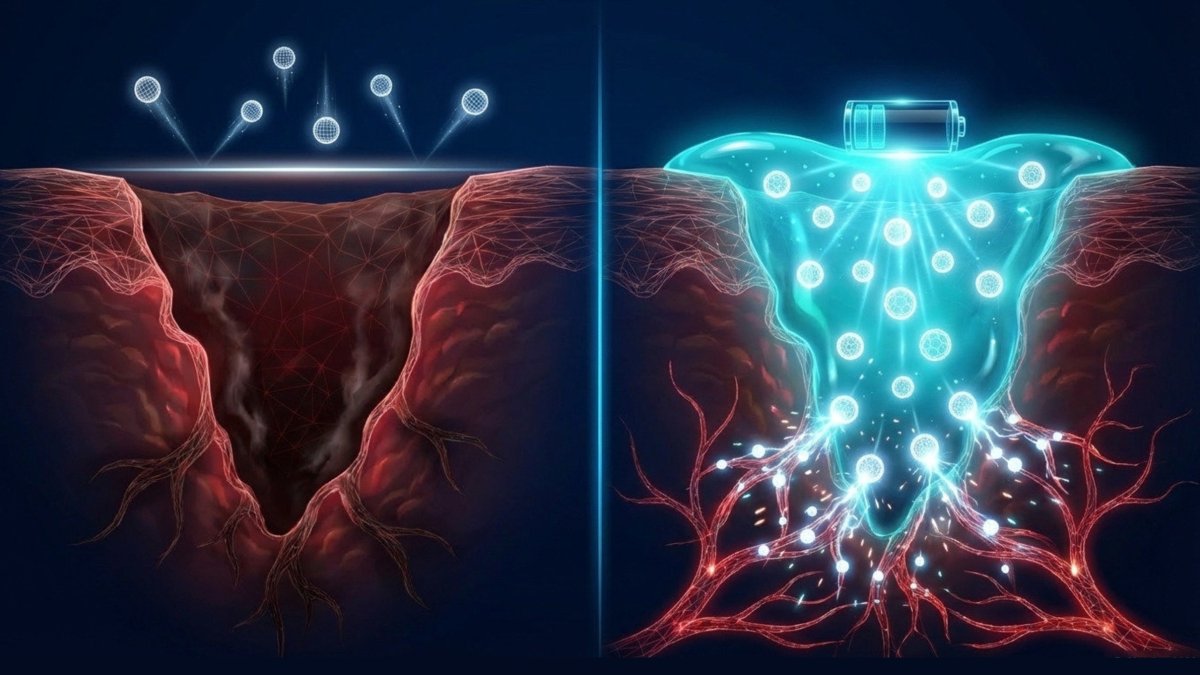
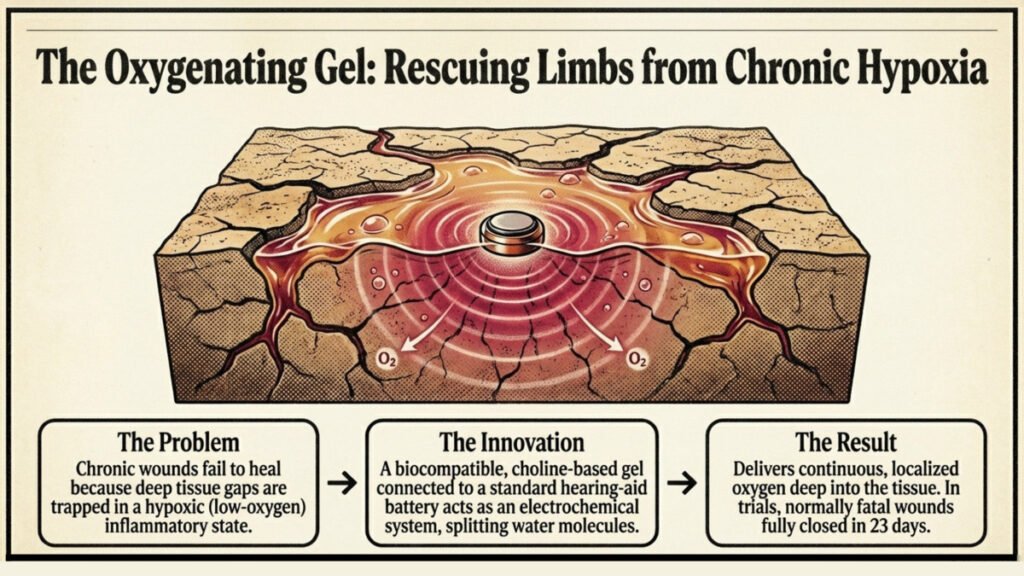
In chronic wounds, oxygen from the air or the bloodstream often fails to reach the deeper layers of damaged tissue. This creates a condition known as hypoxia (oxygen deprivation). When tissue is hypoxic, the wound becomes trapped in a perpetual state of inflammation. Instead of repairing itself, the tissue breaks down, creating an ideal environment for harmful bacteria to thrive and infections to take hold .
As UCR Associate Professor Iman Noshadi explains, “Chronic wounds don’t heal by themselves… In any of these stages, lack of a stable, consistent oxygen supply is a big problem”.
The Innovation: A Self-Oxygenating Smart Gel
Traditional wound dressings might absorb excess fluid or release antimicrobial agents, but they fail to address the fundamental issue of deep-tissue hypoxia. The UCR team’s solution, detailed in the journal Communications Materials, is a soft, adaptable gel that acts as a miniature electrochemical system .
The gel is composed of water and a choline-based liquid, making it antibacterial, nontoxic, and biocompatible. When connected to a tiny battery—similar to those used in hearing aids—the gel splits water molecules to steadily and continuously release oxygen directly into the wound bed .
Deep Tissue Delivery and Sustained Healing
Unlike topical treatments that only supply oxygen to the surface, this smart gel is applied before it solidifies. This allows it to mold perfectly to the unique contours of the injury, reaching deep into small gaps where oxygen levels are typically the lowest and the risk of infection is the highest .
Furthermore, the gel provides a sustained supply of oxygen. Because the body can take weeks to form new blood vessels, short bursts of oxygen are insufficient for chronic wounds. The UCR gel can maintain its oxygen delivery for up to a month, effectively converting a stagnant chronic wound into one that heals like a typical injury .
A Dual-Action Approach
Beyond simply delivering oxygen, the gel also actively combats the chronic inflammatory state. Choline, a primary component of the gel, helps regulate the immune response. Chronic wounds are often plagued by reactive oxygen species—unstable molecules that damage cells and prolong inflammation. By supplying stable oxygen while simultaneously reducing this harmful molecular activity, the gel restores a balanced environment conducive to healing .
Promising Results and Future Implications
The results from animal models have been striking. In experiments using diabetic and older mice—which develop wounds closely mimicking those seen in older human adults—untreated wounds often proved fatal. However, when the oxygen-producing patch was applied and replaced weekly, the wounds closed in approximately 23 days, and the animals survived .
The implications of this technology extend far beyond wound care. The UCR team envisions this self-oxygenating system as a crucial stepping stone for regenerative medicine. A major obstacle in growing replacement tissues or organs in the lab is the difficulty of diffusing oxygen deep into thick tissue constructs, leading to cell death. This gel technology could provide the necessary life support to sustain larger bioengineered organs for patients in need .
While lifestyle factors and underlying conditions like diabetes must still be addressed on a societal level, this innovative gel represents a tangible, immediate chance to reduce amputations, significantly improve patients’ quality of life, and finally give the body the breath of fresh air it needs to heal itself.
This topic is featured in Great News podcast episode 38.

The Great News Podcast is your source for positive news, inspiring stories, and good news from around the world. We skip the doom and gloom of mainstream media to focus on scientific breakthroughs, environmental wins, and the inspiring news that proves the world is getting better. Join Andrew McGivern for a dose of optimism and uplifting stories that will change your perspective on human progress.
It is easy to find the
Keep looking for the good in the world, because it is not only there – its everywhere.
The Great News podcast is brought to you by the Daily Quote.
Today, we have a packed episode! What if we could study forty years of human aging in just four days? That is our lead story. Plus, we’ll look at a hydrogen-powered business jet hitting major milestones, a healing gel that could prevent amputations from chronic wounds, and a solar device that makes drinking water safe in under an hour.
Organ-on-a-Chip Replicates Decades of Aging in Days
Hydrogen Business Jet Moves Closer to Reality
How a New Oxygen-Delivering Gel Could Save Limbs from Chronic Wounds
Solar-Powered Device Disinfects Water in Just One Hour
Stick around for the speed round, where we’ll cover even more breakthroughs in medicine and energy!
Terminating Super-Bugs in a single day!
Mirror-Image Proteins: A Novel Strategy to Combat Alzheimer’s Disease
Figs: Your Sweet Secret Weapon for Health and Wellness
Bill Gates’ TerraPower Gets Green Light for Advanced Reactor
Turning Nuclear Waste into Power and Reducing its Deadly Lifespan
Miraculous Advances in Spinal Cord Injury TreatmentMalaria Vaccine Saving Children in NigeriaA New Way to Fight Alzheimer’s Disease

Sources:
SciTechDaily. “Scientists Create Healing Gel That Could Stop Chronic Wounds From Turning Deadly.”