How the Malaria Vaccine is Saving Children’s Lives in Nigeria
Malaria, a preventable and treatable disease, continues to be one of the deadliest threats to children in sub-Saharan Africa. Nigeria, in particular, bears an immense burden, accounting for over 25% of all malaria cases and 31% of global malaria deaths . For generations, families have grappled with the devastating impact of this parasitic disease, often leading to severe illness, long-term health complications, and tragically, death.
However, a new chapter in the fight against malaria is unfolding in Northwestern Nigeria. One year after the rollout of a groundbreaking malaria vaccine, health workers and parents in Kebbi State are witnessing a dramatic reduction in malaria cases and child mortality. This success story offers a powerful testament to the potential of vaccination in transforming public health outcomes in high-burden regions.
The Silent Scourge: Malaria’s Impact on Nigerian Children
Malaria is caused by Plasmodium parasites transmitted through the bites of infected female Anopheles mosquitoes. Children under five are particularly vulnerable, with their developing immune systems struggling to fight off the infection. The disease can lead to high fevers, severe anemia, and neurological complications, often resulting in death if not promptly treated .
The sheer scale of the problem in Nigeria has made it a critical focus for global health initiatives. The continuous cycle of infection and re-infection not only claims lives but also places an enormous strain on healthcare systems and perpetuates cycles of poverty within affected communities .
A New Weapon: The R21/Matrix-M Vaccine
The recent success in Kebbi State is largely attributed to the introduction of the R21/Matrix-M malaria vaccine. Launched in December 2024, with initial pilot programs in Kebbi and Bayelsa states, this vaccine represents a significant advancement in malaria prevention . The rollout has been a collaborative effort, supported by Gavi, the Vaccine Alliance, in partnership with the Nigerian government, the World Health Organization (WHO), and organizations like the Malaria Consortium .
Within just one year of its implementation in Kebbi State, the impact has been profound:
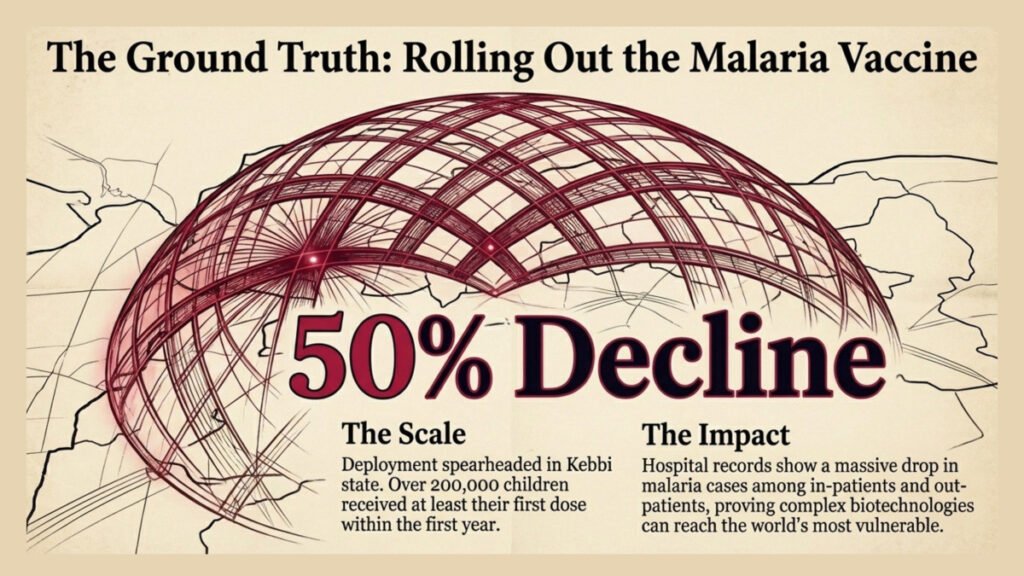
•50% Reduction in Cases: Hospital records show a remarkable 50% decline in malaria cases among both in-patients and out-patients .
•Over 200,000 Children Vaccinated: More than 200,000 children in Kebbi State have received at least their first dose of the vaccine, building a crucial shield against the disease.
•Tangible Relief for Families: Parents report a noticeable decrease in illness among their children, translating into fewer hospital visits, reduced healthcare costs, and improved quality of life for families .
Beyond Kebbi State, the broader implementation areas in Nigeria have also seen encouraging results, with data suggesting a 12-13% drop in all-cause mortality among vaccine-eligible children and approximately a 34% reduction in severe malaria incidence.
A Global Effort for a Healthier Future
The success of the R21/Matrix-M vaccine in Nigeria is part of a larger global push to eradicate malaria. Both the R21 and RTS,S malaria vaccines have been recommended by the WHO and are being integrated into routine immunization programs across sub-Saharan Africa . Gavi, the Vaccine Alliance, has set an ambitious goal to immunize 50 million children globally, a target that could potentially avert over 170,000 deaths between 2026 and 2030.
This progress underscores the power of scientific innovation combined with dedicated public health efforts. The malaria vaccine is not just a medical breakthrough; it is a testament to human progress, offering hope for a future where children in malaria-endemic regions can grow up free from the threat of this devastating disease.
This topic is featured in Great News podcast episode 38.
Sources:
Human Progress. “Malaria Vaccine Reduces Deaths of Children in Northwestern Nigeria.”
World Health Organization (WHO ). “Malaria vaccines (RTS,S and R21).”