Trees in the USA are capturing more carbon than before
When it comes to the climate conversation, forests often play second fiddle to solar panels and electric cars. But a landmark new study published in the Proceedings of the National Academy of Sciences suggests we may be dramatically underestimating what’s happening right in America’s backyard.
According to researchers, U.S. forests have stored more carbon in the past two decades than at any time in the last century, a remarkable finding that reframes how we think about natural carbon sinks.
The study examined six key drivers of carbon sequestration: temperature, precipitation, atmospheric CO₂, land management, forest age, and total forested area. The team was surprised by exactly how much natural factors influenced the total amount of carbon stored — changes in temperature and precipitation alone, from 2005 to 2022, led to an increase of 66 million metric tons of carbon sequestration per year.
Human activity, as ever, was a mixed bag. Deforestation reduced stored forest carbon by roughly 31 million tons per year, while tree-planting and reforestation efforts added back about 23 million tons per year. The net human contribution is sobering, but not the headline.
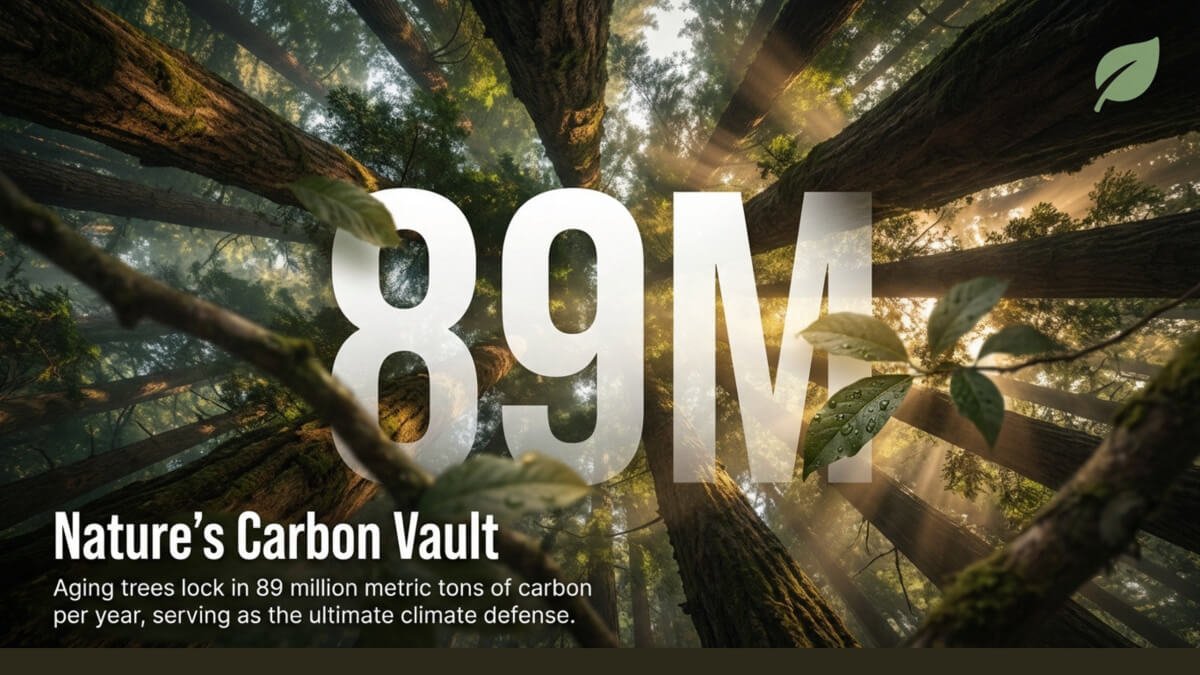
The real star of the story is forest age. Structural changes in the peak growth stages of local trees helped lock in the most carbon — an impressive 89 million metric tons per year. As forests mature and trees enter their most vigorous growth phases, they become increasingly powerful carbon-capture machines.
The takeaway is genuinely encouraging. Nature, given the chance to recover and mature, is doing a tremendous amount of heavy lifting in the fight against climate change. That doesn’t mean we can ease up on reducing emissions — but it does mean that protecting and expanding America’s forests may be one of the highest-return climate investments available to us. Sometimes the best technology is a very old tree.
This topic was featured on Great News podcast episode 35.

The Great News Podcast is your source for positive news, inspiring stories, and good news from around the world. We skip the doom and gloom of mainstream media to focus on scientific breakthroughs, environmental wins, and the inspiring news that proves the world is getting better. Join Andrew McGivern for a dose of optimism and uplifting stories that will change your perspective on human progress.
It is easy to find the
Keep looking for the good in the world, because it is not only there – its everywhere.
This podcast is brought to you by the Daily Quote. The podcast designed to kickstart your day in a positive way!
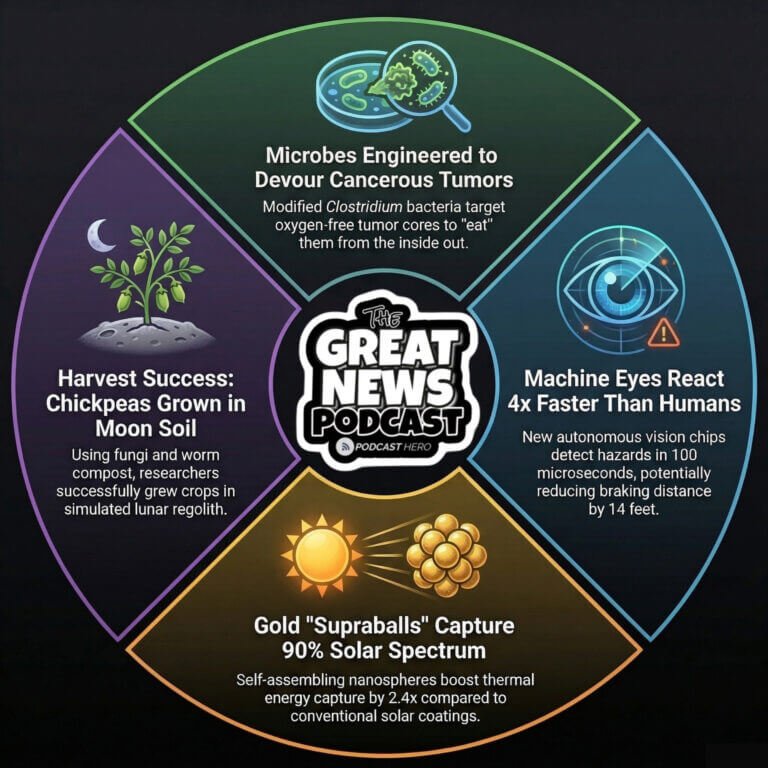
Today, we are exploring a medical breakthrough that uses ”hungry” bacteria to fight cancer, a massive electric flying taxi taking to the skies in China, and a successful harvest of chickpeas grown in actual moon dirt
Plus, we’ll look at a new computer chip that gives self-driving cars reflexes four times faster than the human brain
Bacteria that eats cancer from the inside out
Robot Cars react 4X faster than humans
And stick around for our speed round, where we’ll cover even more great news!
US Forests fighting harder against climate change
Gold Supraballs capture 90% of solar spectrum
A few changes at home reduce asthma attacks
New additive increases organic solar cell efficiency
If you like the Great News Podcast, You'll love the great news letter. Because the Great News Podcast is Great! But the Great News Letter is Greater!
The Great News Letter is FREE and includes all the good news stories.
Source: Human Progress