CRISPR Gene Editor Replicates and Spreads Like a Virus
Gene editing has always had a numbers problem. To meaningfully treat a genetic disease, you need to fix enough cells to tip the balance — and getting CRISPR into a sufficient number of them has been one of the field’s stubborn bottlenecks. Scientists typically compensate by cranking up the dose, which brings its own risks: immune reactions, off-target edits, and complications that can overshadow the therapy itself.
A team at UC Berkeley, led by Nobel laureate Jennifer Doudna, just took a creative swing at this problem — by borrowing a trick from viruses.
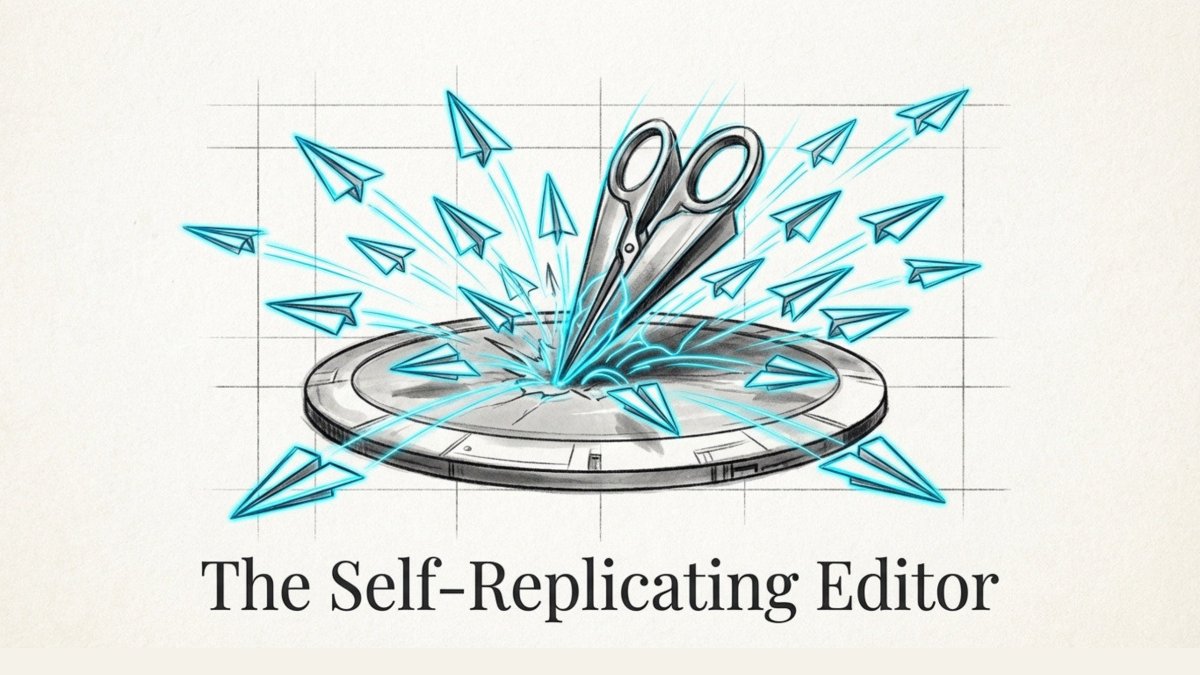
Their new system, called NANITE (NANoparticle-Induced Transfer of Enzyme), combines genetic instructions for a virus-like carrier and CRISPR machinery into a single piece of circular DNA. When NANITE enters a cell, that cell essentially becomes a tiny factory: it manufactures the full CRISPR toolkit, packages it up, and ships it off to neighbouring cells. Those cells, in turn, receive and apply the gene edits — even though the original therapy never directly touched them.
Think of it less like a drug and more like a benevolent infection.
The results are striking. In lab-grown cells, NANITE was roughly three times more efficient than standard CRISPR-Cas9, with edited cells reaching nearly 300 percent of the number initially treated, clear evidence the therapy was spreading beyond its starting point. In mice with a genetic metabolic disorder, NANITE reduced a disease-causing protein by nearly 50 percent while editing only around 11 percent of liver cells, whereas classic CRISPR edited just four percent and had minimal effect.
Crucially, extensive liver and blood tests detected no toxic side effects in treated mice.
What makes this more than just a lab curiosity is what it implies for the future of gene therapy. Many conditions — muscular dystrophy, metabolic disorders, diseases of the liver and beyond — require correcting a meaningful fraction of affected cells, which has historically demanded large, risky doses. A therapy that can amplify itself changes that equation entirely. By lowering effective dose requirements, NANITE could make genome editing more practical and accessible for treating human disease.
There’s still work to do. The team is exploring converting NANITE into mRNA form — a more flexible and well-understood delivery format, thanks in large part to the COVID-19 vaccine era. But the proof of concept is here, and it’s a meaningful one.
Gene editing has long promised to rewrite the story of inherited disease. NANITE might just be the plot twist that finally makes it stick.
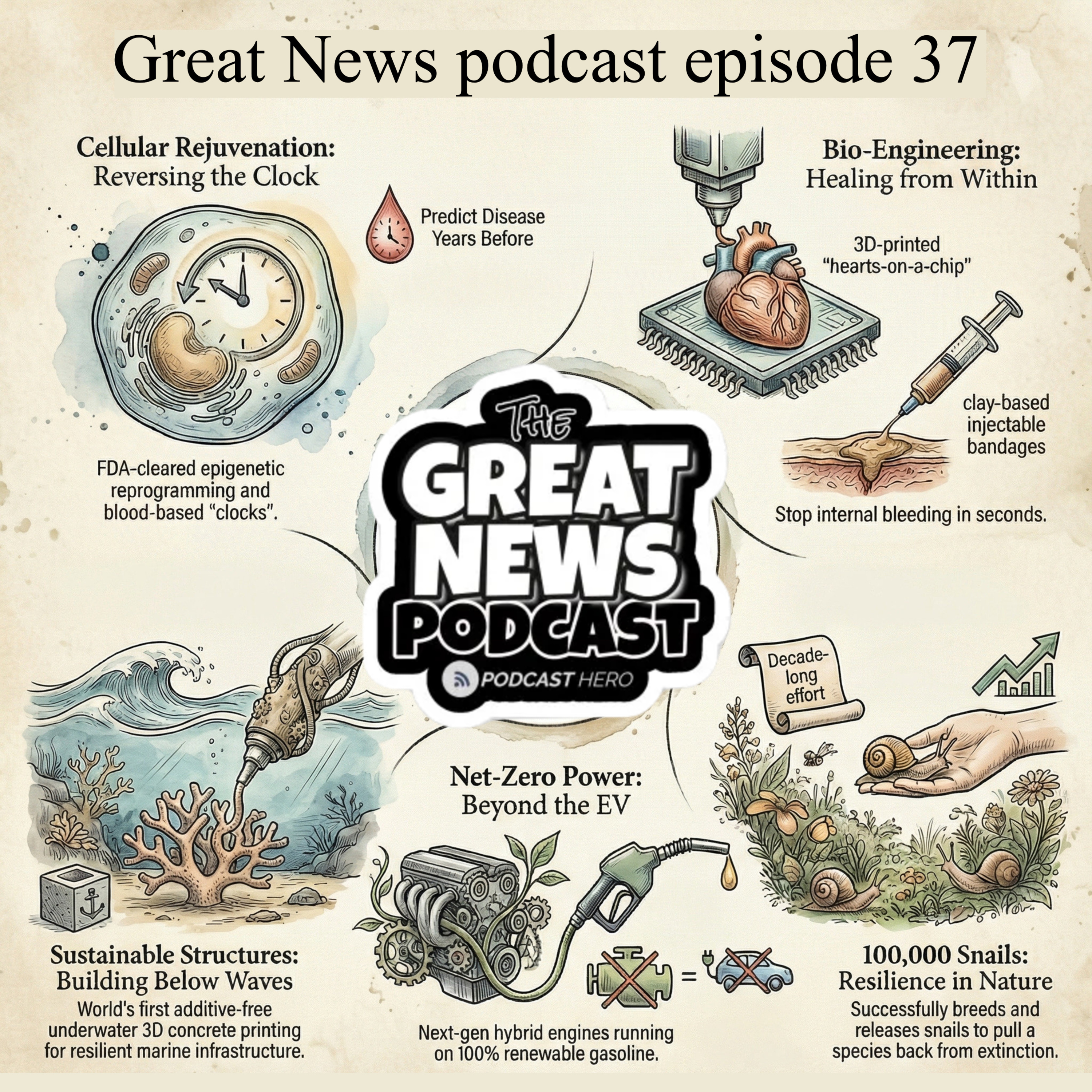
This topic was featured on Great News podcast episode 36.

The Great News Podcast is your source for positive news, inspiring stories, and good news from around the world. We skip the doom and gloom of mainstream media to focus on scientific breakthroughs, environmental wins, and the inspiring news that proves the world is getting better. Join Andrew McGivern for a dose of optimism and uplifting stories that will change your perspective on human progress.
It is easy to find the
Keep looking for the good in the world, because it is not only there – its everywhere.
This episode is brought to you by the Daily Quote. The podcast designed to kickstart your day in a positive way.
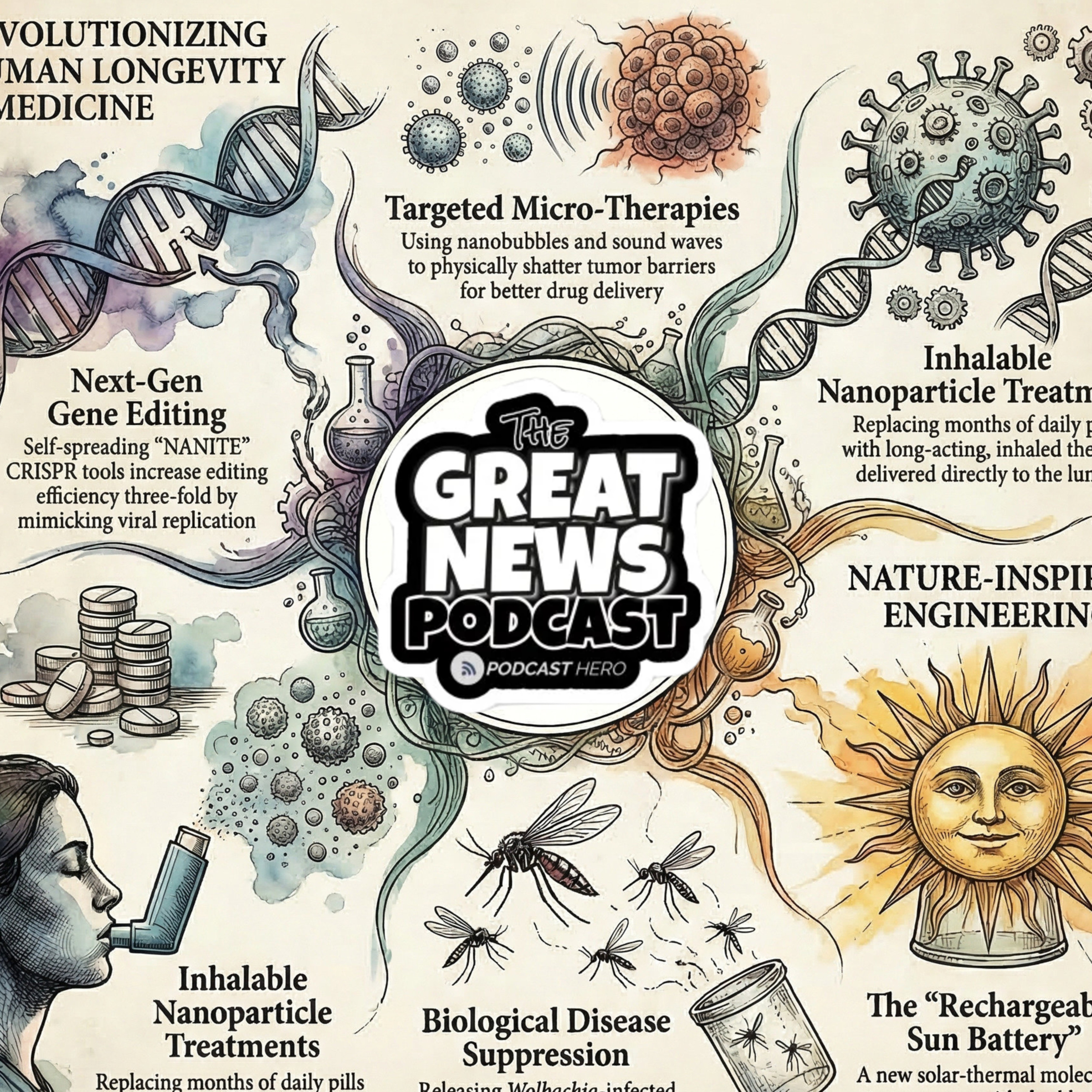
Today, we are diving into some truly groundbreaking advancements in medicine, biotechnology, and sustainable energy. What if a gene editor could replicate and spread like a virus to ensure it reaches every cell that needs a cure? That is our lead story today.
Plus, we have a ”rechargeable sun battery” that outperforms lithium-ion, tiny bubbles that shatter cancer’s defenses, and a city-wide success story in wiping out Dengue fever.
CRISPR Gene Editor Replicates and Spreads Like a Virus
New Sun Battery Beats Lithium-Ion
Bubbles and Ultrasound Break Soften Tumour Walls for Better Treatment
And don’t forget to stick around for the speed round, where we’ll dive into even more great news.Prime C Shows Striking Survival Benefit in ALS Clinical Trial
Inhalable Treatment Could Replace Months of Pills for TB
Could a “Longevity Protein” Slow How We Age?An Inflammation Suppressor Decreases Mortality
Turning Our Own DNA Against Cancer
Until next time, keep looking for the good in the world, because it’s not only there—it’s everywhere.
Source: Singularity Hub