
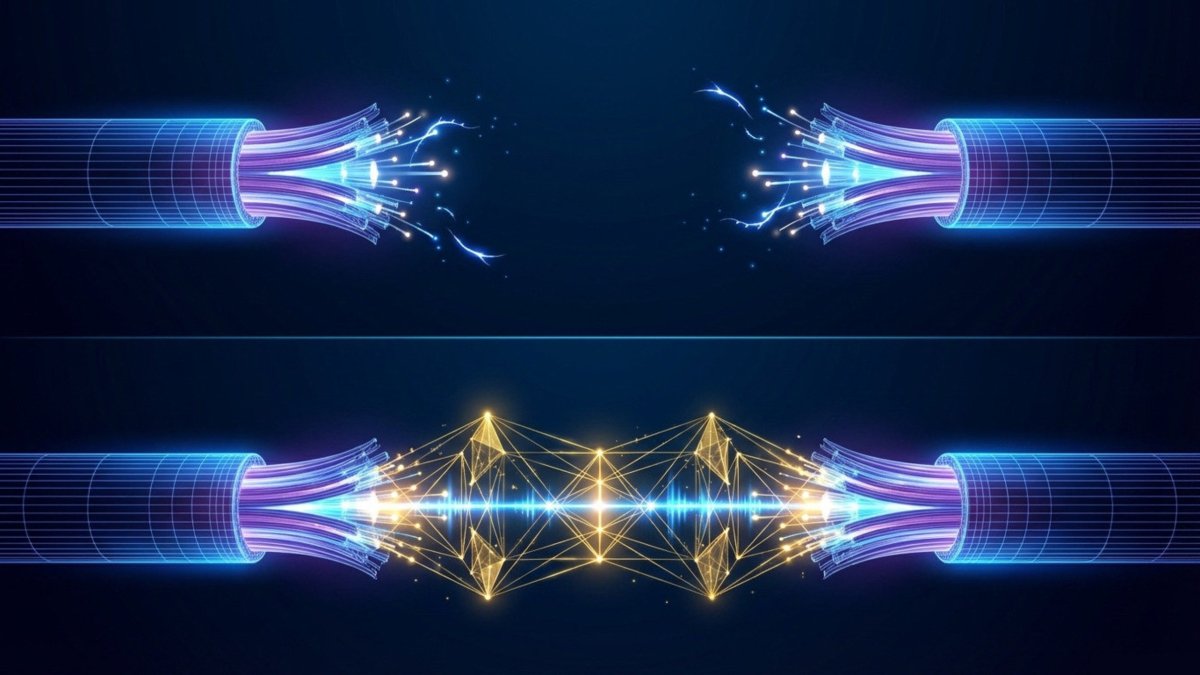
From Despair to Hope
For far too long, a spinal cord injury (SCI) was often considered a life-altering, if not fatal, event, leaving patients and their families with little hope for significant recovery. The prognosis was grim, with many not surviving beyond the first year, and those who did often faced lifelong paralysis. However, a new era of medical innovation is rapidly transforming this landscape, offering unprecedented possibilities for survival and functional recovery. Breakthroughs in surgical techniques, stem cell therapy, and advanced technologies like robotics and artificial intelligence are now giving patients a chance to regain movement, speech, and even the ability to walk again.
Oliver’s Miracle: Reconstructing the Impossible
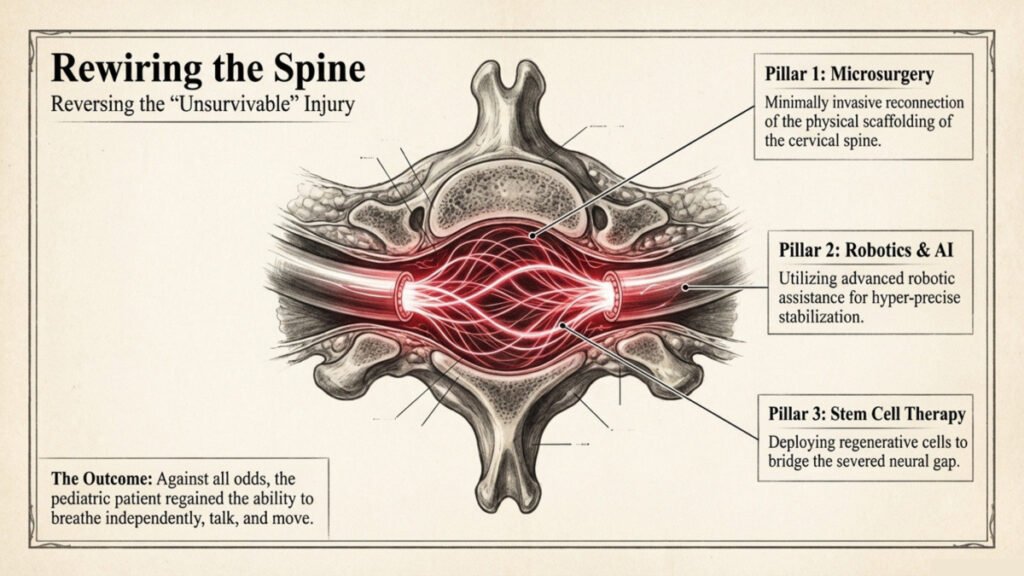
One of the most compelling recent cases highlighting these advancements is that of a two-year-old boy named Oliver. After a catastrophic car accident in Mexico, Oliver suffered an injury that completely severed the connection between his skull and spine, and his spinal cord itself was severed. Experts across Europe had deemed his case hopeless, considering the injury unsurvivable.
Yet, University of Chicago neurosurgeon Dr. Mohamad Bydon saw a possibility. He embarked on an extraordinary, multi-stage surgical intervention at UChicago Medicine. The procedure involved a complex reconstruction, first from the back with an occipito-cervical fusion—using a plate and screws to stabilize the skull and upper spine—followed by an anterior approach to drill bone and place a cage, recreating the crucial structural support . This high-risk surgery, particularly challenging in a child, defied all odds. Oliver not only survived but, in the weeks that followed, began to show remarkable signs of recovery, regaining the ability to breathe, talk, and move his fingers and toes, even responding to commands like “squeeze my hand”.
Beyond the Operating Room: A Multifaceted Future
Oliver’s story, while extraordinary, is a powerful illustration of a broader trend in SCI treatment. Dr. Bydon and his colleagues are at the forefront of integrating various cutting-edge technologies to push the boundaries of what’s possible:
•Stem Cell Therapy: Dr. Bydon’s research includes pioneering work in stem cell therapy, which has already helped some paralyzed patients regain movement, with one individual even learning to walk again after a decade of paralysis . These therapies aim to repair damaged neural pathways and promote regeneration.
•Robotic Surgery and Artificial Intelligence (AI): The precision offered by robotic surgical systems is making complex spinal procedures safer and less invasive. Coupled with AI, which can assist in surgical planning and real-time decision-making, these technologies are enhancing surgical outcomes and reducing risks, especially in delicate cases.
•Minimally Invasive Techniques: Advances in surgical approaches are continuously reducing the invasiveness of procedures, leading to faster recovery times, less pain, and fewer complications for patients.
A New Horizon of Hope
The shift in spinal cord injury treatment is profound—from merely ensuring survival to actively pursuing functional recovery. The synergy between advanced surgical techniques, regenerative medicine, and intelligent technologies is redefining the limits of neurosurgery and offering renewed hope to countless individuals. The human resilience demonstrated by patients like Oliver, combined with the relentless pursuit of innovation by researchers like Dr. Bydon, paints a future where spinal cord injuries, once a source of despair, may increasingly become conditions from which significant recovery is not just possible, but expected.
This transformative period in medicine promises not only to save lives but to restore quality of life, empowering individuals to reclaim independence and participate more fully in the world around them.
This topic was featured in Great News podcast episode 38.
Sources:
Futurity. “Listen: New treatments are changing lives after spinal cord injuries.”
ABC News. “Paralyzed man who can walk again shows potential benefit of stem cell therapy.”