Nature’s Blueprint for the Future of Solar Energy
What if sunlight could be bottled up like a genie, waiting patiently until you needed it — then released on command as a burst of heat powerful enough to boil water? That’s no longer science fiction. Researchers at UC Santa Barbara have developed a molecule that does exactly that, and it could change the way we think about renewable energy storage.
The molecule in question is a modified organic compound called pyrimidone, and it belongs to a field called Molecular Solar Thermal (MOST) energy storage. Rather than converting sunlight into electricity the way traditional solar panels do, the molecule stores solar energy directly within its own chemical structure and releases it when triggered.
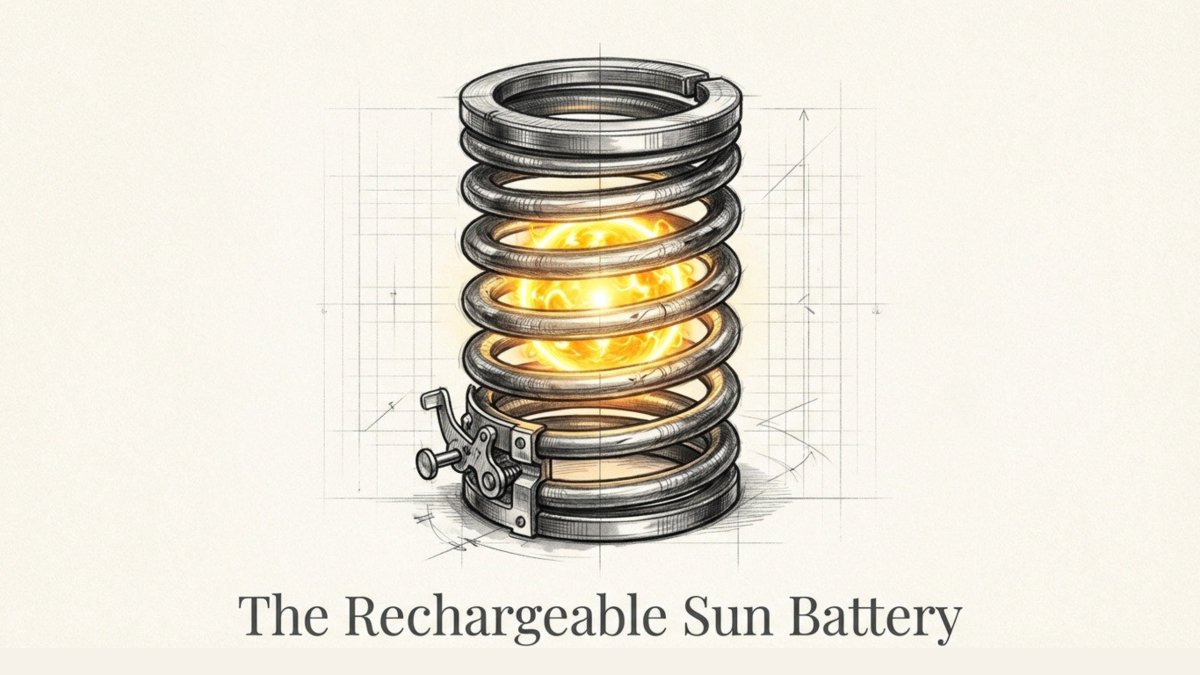
The design draws inspiration from a surprisingly elegant source: DNA. The pyrimidone structure resembles a component in DNA that can undergo reversible changes under UV light, and by engineering a synthetic version, the team created a molecule capable of storing energy while remaining stable for years. Think of it like a compressed spring — when exposed to sunlight, it twists into a high-energy configuration and remains locked in that strained state until activated by heat or a catalyst, at which point it snaps back and releases stored energy as heat.
The numbers are striking. The molecule delivers more than 1.6 megajoules per kilogram in energy density — roughly double that of a typical lithium-ion battery, which averages about 0.9 MJ/kg. In lab tests, the released heat was enough to boil water under ambient conditions, a result the researchers themselves called a significant milestone.
Perhaps most exciting is the simplicity of the concept. Because the material dissolves in water, it could circulate through rooftop solar collectors during the day, store energy in tanks, and release heat at night. No bulky battery packs. No complex grid infrastructure. The molecule itself is the storage medium.
Potential uses range from off-grid camping systems to residential water heating applications that could make clean, stored solar energy accessible to people far beyond the reach of traditional power grids.
We are still in the early stages, and scaling a laboratory molecule into a consumer product is never a simple leap. But this research, published in the journal Science, is a compelling reminder that some of the best engineering ideas are already written in nature — waiting for us to read them.
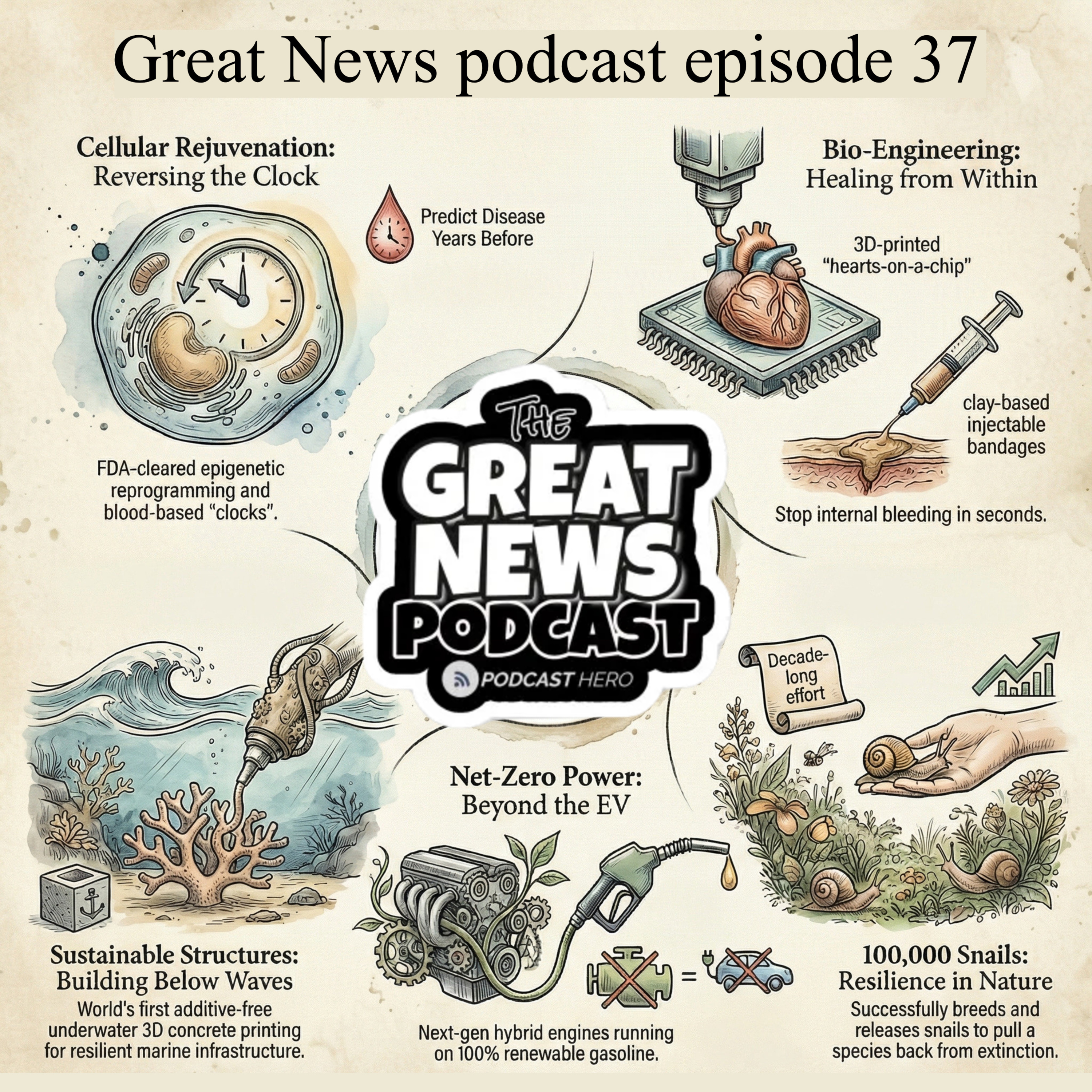
This topic was featured on Great News podcast episode 36.

The Great News Podcast is your source for positive news, inspiring stories, and good news from around the world. We skip the doom and gloom of mainstream media to focus on scientific breakthroughs, environmental wins, and the inspiring news that proves the world is getting better. Join Andrew McGivern for a dose of optimism and uplifting stories that will change your perspective on human progress.
It is easy to find the
Keep looking for the good in the world, because it is not only there – its everywhere.
This episode is brought to you by the Daily Quote. The podcast designed to kickstart your day in a positive way.
Today, we are diving into some truly groundbreaking advancements in medicine, biotechnology, and sustainable energy. What if a gene editor could replicate and spread like a virus to ensure it reaches every cell that needs a cure? That is our lead story today.
Plus, we have a ”rechargeable sun battery” that outperforms lithium-ion, tiny bubbles that shatter cancer’s defenses, and a city-wide success story in wiping out Dengue fever.
CRISPR Gene Editor Replicates and Spreads Like a Virus
New Sun Battery Beats Lithium-Ion
Bubbles and Ultrasound Break Soften Tumour Walls for Better Treatment
And don’t forget to stick around for the speed round, where we’ll dive into even more great news.Prime C Shows Striking Survival Benefit in ALS Clinical Trial
Inhalable Treatment Could Replace Months of Pills for TB
Could a “Longevity Protein” Slow How We Age?An Inflammation Suppressor Decreases Mortality
Turning Our Own DNA Against Cancer
Until next time, keep looking for the good in the world, because it’s not only there—it’s everywhere.

Source: Interesting Engineering