Moon Hummus Might Actually Happen
For decades, the question of how to feed astronauts on long-term lunar missions has been one of the trickier nuts to crack. You can’t exactly ship a year’s worth of groceries to the moon. But a new study published this week in Scientific Reports offers a genuinely exciting answer: grow the food up there.
Researchers from the University of Texas at Austin and Texas A&M University have successfully grown and harvested chickpeas using simulated “moon dirt” — marking the first time this crop has been produced in a material designed to mimic lunar soil.
The challenge is that lunar regolith isn’t particularly good for growing plants. Unlike soil on Earth, it’s full of toxic metals like aluminum, copper, and zinc, and it isn’t very permeable to water. So the team had to get creative.
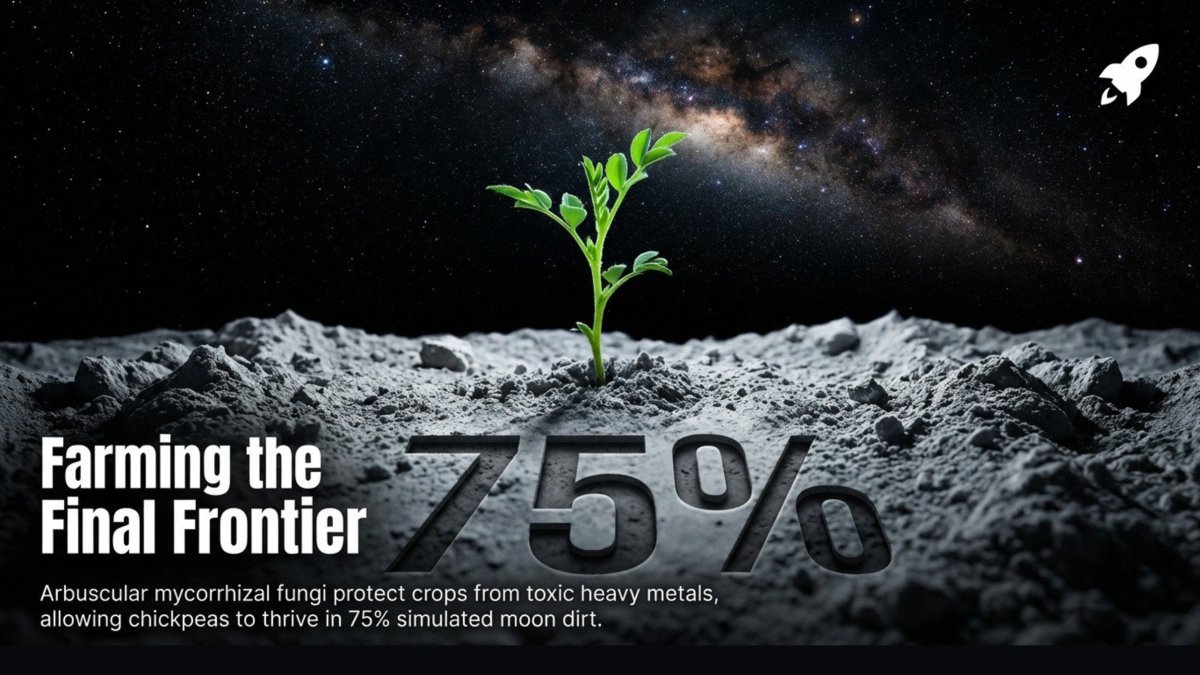
Their solution involved two key ingredients: worm compost and fungi. They added vermicompost — a byproduct of red wiggler earthworms that’s rich in essential plant nutrients — and coated the chickpeas with a symbiotic fungi called arbuscular mycorrhizae before planting. The fungi form a partnership with the plant roots, helping them absorb nutrients while also limiting the uptake of harmful metals from the soil. Crucially, the worms themselves could be fed mission waste — food scraps, cotton clothing, hygiene products — making the whole system elegantly self-contained.
The results were encouraging. Chickpea plants flowered and produced seeds in soil mixtures containing up to 75% regolith, though higher concentrations caused stress and early death. The more simulated moon dirt in the mix, the fewer pods the plants yielded — but their size held steady.
Why chickpeas specifically? They’re stress tolerant, high in protein, and send out signals to actively recruit the microorganisms that help them survive, a trait that made them ideal partners for the fungi in the experiment.
There’s still work to do before anyone is packing a can of moon-grown hummus. The chickpeas are currently being tested for metal accumulation, and researchers need to confirm they’re safe and nutritious before anyone takes a bite. But the scientists are optimistic — and one of them has already volunteered to be first in line. As researcher Jessica Atkin put it: “I will be the first one to make some moon hummus.”
This topic was featured in Great News podcast episode 35.

The Great News Podcast is your source for positive news, inspiring stories, and good news from around the world. We skip the doom and gloom of mainstream media to focus on scientific breakthroughs, environmental wins, and the inspiring news that proves the world is getting better. Join Andrew McGivern for a dose of optimism and uplifting stories that will change your perspective on human progress.
It is easy to find the
Keep looking for the good in the world, because it is not only there – its everywhere.
This podcast is brought to you by the Daily Quote. The podcast designed to kickstart your day in a positive way!
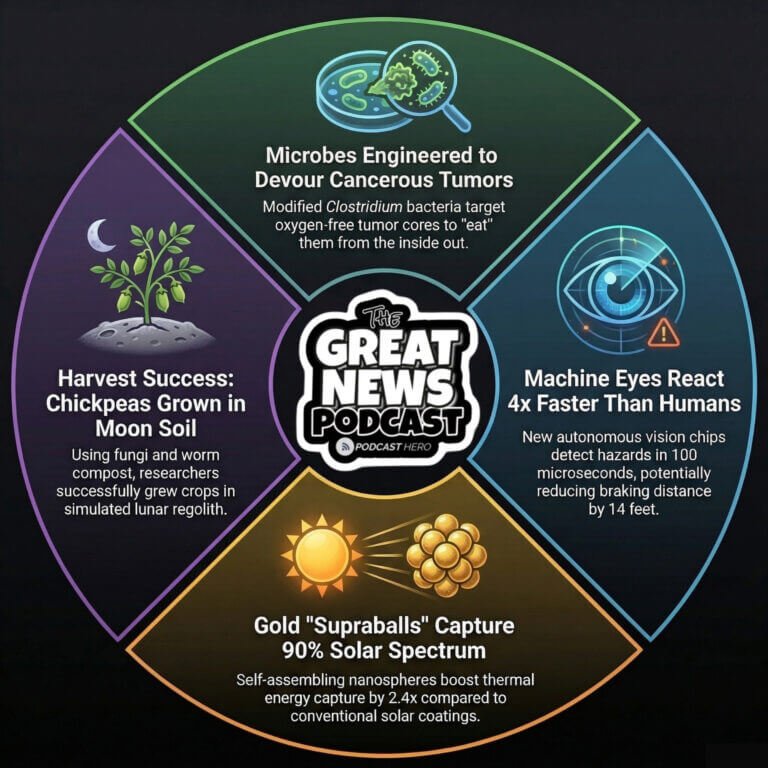
Today, we are exploring a medical breakthrough that uses ”hungry” bacteria to fight cancer, a massive electric flying taxi taking to the skies in China, and a successful harvest of chickpeas grown in actual moon dirt
Plus, we’ll look at a new computer chip that gives self-driving cars reflexes four times faster than the human brain
Bacteria that eats cancer from the inside out
Robot Cars react 4X faster than humans
And stick around for our speed round, where we’ll cover even more great news!
US Forests fighting harder against climate change
Gold Supraballs capture 90% of solar spectrum
A few changes at home reduce asthma attacks
New additive increases organic solar cell efficiency
If you like the Great News Podcast, You'll love the great news letter. Because the Great News Podcast is Great! But the Great News Letter is Greater!
The Great News Letter is FREE and includes all the good news stories.
Source: SciTechDaily