An easier transition to cleaner transportation…
The road to zero-emission transport was supposed to be a straight line, but reality has a habit of adding bends. As EV adoption has proven slower and more complicated than automakers and governments once predicted, a new class of technology is stepping into the gap. The Horse H12 Concept engine is one of the most compelling examples yet.
Horse Powertrain, a spinoff from a Geely-Renault joint venture that has grown into one of the world’s leading engine manufacturers, has partnered with Spanish energy company Repsol to develop a next-generation hybrid powertrain that runs on 100% renewable fuel. The results are striking: the company claims the prototype can boost fuel economy by 40% while cutting up to 1.77 tons of CO2 emissions annually compared to a conventional combustion engine running on regular gasoline.
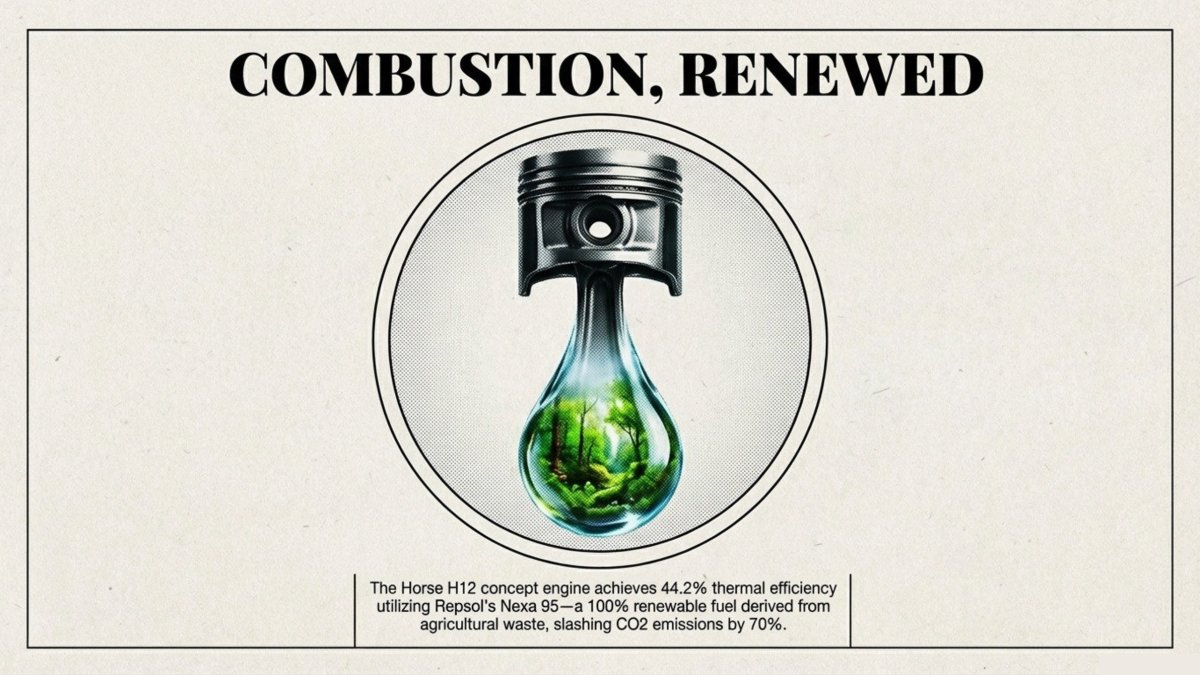
The H12 is built on a turbocharged 1.2-liter three-cylinder base, but heavily reworked. Key upgrades include a 17:1 compression ratio, an optimized turbocharger, a new exhaust gas recirculation system, and a high-energy ignition system, all working together to achieve a peak brake thermal efficiency of 44.2%. That translates to fuel consumption estimates below 3.3 L/100 km, or better than 70 mpg.
The fuel itself is equally interesting. Repsol’s “Nexa 95” renewable gasoline is made from organic materials including agricultural and forestry waste and used cooking oils, and is compatible with existing gas-powered vehicles without any modifications. Repsol estimates it can reduce CO2 emissions by more than 70% compared to conventional gasoline and the company already has one dedicated production facility running at industrial scale, with a second planned for this year.
What makes this story particularly timely is the context around it. As consumer EV demand has become increasingly uncertain, Horse has positioned itself as a critical bridge, supplying hybrid powertrains to major automakers like Volvo, Nissan, and Mitsubishi, allowing them to fill out their lineups without diverting billions into new combustion R&D.
Is this the future of transportation? Probably not on its own. But the H12 makes a compelling case that the internal combustion engine isn’t finished yet — it just needed better fuel, smarter engineering, and a moment of honest reckoning about how complex the energy transition really is.
This topic was featured on Great News podcast episode 37.
Source: New Atlas