
The Future of Private Flight
For decades, the concept of a zero-emission business jet seemed like a distant dream, hampered by the immense technical challenges of alternative fuels. However, the aviation industry is on the cusp of a major breakthrough. French aerospace startup Beyond Aero has recently achieved a critical milestone with its BYA-I One aircraft, successfully completing its Preliminary Design Review (PDR) and taking a significant step toward making hydrogen-powered private flight a reality by 2030 .
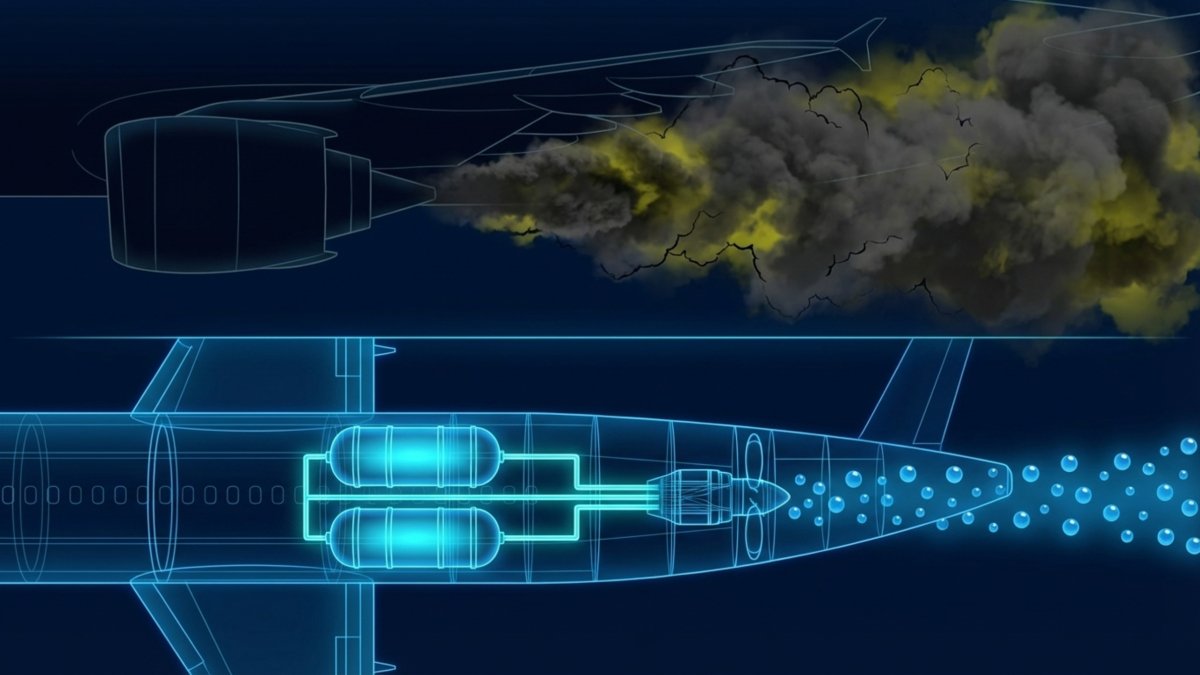
The BYA-I One is not just a concept; it is a meticulously engineered aircraft designed to meet the rigorous demands of modern business travel while producing zero carbon emissions. By utilizing hydrogen fuel cells to power electric propfans, the only byproduct of this aircraft is water vapor, effectively immunizing it against carbon taxes and the growing trend of “flight shaming” .
A Pragmatic Approach to Hydrogen Storage
One of the most significant hurdles in hydrogen aviation is fuel storage. Hydrogen has a very low energy density by volume, meaning aircraft require large amounts of it to achieve meaningful range. Furthermore, handling cryogenic (liquid) hydrogen requires complex, ultra-cold liquefaction plants and heavy Dewar tanks, which add immense cost and weight .
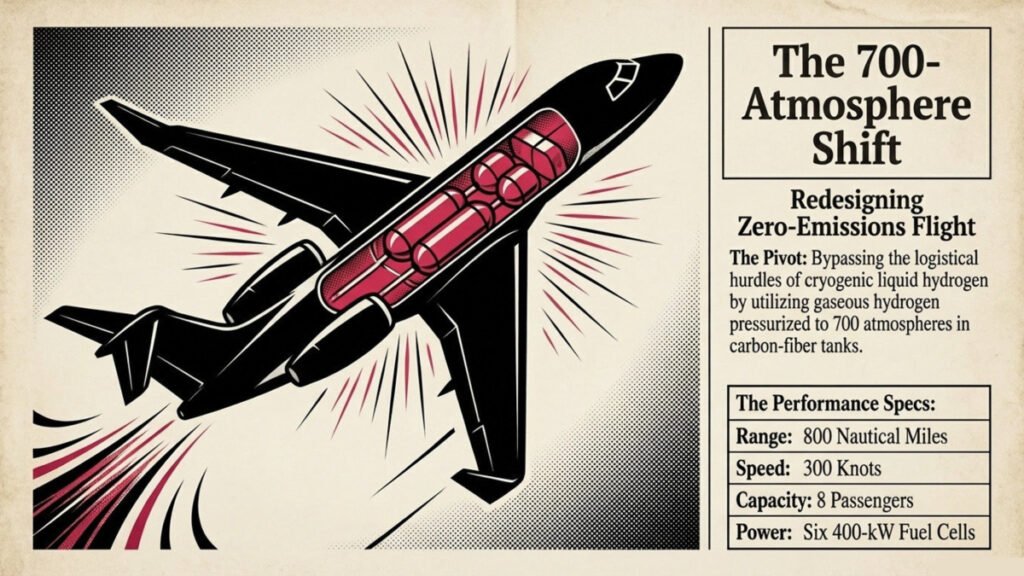
Beyond Aero has circumvented these challenges by adopting a highly pragmatic design philosophy. Instead of cryogenic liquid, the BYA-I One utilizes gaseous hydrogen pressurized to 700 bar (700 atmospheres) . This decision allows the company to leverage existing, mature high-pressure technology, vastly simplifying thermal management and reducing the need for specialized ground infrastructure.
While this approach is innovative, it does come with trade-offs. The high-pressure carbon-fiber tanks required to store the gas are heavy; approximately 20 kilograms of tank weight is needed for every 1 kilogram of hydrogen fuel . This added “dead-weight” can impact performance, particularly at high-altitude airports in hot climates. Nevertheless, Beyond Aero has optimized the aircraft’s design to ensure it meets the needs of its target market.
Performance and Specifications
Despite the weight penalty of the storage tanks, the BYA-I One boasts impressive specifications tailored for the business aviation sector. The aircraft is designed for short-to-medium-range flights, which account for the vast majority of private jet travel.
| Specification | Details |
| Range | 800 Nautical Miles (920 miles / 1,482 km) |
| Cruising Speed | 300 knots (345 mph / 556 km/h) |
| Capacity | Up to 8 passengers + 2 crew |
| Maximum Takeoff Weight | 21,164 lb (9,600 kg) |
| Propulsion | Twin-propfan, powered by six 400-kW fuel cells |
Table 1: Key specifications of the Beyond Aero BYA-I One .
The propulsion system is particularly noteworthy. The aircraft utilizes a redundant configuration of six 400-kilowatt fuel cells. This redundancy ensures a level of system resilience that rivals, if not exceeds, that of conventional gas turbine engines . Furthermore, the electric propfans operate much more quietly than traditional jet engines, significantly reducing noise pollution.
The Path to Certification
The completion of the Preliminary Design Review is a monumental step. As Luiz Oliveira, Chief Engineer at Beyond Aero, stated, “The Preliminary Design Review confirms that the aircraft configuration and its major systems – propulsion, hydrogen storage, aerodynamics and avionics – have reached the level of maturity required to support a certifiable architecture” .
The company is not aiming for a light-sport certification; they are pursuing the stringent CS-25/Part 25 certification from the European Union Aviation Safety Agency (EASA) and the Federal Aviation Administration (FAA) . This is the highest standard of airworthiness, typically reserved for large commercial airliners. Achieving this certification will prove that hydrogen-electric propulsion is as safe and reliable as conventional aviation technology.
With the PDR complete, the BYA-I program now moves into the detailed design and verification phase. If Beyond Aero can maintain its current trajectory and overcome the remaining infrastructural challenges of hydrogen supply, the BYA-I One could enter service by 2030, forever changing the landscape of business aviation and proving that luxury travel does not have to come at the expense of the environment.
This topic is featured in Great News podcast episode 38.

The Great News Podcast is your source for positive news, inspiring stories, and good news from around the world. We skip the doom and gloom of mainstream media to focus on scientific breakthroughs, environmental wins, and the inspiring news that proves the world is getting better. Join Andrew McGivern for a dose of optimism and uplifting stories that will change your perspective on human progress.
It is easy to find the
Keep looking for the good in the world, because it is not only there – its everywhere.
The Great News podcast is brought to you by the Daily Quote.
Today, we have a packed episode! What if we could study forty years of human aging in just four days? That is our lead story. Plus, we’ll look at a hydrogen-powered business jet hitting major milestones, a healing gel that could prevent amputations from chronic wounds, and a solar device that makes drinking water safe in under an hour.
Organ-on-a-Chip Replicates Decades of Aging in Days
Hydrogen Business Jet Moves Closer to Reality
How a New Oxygen-Delivering Gel Could Save Limbs from Chronic Wounds
Solar-Powered Device Disinfects Water in Just One Hour
Stick around for the speed round, where we’ll cover even more breakthroughs in medicine and energy!
Terminating Super-Bugs in a single day!
Mirror-Image Proteins: A Novel Strategy to Combat Alzheimer’s Disease
Figs: Your Sweet Secret Weapon for Health and Wellness
Bill Gates’ TerraPower Gets Green Light for Advanced Reactor
Turning Nuclear Waste into Power and Reducing its Deadly Lifespan
Miraculous Advances in Spinal Cord Injury TreatmentMalaria Vaccine Saving Children in NigeriaA New Way to Fight Alzheimer’s Disease

Sources:
New Atlas. “Hydrogen business jet closer to reality with BYA-I progress.”