An Inflammation Suppressor Decreases Mortality
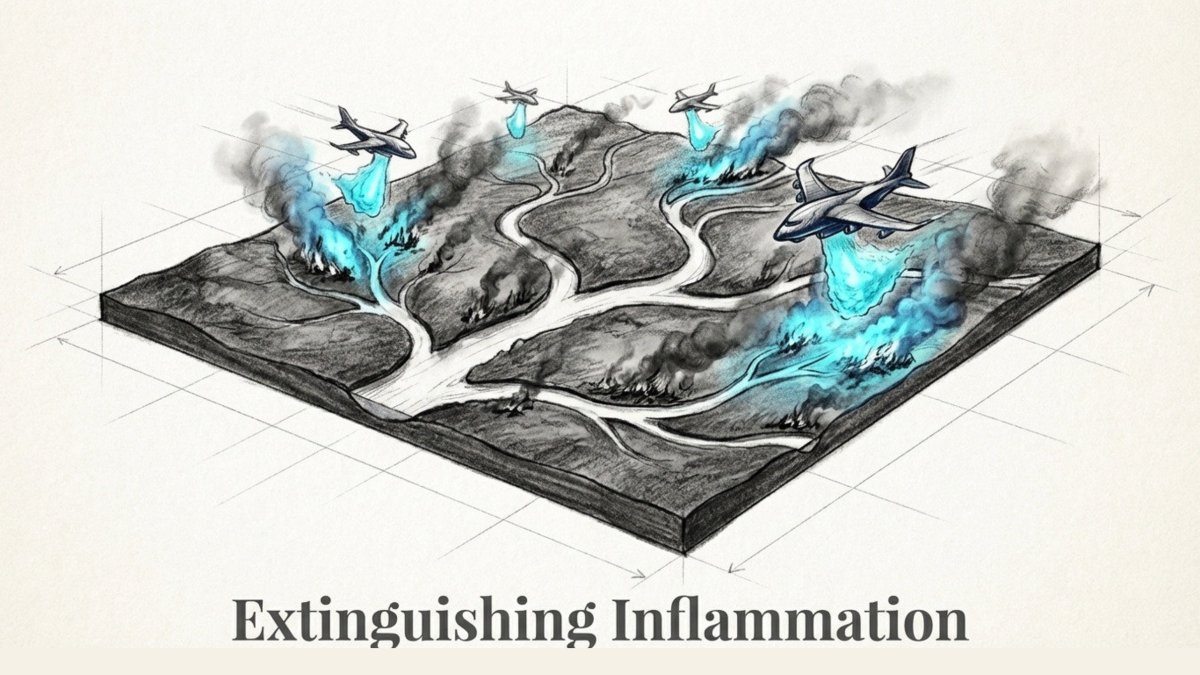
We’ve known for years that chronic inflammation is bad news for aging. The slow, smoldering immune activity that builds up over decades — sometimes called “inflammaging” — is closely linked to heart disease, diabetes, cognitive decline, and early death. But here’s the trickier question scientists have struggled to answer: does inflammation cause those outcomes, or is it just along for the ride?
A new study published in the journal Aging takes a significant step toward settling that debate — and the findings point toward a surprisingly actionable target.
The Culprit and Its Counterpart
The researchers focused on IL-6, a well-known inflammatory signaling molecule, and its soluble receptor, IL-6R. While IL-6 drives inflammation, IL-6R circulates in the bloodstream and essentially acts as a decoy — binding to IL-6 and pulling it away from its inflammatory pathway. These two proteins tell very different stories for human health.
To establish genuine cause and effect, the team used Mendelian randomization, a clever technique that leverages large genomic datasets to mimic a controlled experiment. Because our genes are assigned randomly at conception, this approach is far less vulnerable to the confounding factors and reverse causation that plague traditional observational studies.
What They Found
The results were striking. Increases in IL-6 were linked to greater overall mortality, while increases in IL-6R were protective — associated with reduced all-cause mortality and lower risk of conditions including lung cancer, diabetes, stroke, and coronary artery disease. Alzheimer’s disease and kidney conditions were unaffected, but the cardiovascular benefits were particularly pronounced.
Importantly, the researchers ruled out the possibility that pre-existing heart disease was simply causing IL-6 levels to rise. The causal arrow, the data suggested, points the other way.
A Clear Mechanism — and a Drug That Already Exists
Why does IL-6R protect the heart so specifically? IL-6R is not abundant in the walls of blood vessels or heart tissue, so when it circulates throughout the bloodstream, it travels to where IL-6 is causing damage — binding to and neutralizing the inflammatory compound before it can worsen conditions like thrombosis or endothelial dysfunction.
This isn’t just an academic finding. A drug called tocilizumab, which blocks IL-6R signaling, is already FDA-approved and has been used in clinical settings for conditions ranging from rheumatoid arthritis to severe COVID-19. The researchers suggest that IL-6R antagonism could represent a viable strategy for reducing cardiovascular disease and associated mortality, though they caution that further animal and human studies are needed to confirm whether artificially boosting circulating IL-6R through such drugs translates into real-world cardiovascular risk reduction.
The Bigger Picture
This research adds meaningful weight to the idea that inflammation isn’t just a symptom of aging — it’s an active driver of it. And it highlights a specific, druggable pathway that may one day become part of a broader toolkit for extending healthy human lifespan. The biology of aging is complex, but moments like this — when a clear mechanism meets an existing drug — are exactly the kind of progress the longevity field needs.
This topic was featured in Great News podcast episode 36.

The Great News Podcast is your source for positive news, inspiring stories, and good news from around the world. We skip the doom and gloom of mainstream media to focus on scientific breakthroughs, environmental wins, and the inspiring news that proves the world is getting better. Join Andrew McGivern for a dose of optimism and uplifting stories that will change your perspective on human progress.
It is easy to find the
Keep looking for the good in the world, because it is not only there – its everywhere.
This episode is brought to you by the Daily Quote. The podcast designed to kickstart your day in a positive way.
Today, we are diving into some truly groundbreaking advancements in medicine, biotechnology, and sustainable energy. What if a gene editor could replicate and spread like a virus to ensure it reaches every cell that needs a cure? That is our lead story today.
Plus, we have a ”rechargeable sun battery” that outperforms lithium-ion, tiny bubbles that shatter cancer’s defenses, and a city-wide success story in wiping out Dengue fever.
CRISPR Gene Editor Replicates and Spreads Like a Virus
New Sun Battery Beats Lithium-Ion
Bubbles and Ultrasound Break Soften Tumour Walls for Better Treatment
And don’t forget to stick around for the speed round, where we’ll dive into even more great news.Prime C Shows Striking Survival Benefit in ALS Clinical Trial
Inhalable Treatment Could Replace Months of Pills for TB
Could a “Longevity Protein” Slow How We Age?An Inflammation Suppressor Decreases Mortality
Turning Our Own DNA Against Cancer
Until next time, keep looking for the good in the world, because it’s not only there—it’s everywhere.
Source: Lifespan.io