The Flying Taxi Just Got a Lot Bigger
For years, the promise of electric air travel has been dangled just out of reach — a sleek, quiet alternative to gridlocked city roads, always a few certifications away from reality. But a recent demonstration in Kunshan, China, suggests the future might be closer than we think, and considerably larger than anyone expected.
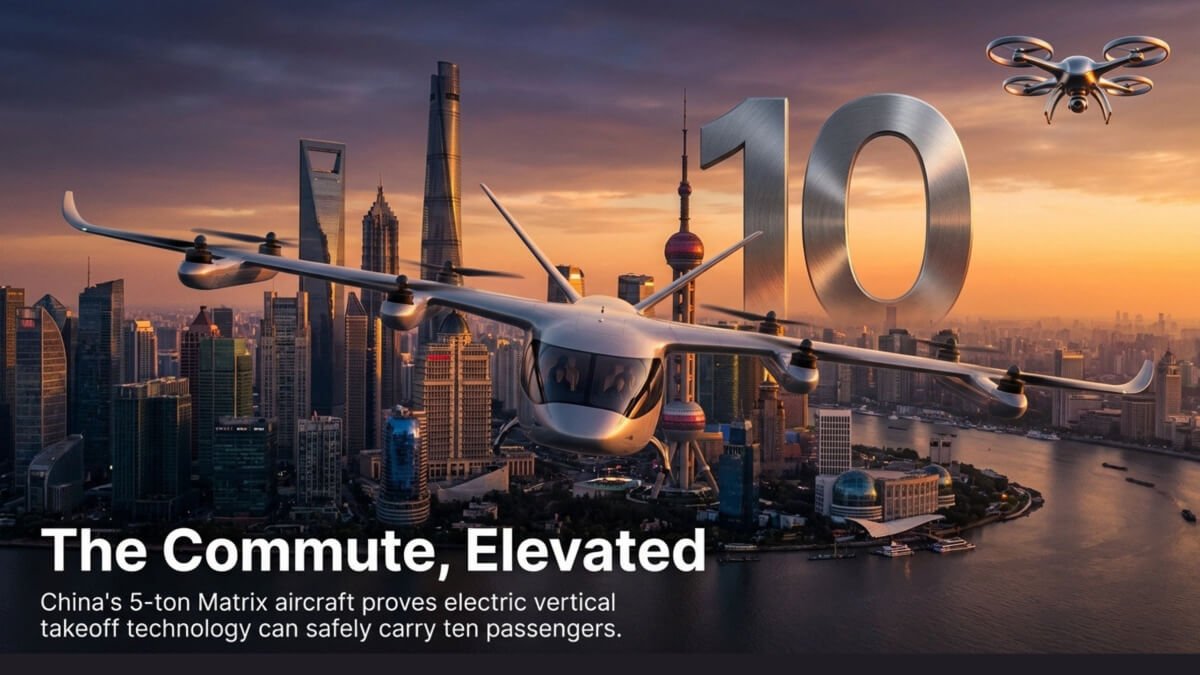
Meet the Matrix. Developed by Chinese company AutoFlight, founded in 2017, the Matrix is a 5-ton electric vertical takeoff and landing vehicle — an eVTOL — that can carry up to 10 passengers. It spans roughly 20 meters (about 66 feet) in wingspan and can stay airborne for a full hour without recharging. Think less “flying car” and more “electric minibus with rotors.”
At AutoFlight’s low-altitude flight testing facility, the craft lifted off, completed two laps, and landed smoothly — quieter than a helicopter, though far from silent. It’s an impressive engineering feat, and a strong signal that China is serious about dominating what it calls the “low-altitude economy.”
But impressive hardware is only part of the story. AutoFlight already has a smaller, 2-ton passenger eVTOL in development, but it’s still awaiting regulatory certification. The company hopes to secure a type certificate from regulators by 2027, and even then, additional operator approvals would be needed before a single paying passenger steps aboard.
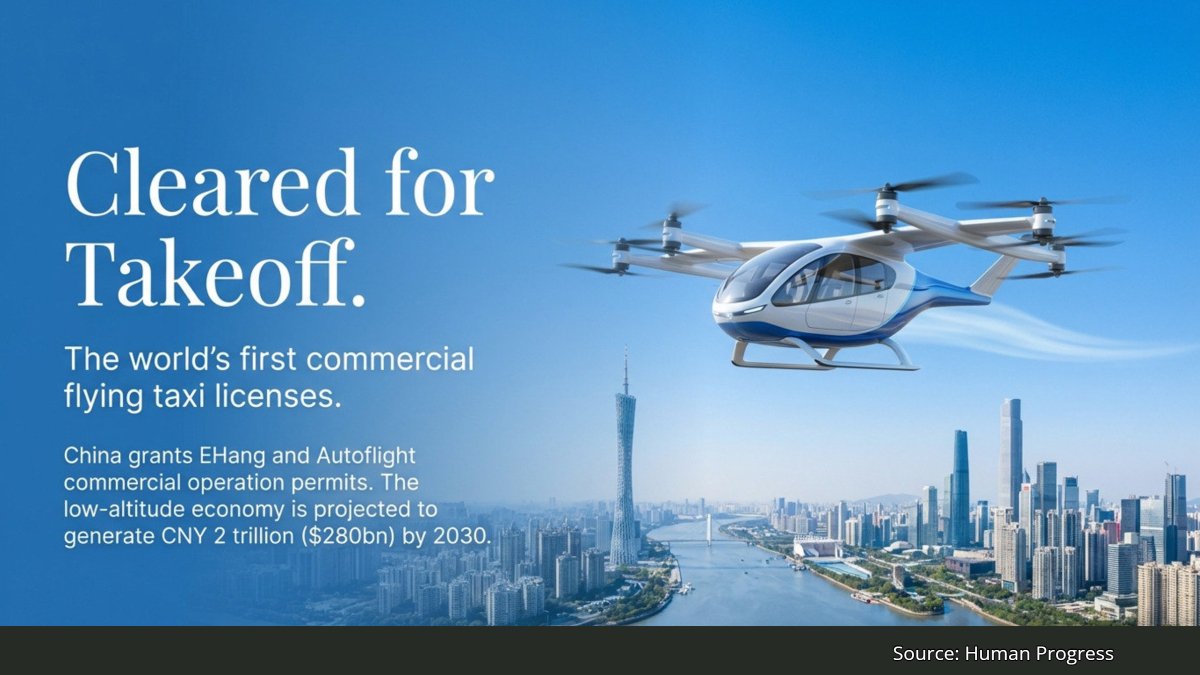
Other Chinese firms are in the race too. Guangdong-based EHang has already received certification to offer commercial passenger services, though flights have yet to begin. Meanwhile, the broader infrastructure — landing pads, air traffic routing, urban logistics — remains largely unbuilt.
Economists tracking the sector, like Gary Ng of Natixis, point out that safety guarantees, physical infrastructure, and routing logistics all need to come together before flying taxis become a genuine option for commuters.
So when will you actually be able to hail a flying taxi? AutoFlight’s own leadership admits it’s a tough question to answer. What’s clear is that the technology is maturing fast — and China, with its appetite for ambitious infrastructure and its booming drone delivery sector, is positioning itself at the front of the queue.
The Matrix has taken flight. The rest of the ecosystem needs to catch up.
This topic was featured in Great News podcast episode 35.

The Great News Podcast is your source for positive news, inspiring stories, and good news from around the world. We skip the doom and gloom of mainstream media to focus on scientific breakthroughs, environmental wins, and the inspiring news that proves the world is getting better. Join Andrew McGivern for a dose of optimism and uplifting stories that will change your perspective on human progress.
It is easy to find the
Keep looking for the good in the world, because it is not only there – its everywhere.
This podcast is brought to you by the Daily Quote. The podcast designed to kickstart your day in a positive way!
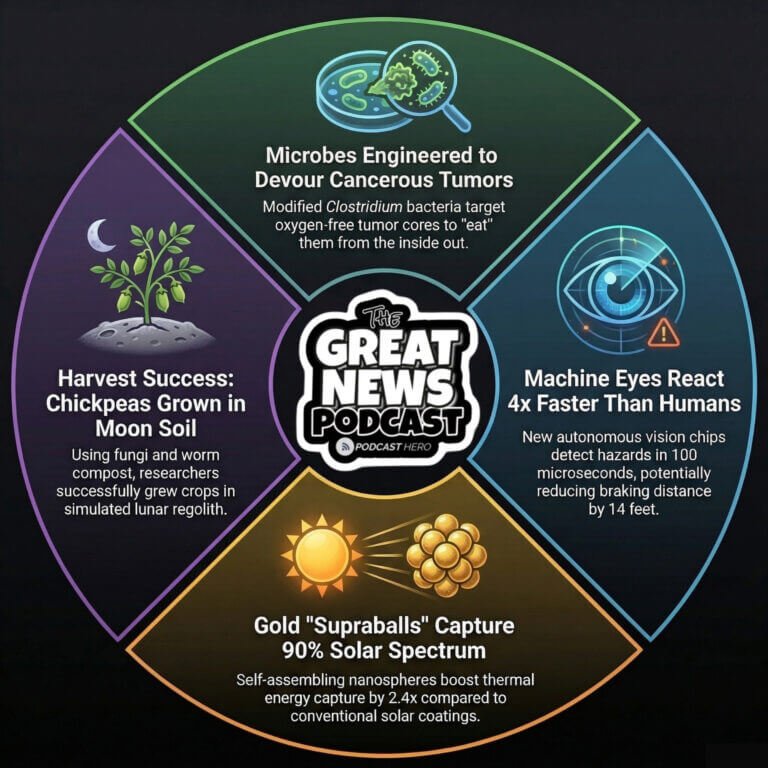
Today, we are exploring a medical breakthrough that uses ”hungry” bacteria to fight cancer, a massive electric flying taxi taking to the skies in China, and a successful harvest of chickpeas grown in actual moon dirt
Plus, we’ll look at a new computer chip that gives self-driving cars reflexes four times faster than the human brain
Bacteria that eats cancer from the inside out
Robot Cars react 4X faster than humans
And stick around for our speed round, where we’ll cover even more great news!
US Forests fighting harder against climate change
Gold Supraballs capture 90% of solar spectrum
A few changes at home reduce asthma attacks
New additive increases organic solar cell efficiency
If you like the Great News Podcast, You'll love the great news letter. Because the Great News Podcast is Great! But the Great News Letter is Greater!
The Great News Letter is FREE and includes all the good news stories.
Source: TechXplore