The Future of Aging Research
With over a billion people worldwide aged 60 or older, and that number projected to double by 2050, understanding the biological processes of aging has never been more critical. The global healthcare system faces immense pressure to manage the escalating burden of age-related diseases. However, developing longevity therapeutics is a costly and time-consuming endeavor, with over 90% of drugs failing in clinical trials, partly due to the limitations of animal models in accurately reflecting human biology .
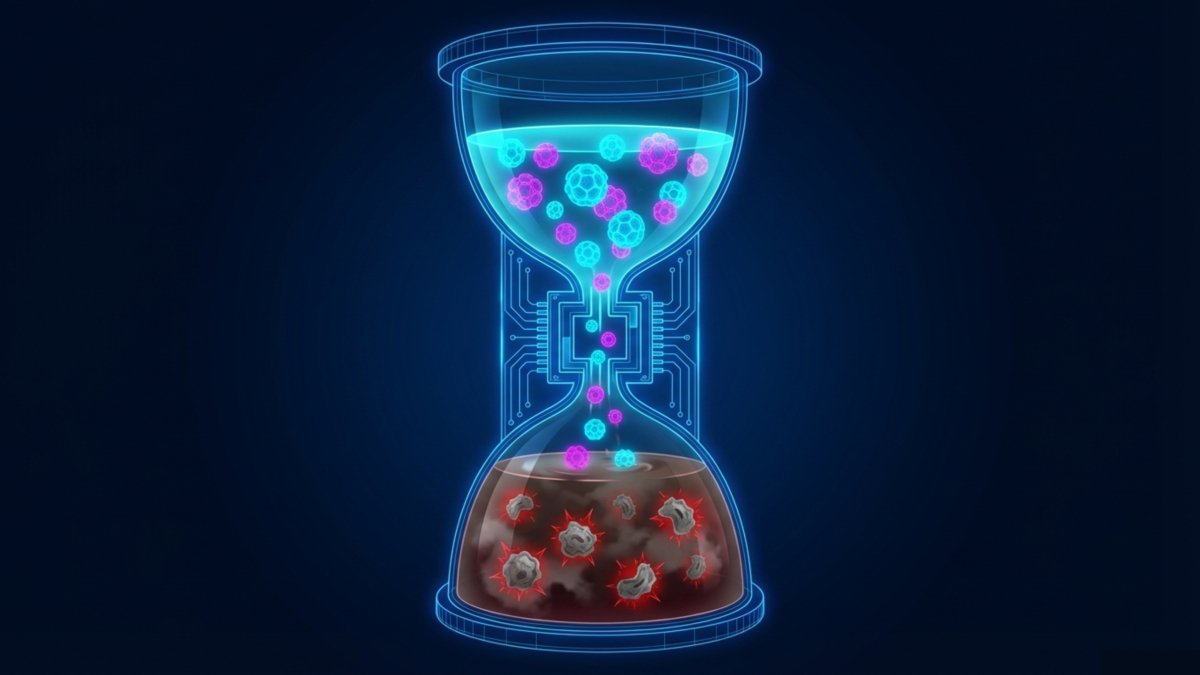
In a groundbreaking development, researchers at UC Berkeley have unveiled a miniaturized organ-on-a-chip system capable of replicating decades of human aging in a mere four days. This innovative technology, detailed in Nature Biomedical Engineering, promises to revolutionize how we study aging mechanisms and screen next-generation therapies, offering a rapid and reliable platform that closely mimics human physiology .
Deciphering the Dynamics of Aging
The conventional view of aging posits that cellular dysfunction accumulates over time, leading to the myriad physical and metabolic changes associated with growing older. However, longevity researchers like Irina Conboy have long challenged this notion, suggesting that aging is not merely a passive progression but a dynamic process influenced by systemic factors .
Early research by Irina and Michael Conboy, utilizing a technique called parabiosis (surgically connecting two living organisms), demonstrated that aging in mammals is significantly regulated by age-elevated systemic proteins circulating in the bloodstream. Their studies revealed that connecting an older mouse to a younger one could induce signs of rejuvenation in the older animal, while simultaneously accelerating aging in the younger counterpart exposed to older blood . This pivotal work underscored that certain blood-borne factors, while beneficial at young levels, become counterproductive in old age, promoting inflammation and cellular decline.
The Organ-on-a-Chip: A Human Model in Miniature
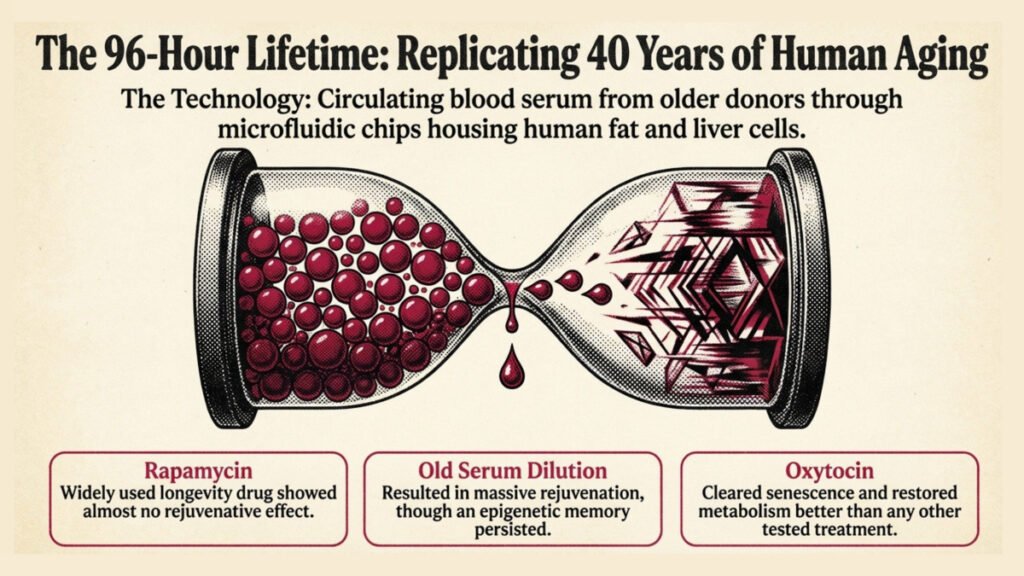
Building upon these foundational insights, metabolic biologist Andreas Stahl and his team, in collaboration with the Conboys, developed an organ-on-a-chip system designed to accelerate the biological age of human fat and liver tissues. These miniature devices are intricate, cell-filled platforms that meticulously replicate the architectural, fluidic, and mechanical environments of living human organs .
The system features separate chambers for white adipose tissue (WAT) and liver cells, interconnected by a microliter-scale tubing network that mimics the human vascular system. The key to accelerating aging lies in exposing these young human tissues, derived from induced pluripotent stem cells (iPSCs), to human serum (blood plasma devoid of cells and clotting factors) obtained from older individuals. This exposure rapidly induces biological changes characteristic of decades of aging, achieving approximately 40 years of aging simulation in just four days .
Revolutionizing Drug Discovery and Personalized Medicine
The implications of this technology are profound. By providing a highly accurate and accelerated human model, the organ-on-a-chip system can significantly streamline the drug development pipeline. Pharmaceutical companies can now rapidly test potential longevity therapeutics, observing their effects on human tissues in weeks rather than years, thereby reducing the high costs and failure rates associated with traditional clinical trials .
Moreover, this platform offers unprecedented opportunities for personalized medicine. Researchers can investigate how an individual’s unique blood profile influences the aging of their organs, potentially leading to tailored interventions. The ability to study inflammaging—the chronic, low-grade inflammation that contributes to age-related diseases—in a controlled human model will also yield invaluable insights into developing strategies to mitigate its effects .
As our global population continues to age, innovative tools like the organ-on-a-chip are indispensable. This technology not only deepens our understanding of the complex biology of aging but also paves the way for faster, more effective development of therapies that could extend healthy human lifespan and alleviate the burden of age-related diseases.
This topic is featured in Great News podcast episode 38.
Sources:
Medical Xpress. “Organ-on-a-chip technology replicates decades of human aging in just four days.”