One Company Is Betting on It
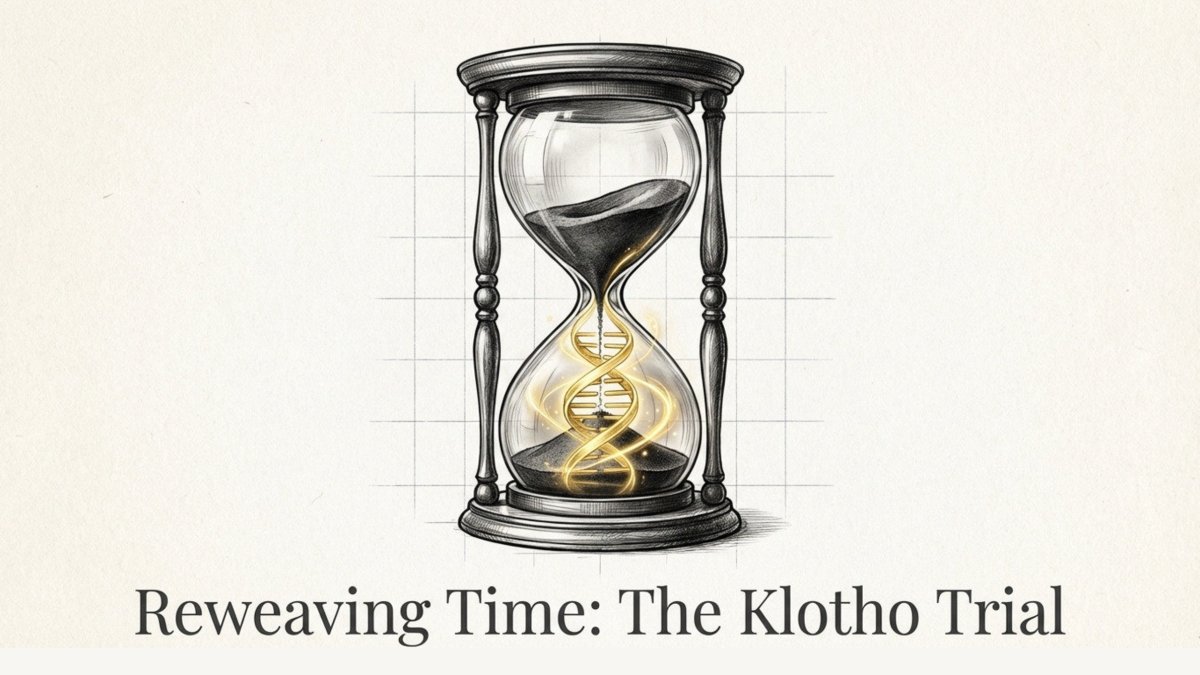
For decades, scientists have known that a protein called klotho — named after the Greek goddess who spins the thread of life — is closely tied to how well we age. People with higher levels of it tend to have healthier hearts, kidneys, brains, and bones. The catch? Levels naturally decline as we get older, and figuring out how to safely top them back up in humans has been a stubborn scientific puzzle.
Now, a biotech company called Klothea Bio thinks it has a solution — and it’s already testing it in people.
Klothea Bio has begun enrolling participants into a Phase 1b clinical trial of its experimental alpha klotho mRNA therapy, AKL003, at the GARM Clinic in Próspera, a special economic zone on the Honduran island of Roatán. Rather than targeting a specific disease, the trial is explicitly designed to explore whether boosting klotho levels can influence biomarkers linked to human lifespan, a rare and ambitious goal in a field where most companies stick to conventional disease indications.
How does it work? AKL003 uses a lipid nanoparticle formulation — the same basic delivery technology behind mRNA vaccines,to carry a proprietary mRNA sequence into the body’s cells, prompting them to produce klotho themselves. The company describes this as “klotho hormone supplementation” and believes the approach could allow repeat dosing and more consistent protein expression than earlier attempts to increase klotho levels.
The randomized, double-blind, placebo-controlled study will enroll 21 healthy adults aged 25 to 75, tracking not just safety but a wide range of aging-related signals: inflammatory markers, cardiovascular health, sleep quality via wearables, mitochondrial function, and even epigenetic “biological age” clocks.
The trial location itself is notable. Próspera operates as an autonomous special economic zone with its own legal and regulatory framework, designed to attract international investment through lower taxation, streamlined governance, and policies framed around medical freedom. It has become a quiet hub for experimental longevity science — Klothea joins gene therapy companies and high-profile biohackers who have sought out the jurisdiction’s more flexible approach to clinical development.
Of course, a trial of 21 people won’t tell us whether klotho can extend human life. But it could tell us something important: whether it’s safe to repeatedly boost this protein in healthy people, and whether doing so moves the biological dials we associate with slower aging. Many in the longevity field will be keenly watching the safety outcomes and biomarker trends from this small cohort.
The thread of life, it turns out, might have a molecular handle. The question is whether we’re ready to pull it.
This topic was featured in Great News podcast episode 36.

The Great News Podcast is your source for positive news, inspiring stories, and good news from around the world. We skip the doom and gloom of mainstream media to focus on scientific breakthroughs, environmental wins, and the inspiring news that proves the world is getting better. Join Andrew McGivern for a dose of optimism and uplifting stories that will change your perspective on human progress.
It is easy to find the
Keep looking for the good in the world, because it is not only there – its everywhere.
This episode is brought to you by the Daily Quote. The podcast designed to kickstart your day in a positive way.
Today, we are diving into some truly groundbreaking advancements in medicine, biotechnology, and sustainable energy. What if a gene editor could replicate and spread like a virus to ensure it reaches every cell that needs a cure? That is our lead story today.
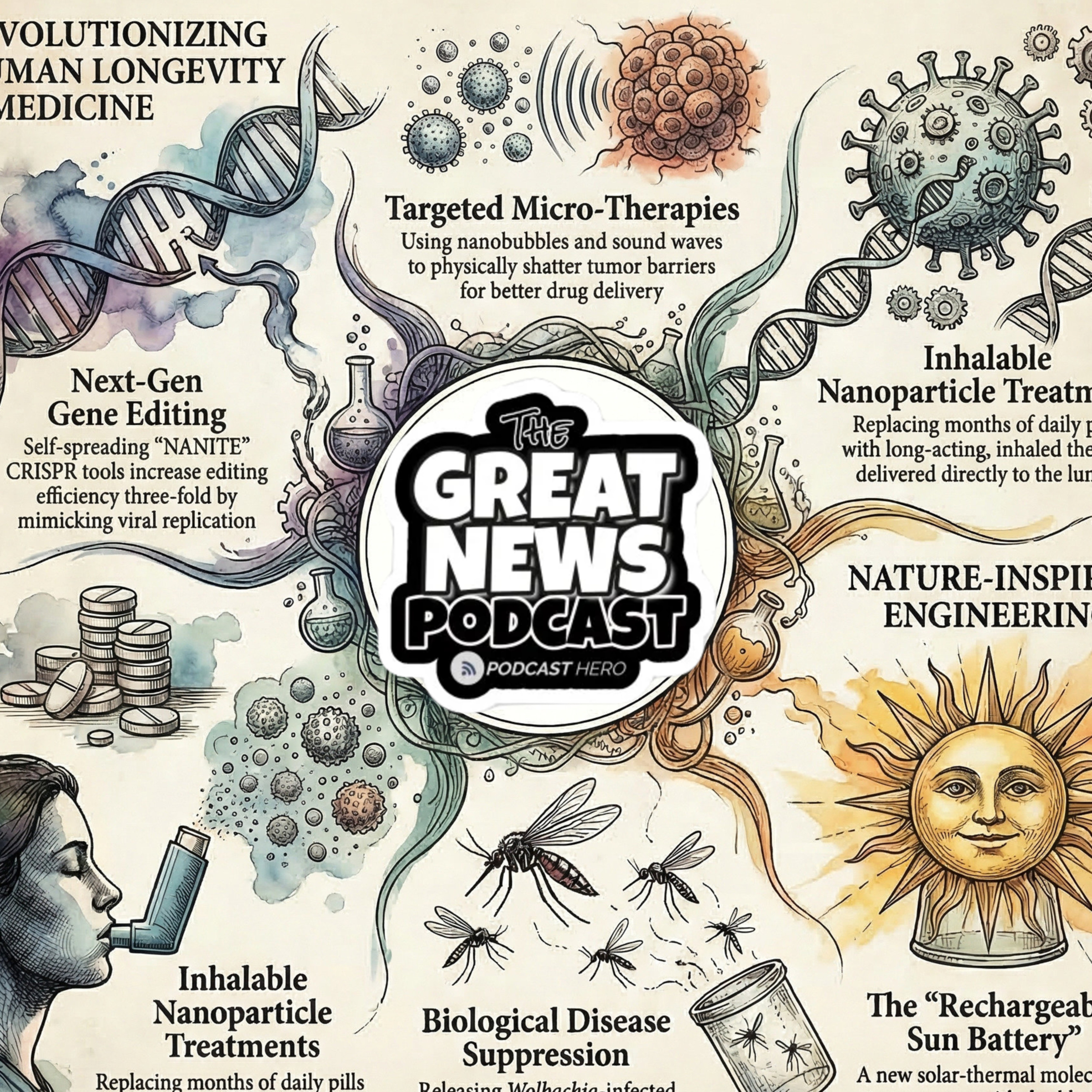
Plus, we have a ”rechargeable sun battery” that outperforms lithium-ion, tiny bubbles that shatter cancer’s defenses, and a city-wide success story in wiping out Dengue fever.
CRISPR Gene Editor Replicates and Spreads Like a Virus
New Sun Battery Beats Lithium-Ion
Bubbles and Ultrasound Break Soften Tumour Walls for Better Treatment
And don’t forget to stick around for the speed round, where we’ll dive into even more great news.Prime C Shows Striking Survival Benefit in ALS Clinical Trial
Inhalable Treatment Could Replace Months of Pills for TB
Could a “Longevity Protein” Slow How We Age?An Inflammation Suppressor Decreases Mortality
Turning Our Own DNA Against Cancer
Until next time, keep looking for the good in the world, because it’s not only there—it’s everywhere.
Source: Longevity Technology