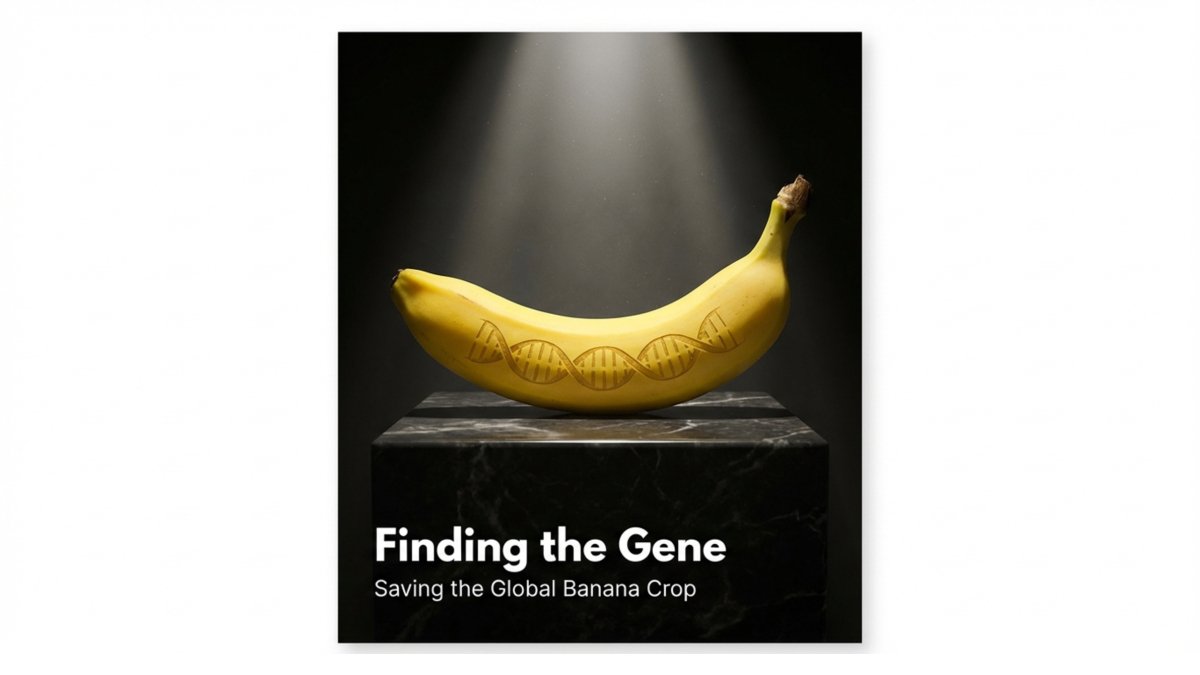
Could a Wild Banana Save the World’s Favorite Fruit?
The humble banana — the world’s most popular fruit and a dietary staple for over 400 million people — is under serious threat. A soil-borne fungal disease called Fusarium wilt, better known as Panama disease, is quietly spreading through banana plantations across subtropical regions worldwide. It kills plants from the roots up and leaves contaminated soil that can remain unusable for years. The Cavendish banana, which makes up the vast majority of bananas sold globally, has no natural defense against it.
But scientists may have just found a way forward.
Researchers at the University of Queensland, led by Dr. Andrew Chen and Professor Elizabeth Aitken, have identified the specific genetic region responsible for resisting the disease’s most dangerous strain — Subtropical Race 4 (STR4). The discovery, published in Horticulture Research, took five years of painstaking work to achieve.
The resistance was found not in any banana you’d find at a grocery store, but in a wild variety called Calcutta 4. It’s inedible — but genetically, it’s remarkable. The team crossed Calcutta 4 with susceptible banana varieties and exposed the offspring to STR4, then compared the DNA of plants that survived with those that didn’t. They traced the resistance to chromosome 5, marking what Dr. Chen called “the first genetic dissection of Race 4 resistance from this wild subspecies.”
This is a big deal because the Cavendish bananas we eat are essentially genetic clones of one another. That uniformity makes them highly vulnerable — if a fungus adapts to one plant, it can devastate entire crops. It’s a scenario that has happened before: a different strain of Panama disease wiped out the Gros Michel banana, the world’s dominant variety before the Cavendish, in the 1950s.
Calcutta 4 itself won’t replace the Cavendish — nobody wants an inedible banana. But it gives plant breeders a precise genetic target. The next step is developing molecular markers that allow breeders to screen seedlings for the resistance trait early, before disease symptoms appear — speeding up selection and reducing costs on the path toward a banana that is tasty, farmable, and naturally disease-resistant.
It’s not a solution yet, but it’s a clear and promising path toward one. In a world where food security is increasingly fragile, that kind of scientific breakthrough — unglamorous, methodical, and years in the making — is exactly what we need.
This topic is covered in Great News podcast episode 32

The Great News Podcast is your source for positive news, inspiring stories, and good news from around the world. We skip the doom and gloom of mainstream media to focus on scientific breakthroughs, environmental wins, and the inspiring news that proves the world is getting better. Join Andrew McGivern for a dose of optimism and uplifting stories that will change your perspective on human progress.
It is easy to find the
Keep looking for the good in the world, because it is not only there – its everywhere.
Today, we are diving into a ”fountain of youth” for the brain, a massive underwater discovery by a mother-daughter duo, and a plan to save the world's most popular fruit. Plus a new water free data center…
Can We Reprogram Our Way Out of Alzheimer's?
A Mother, a Daughter, and the World's Largest Coral Discovery
Protecting Commercial Bananas From Fungus
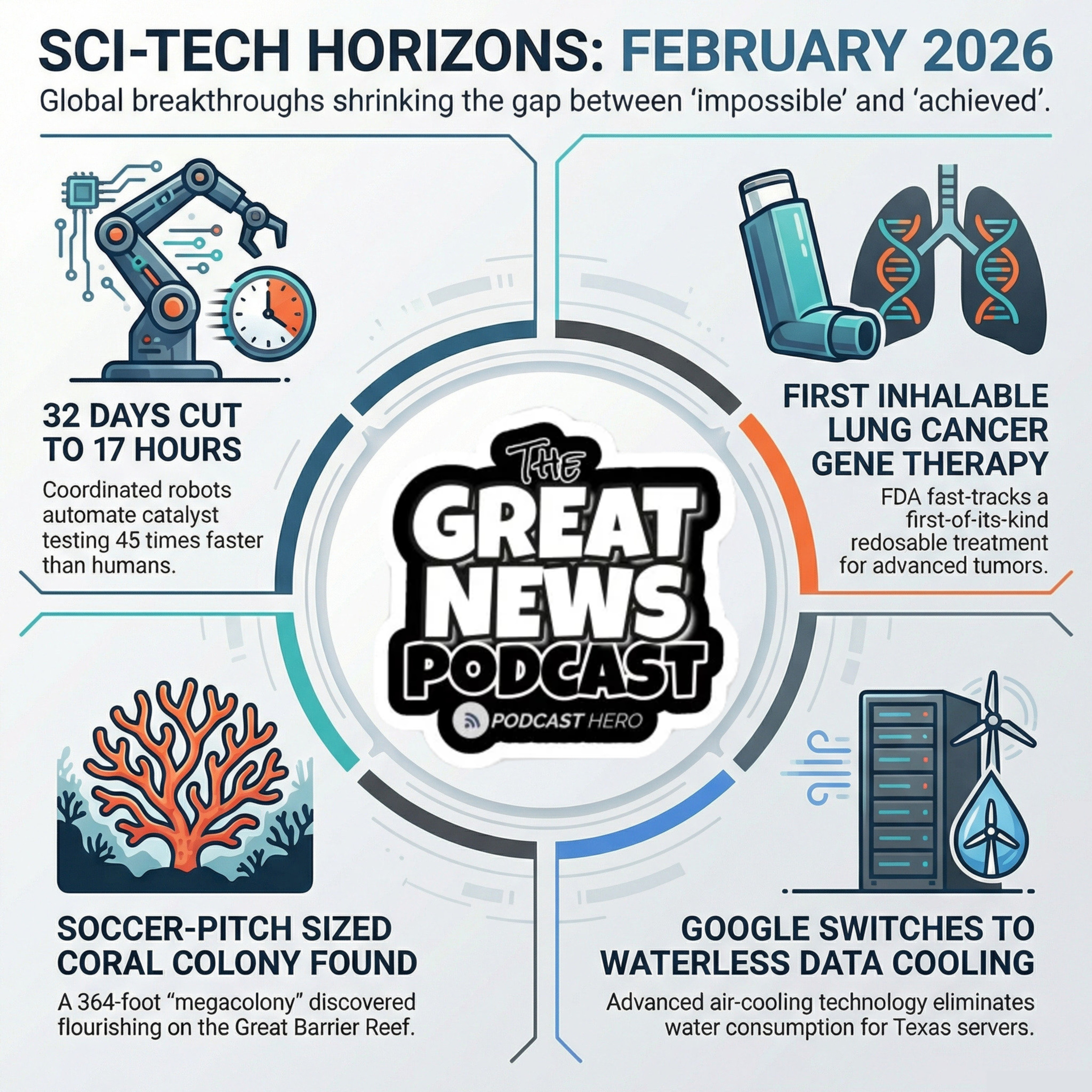
New AI Data Center to Use Zero Water?
And don't forget to stick around for the speed round:
Robots Are Transforming the Chemistry Lab — One Catalyst at a Time
Breathe In, Fight Back: The World's First Inhalable Gene
Therapy for Cancer Just Got Fast-Tracked
Why Your Funniest Teacher Was Probably Your Best Teacher
Source: SciTechDaily