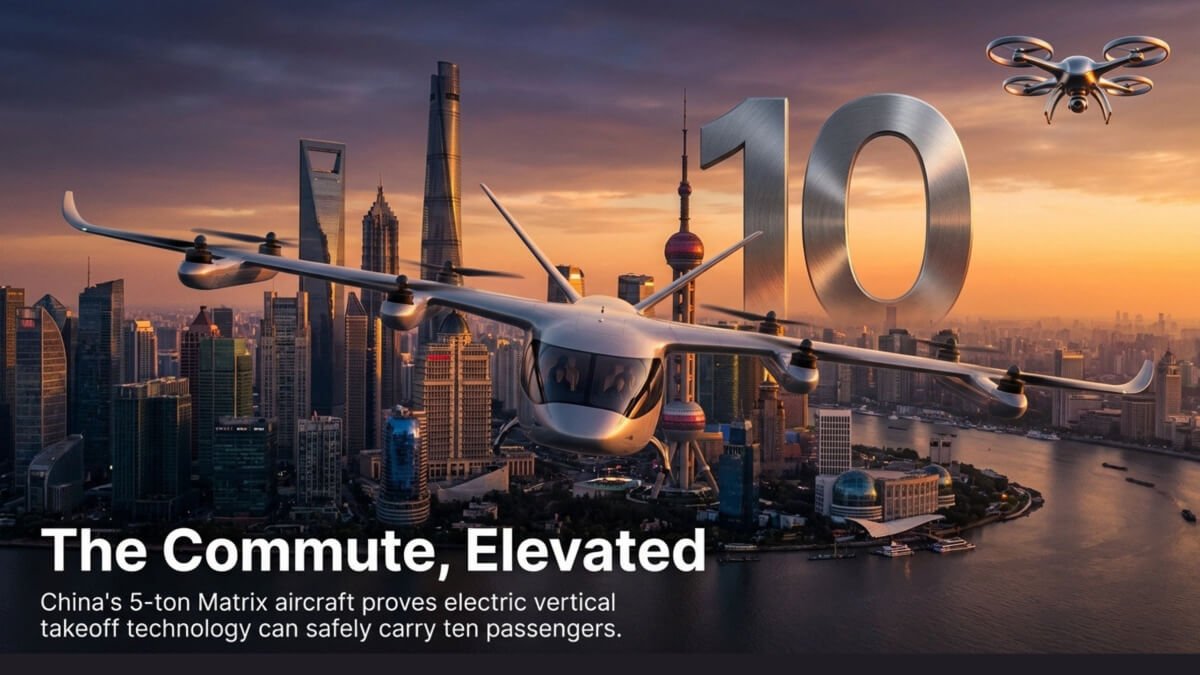
For decades, the flying car has been one of those promises that always seemed to be about ten years away. A staple of science fiction, a recurring punchline about the future we were supposed to have. That joke is now officially over.
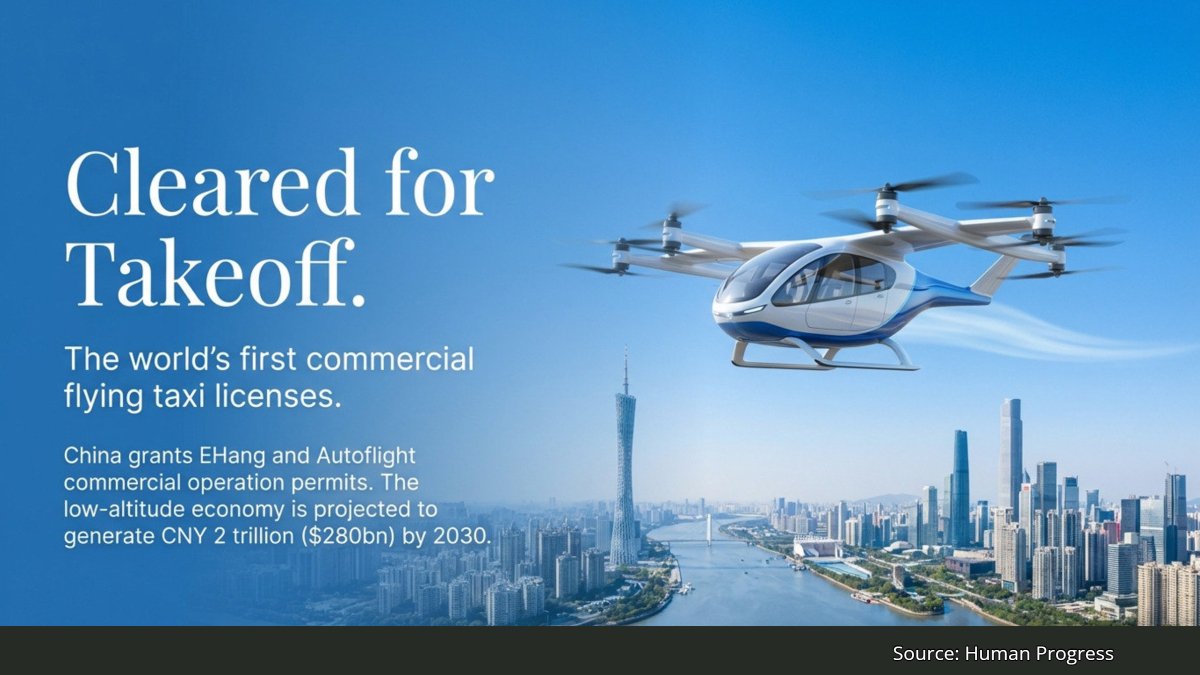
China has granted the world’s first commercial licenses for autonomous flying taxis, with the Civil Aviation Administration of China issuing permits to two domestic firms — EHang Holdings and Autoflight — to begin commercial operations using autonomous electric vertical take-off and landing aircraft, known as eVTOLs. This isn’t a trial, a pilot program, or a regulatory sandbox. These are full commercial operating permits, the final regulatory hurdle in a process that has taken years of certification work to complete.
The air operator certificate was the final regulatory hurdle both companies’ passenger drones needed to clear before being put into operation, having already obtained the type certificate, production certificate, and airworthiness certificate. In other words, the aircraft themselves have been comprehensively vetted. What’s been granted is permission to actually fly paying passengers.
EHang’s flagship vehicle, the EH216-S, is a two-seat pilotless aircraft — no human pilot on board, guided autonomously. EHang is collaborating with China’s aviation authorities to expand beyond tourism into urban transport, with initial services launching for low-altitude tourism, urban sightseeing, and commercial passenger flights at operation sites in Guangzhou and Hefei. The vision is for these aircraft to operate from rooftops and designated vertiports, bypassing road congestion entirely.
The commercial logic is significant. Chinese planners are preparing the groundwork for a low-altitude economy that could generate up to CNY2 trillion — around $280 billion — in annual output as soon as 2030. The term “low-altitude economy” covers all economic activity in airspace below 1,000 metres: flying taxis, cargo drones, aerial tourism, air ambulances, and more. It has been written into China’s national work report, backed by state investment, and is already one of the country’s fastest-growing sectors.
A Chinese trade group has predicted the country could have more than 100,000 autonomous drones, flying cars, and electric air taxis over its cities by 2030. Whether that specific figure proves accurate matters less than the direction of travel. The regulatory framework is in place, the aircraft are certified, the operators are licensed, and the passengers can now buy tickets.
The rest of the world is watching. Competitors in the US — including Joby Aviation and Archer — are working towards FAA certification, while regulators in the UAE, Singapore, and India are in advanced planning phases. But China has moved first, and in a sector where infrastructure, regulation, and public trust all need to develop in parallel, being first carries significant advantages.
The flying taxi has graduated from science fiction to operational reality. The only question now is how quickly the skies fill up.
This topic was covered in Great News podcast episode 31.

The Great News Podcast is your source for positive news, inspiring stories, and good news from around the world. We skip the doom and gloom of mainstream media to focus on scientific breakthroughs, environmental wins, and the inspiring news that proves the world is getting better. Join Andrew McGivern for a dose of optimism and uplifting stories that will change your perspective on human progress.
It is easy to find the
Keep looking for the good in the world, because it is not only there – its everywhere.
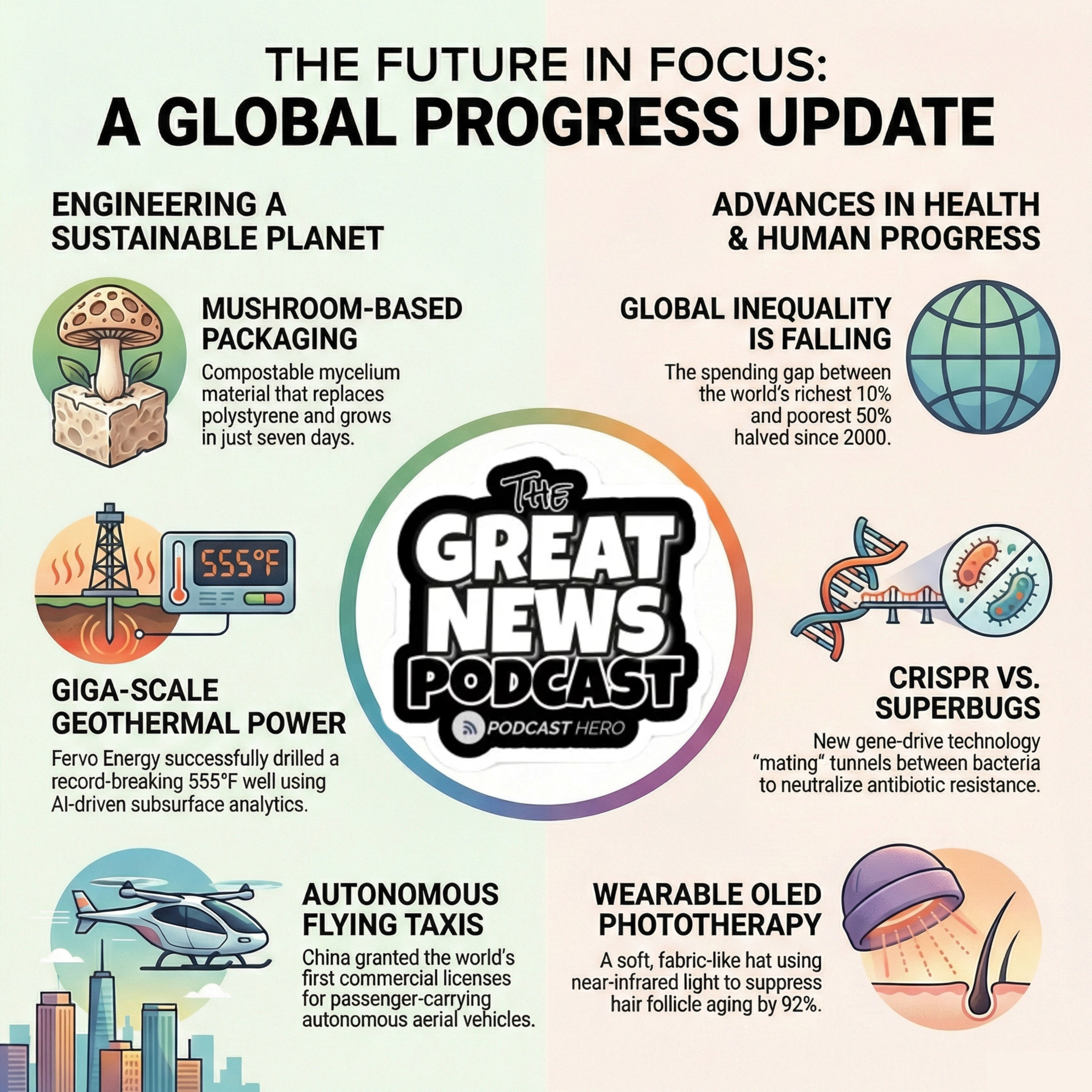
Today we’re diving into some truly groundbreaking advancements in biotechnology, sustainable energy, and global economics. What if we could actually reverse antibiotic resistance in bacteria instead of just trying to keep up with it?
Plus, we have packaging that grows itself from mushrooms, a giga-scale geothermal breakthrough in Utah, and new data showing the world is more equal than you might think.
- What If We Could Teach Bacteria to Forget How to Resist Antibiotics?
- Global Inequality Declines Substantially
- Geothermal Breakthrough
And don't forget to stick around for the speed round where we'll dive into even more great news.
- The Screen Time Panic May Be Missing the Point
- China grants commercial flying taxi licenses
- The Future of Hair Loss Treatment Might Just Be a Hat
- Your Immune System Could Be the Key to Slowing Ageing
- AI has identified 15 new magnetic materials
And don't forget to follow the Daily Quote
Source: Human Progress