
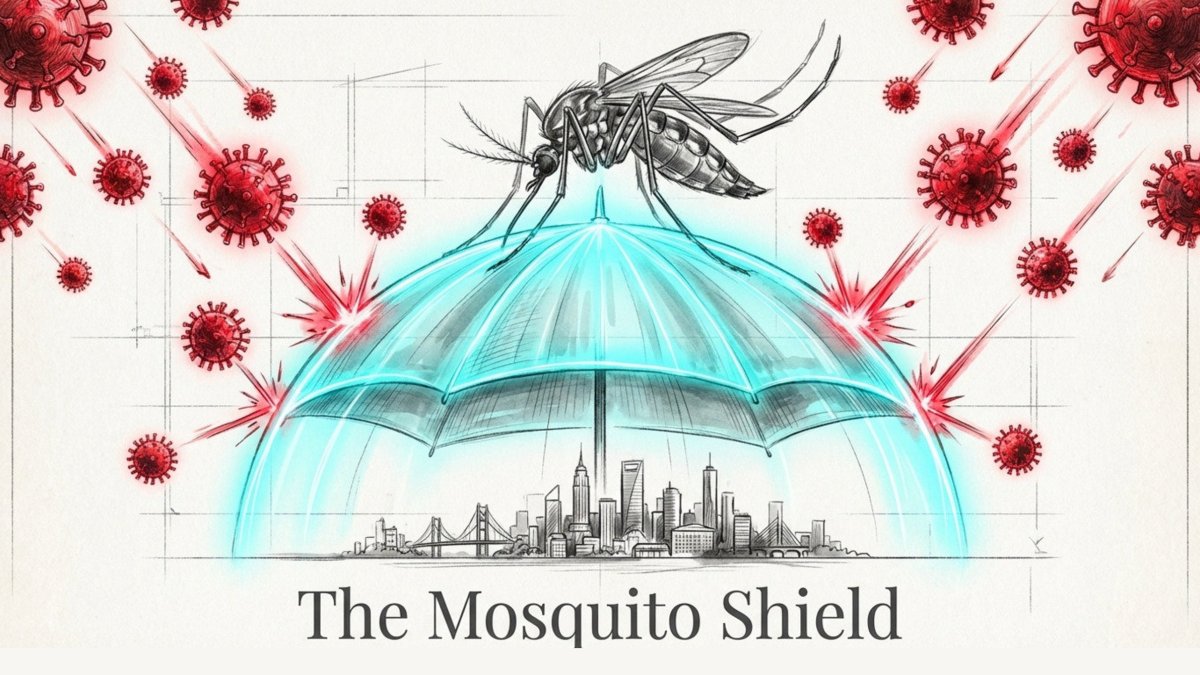
What if the best weapon against a deadly mosquito was another mosquito?
That’s essentially what researchers demonstrated in a landmark trial published in The New England Journal of Medicine this February — and the results are hard to argue with.
Dengue fever infects around 400 million people a year. The mosquito behind it, Aedes aegypti, has long been controlled through insecticides and habitat removal — methods that are costly, imperfect, and increasingly ineffective. This trial took a different approach entirely.
Scientists released male Aedes aegypti mosquitoes infected with a bacteria called Wolbachia across eight geographic clusters in Singapore, covering nearly 400,000 residents. Male mosquitoes don’t bite, so they pose no direct risk — but when they mate with wild females, the eggs don’t hatch. The wild population quietly collapses from within.
And collapse it did. Within three months, mosquito abundance in treated areas dropped by over 85% compared to untreated clusters. Dengue infections followed: only 6% of residents in treated areas tested positive, versus 21% in untreated ones — a protective efficacy of 71 to 72%.
No pesticides. No drugs. Just a bacteria, a box of mosquitoes, and a deep understanding of insect biology.
As dengue expands its reach due to climate change, tools like this one — targeted, low-impact, and demonstrably effective — will matter more than ever.
This topic was featured in Great News podcast episode 36

The Great News Podcast is your source for positive news, inspiring stories, and good news from around the world. We skip the doom and gloom of mainstream media to focus on scientific breakthroughs, environmental wins, and the inspiring news that proves the world is getting better. Join Andrew McGivern for a dose of optimism and uplifting stories that will change your perspective on human progress.
It is easy to find the
Keep looking for the good in the world, because it is not only there – its everywhere.
This episode is brought to you by the Daily Quote. The podcast designed to kickstart your day in a positive way.
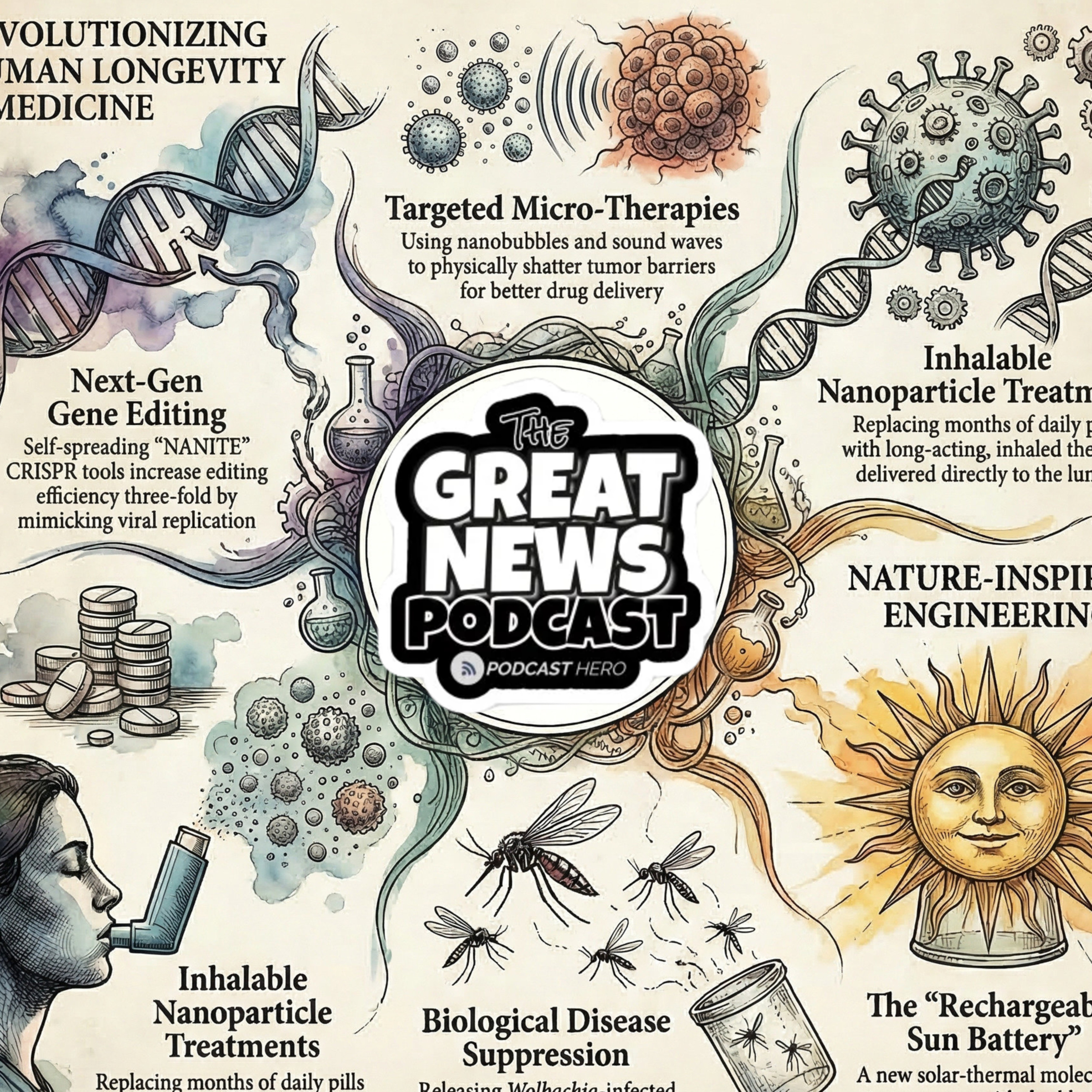
Today, we are diving into some truly groundbreaking advancements in medicine, biotechnology, and sustainable energy. What if a gene editor could replicate and spread like a virus to ensure it reaches every cell that needs a cure? That is our lead story today.
Plus, we have a ”rechargeable sun battery” that outperforms lithium-ion, tiny bubbles that shatter cancer’s defenses, and a city-wide success story in wiping out Dengue fever.
CRISPR Gene Editor Replicates and Spreads Like a Virus
New Sun Battery Beats Lithium-Ion
Bubbles and Ultrasound Break Soften Tumour Walls for Better Treatment
And don’t forget to stick around for the speed round, where we’ll dive into even more great news.Prime C Shows Striking Survival Benefit in ALS Clinical Trial
Inhalable Treatment Could Replace Months of Pills for TB
Could a “Longevity Protein” Slow How We Age?An Inflammation Suppressor Decreases Mortality
Turning Our Own DNA Against Cancer
Until next time, keep looking for the good in the world, because it’s not only there—it’s everywhere.
Source: Human Progress